Best Boxer’s Fracture Splint
A boxer’s fracture — the 4th or 5th metacarpal neck, classically from punching something that didn’t move — needs the wrist held in slight extension and the knuckles (MCP joints) held in flexion while the finger joints stay free. That’s exactly what a plaster ulnar gutter splint does, and the prefabricated braces below are the off-the-shelf alternative. But let me be direct: a fracture is a medical diagnosis that needs medical management. These are devices your physician or hand therapist may recommend or dispense — not a DIY substitute for getting the fracture evaluated. If you haven’t had it imaged and assessed, do that first.
I’m Josh Ramsey, a licensed occupational therapist. Here’s what I’d recommend from the prefab options, based on how they handle the positioning that actually matters.
Our Top Pick: Med Spec Boxer Splint
The most “prescription-like” prefab in the group. Malleable palmar AND dorsal aluminum stays let the clinician bend in the exact degree of MCP flexion prescribed, and the molded plastic clamshell protects the 4th and 5th metacarpals without restricting MP joint flexion — the key functional differentiator. That preserved flexion supports early protected motion, which is how you avoid the stiffness that plagues these fractures. The polypropylene felt liner wicks moisture, and the patented V-Strap system keeps the metacarpal strap from sliding out of its buckle during one-handed donning. Washable, US-made, four sizes (S–XL by wrist circumference), left/right specific.
The costs: left/right specific plus four sizes means a clinic stocks eight SKUs; the clamshell is bulkier under clothing than soft-gutter designs; and at around $53–70 retail it’s the pricier end of this group. Latex status wasn’t stated in the IFU — worth checking for sensitive patients.
Typically around $53–70 through DME retailers.
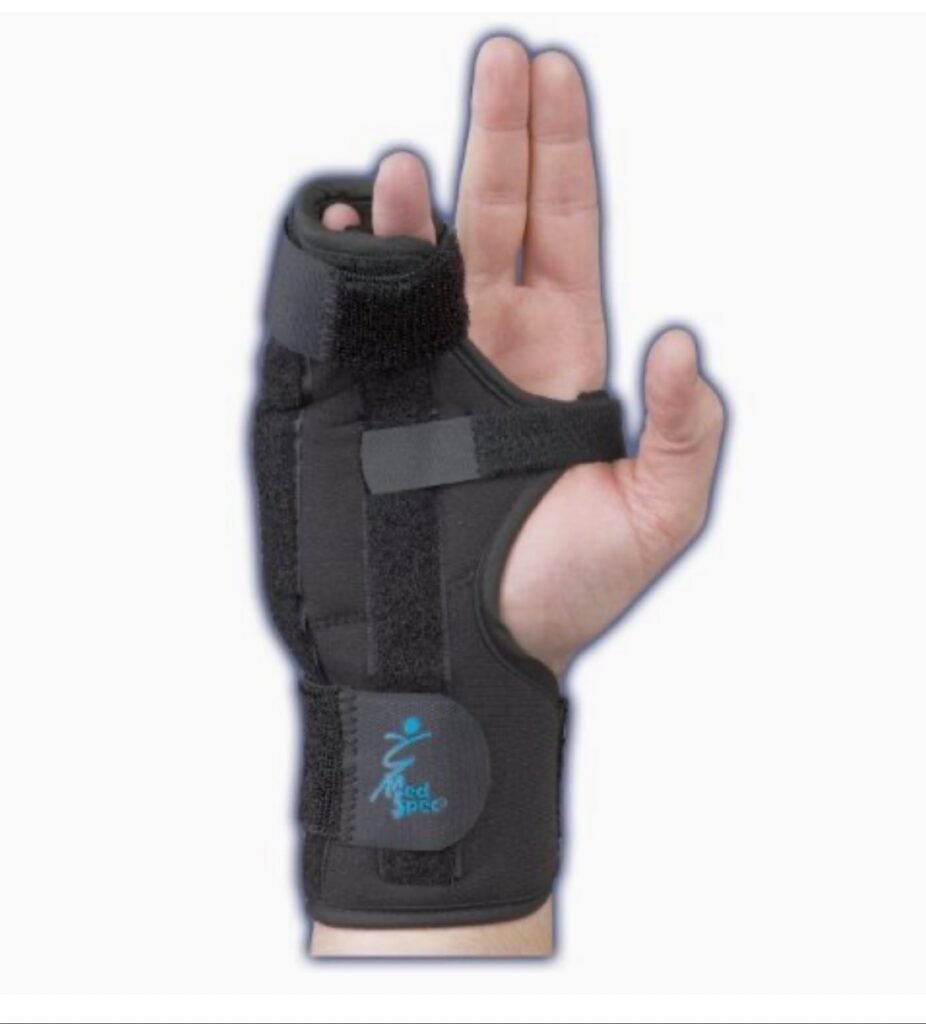
Med Spec Boxer Splint on Amazon (choose your size and left/right on the listing)
Best for: Clinic dispensing and patients where the therapist wants to dial in MCP flexion precisely — the closest prefab to a custom-fabricated ulnar gutter splint.
Most Versatile: Hely & Weber TKO (The Knuckle Orthosis)
One splint, three jobs: flip its orientation and it works as an ulnar gutter (boxer’s), a radial gutter, or a middle/ring finger splint — ideal for clinic inventory or urgent-care dispensing where you don’t know what’s walking in. The standout clinical feature is distal buddy strapping that prevents finger rotation, which directly addresses the rotational malalignment risk in 5th metacarpal neck fractures — something most competitors don’t handle at all. Malleable padded aluminum stays (dorsal and volar), perforated breathable neoprene, infinitely adjustable straps that accommodate the first week’s swelling curve without re-sizing. Latex-free per distributor data — but note the neoprene allergy caution in the IFU (latex-free doesn’t mean neoprene-safe). Sizing is coarse (three bands by palmar crease circumference), so borderline hands may fit imperfectly.
Typically around $69–74 through DME retailers.
Best for: Clinics wanting one device for boxer’s fractures and adjacent metacarpal injuries — especially when rotation control is a concern.
Best Value: ProCare ComfortForm Boxer’s Splint (DJO)
The malleable ulnar stay creates a dorsal block holding the 4th and 5th digits in full flexion — the textbook boxer’s fracture position, without custom molding. At around $27–55 it’s the lowest price among clinician-grade options (Tiger Medical has been the cheapest source found), with five sizes for finer fit granularity than the TKO. The trade-off is positioning philosophy: full flexion of the digits limits their PIP/DIP use more than designs preserving MP flexion, so it’s more restrictive for daily activities. Latex status unverified.
Typically around $27–55 through DME retailers.
Best for: Straightforward, uncomplicated boxer’s fractures where full-flexion dorsal-block positioning is what’s wanted — at the lowest clinician-grade price.
Easiest Self-Application: AliMed EzyWrap Boxer Orthosis
Explicitly designed for single-handed application — the strongest donning story here, and it matters because the injured hand is often the dominant one. Malleable wrist and finger stays for customizing extension and flexion, ulnar styloid pressure relief (the number-one comfort complaint with ulnar gutter devices), soft hypoallergenic materials, and adjustable compression for swelling changes. The compromises: only three size bands (coarsest sizing here), less brand recognition among clinicians, and less rigid than clamshell designs — potentially insufficient for less-stable fractures.
Typically around $38 direct from AliMed.
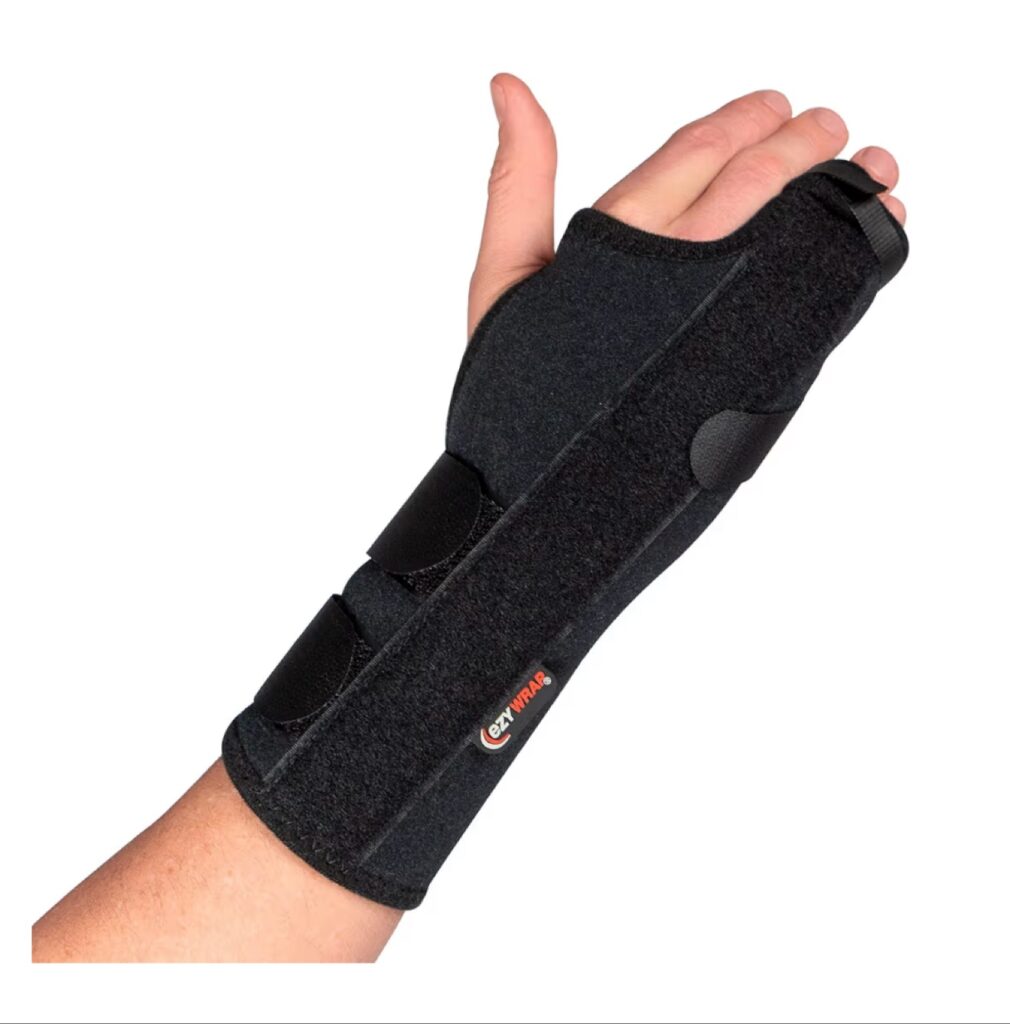
AliMed EzyWrap Boxer Orthosis on Amazon (choose your size and left/right on the listing)
Best for: Patients who must self-apply with the unaffected hand, and comfort-priority cases like geriatric skin.
How to Choose
Match the device to the fracture, not the price. Stable, non-displaced, non-rotated 5th metacarpal neck fractures are the prefab candidates. Anything displaced, rotated, angulated beyond tolerance, or involving multiple metacarpals needs physician-directed management — possibly surgical. The splint doesn’t decide that; the X-ray and the hand surgeon do.
MCP flexion philosophy matters. Designs that preserve MP flexion (Med Spec, TKO) support early protected motion and less stiffness. Full-flexion dorsal blocks (ProCare) are simpler and match textbook positioning but restrict the fingers more. Your treating clinician’s preference should drive this choice.
Plan for the swelling curve. The hand swells most in the first week, then shrinks. Infinitely adjustable straps (TKO) or adjustable compression (EzyWrap) handle that without re-sizing; fixed designs may need re-fitting.
When NOT to use a prefab: any fracture that hasn’t been imaged and evaluated; open fractures; numbness, color change, or increasing pain under the splint (compartment concerns — emergency, not a splint adjustment); and rotational deformity you can see (the “scissoring” fingers) — that needs surgical assessment, not a better strap.
FAQ
How long do you wear a boxer’s fracture splint? Typically 3–4 weeks for stable fractures, but that’s your physician’s call based on follow-up imaging — not a number to freelance. Stiffness rehab often continues after the splint comes off.
Can I take it off to shower? Only if your treating clinician says so. Many protocols allow brief removal for hygiene with the hand kept still; others don’t. Ask — don’t assume.
Why do my fingers feel stiff? Some stiffness is expected with MCP immobilization, which is exactly why designs preserving MP flexion exist and why hand therapy after splint removal matters. Report worsening stiffness rather than waiting.
Do I need hand therapy afterward? Often yes — edema control, scar management if surgical, and motion recovery. Your physician or OT will advise based on the fracture pattern.
The OT Review may earn a commission on purchases made through links on this page, at no extra cost to you.