Best TFCC Wrist Brace
Ulnar-sided wrist pain — the pinky side, aching when you twist a doorknob, grip, or bear weight through the hand — often points to the TFCC, the triangular fibrocartilage complex that stabilizes the joint between the radius and ulna. The braces that actually help TFCC problems work on a specific principle: they bring the radius and ulna together (preventing the joint from “spreading”) to offload the injured complex during activity. That’s different from a generic wrist brace, which just squeezes everything. Understanding that distinction is the whole buying decision.
I’m Josh Ramsey, a licensed occupational therapist. One necessary note: ulnar wrist pain has several causes (TFCC tear, ECU tendonitis, DRUJ instability), and they don’t all want the same device. If pain persists, get it properly diagnosed — ideally by a hand therapist or hand surgeon — rather than brace-shopping indefinitely.
Our Top Pick: WristWidget TFCC Brace
My pick, and it’s not close for most people. The WristWidget is a patented adjustable strap designed specifically around the radius/ulna approximation principle — non-elastic dual straps wrap the distal forearm to bring the two bones together, letting the TFCC heal without surgery, while deliberately avoiding compression on the ulnar head itself. It doesn’t restrict wrist motion at all, so patients keep using the hand for daily activities — and compliance is everything with a brace you need to wear for weeks. It’s water-safe, latex-free, MRI-safe, one size (14–22 cm wrist, plus a wide version), fits either hand, and comes from an OT and Certified Hand Therapist’s design with an 18-year track record as I’m writing this article.
The honest limitations: it’s not a rigid immobilizer, so it’s wrong for acute phases needing full rest or for nighttime positioning. The straps and Velcro fatigue with daily use — plan on replacement every few months with heavy wear — and there’s no graded compression or modular padding for patients wanting more support.
Typically around $38–40 on Amazon (sold by the official WristWidget store) or direct from wristwidget.com, which carries a lifetime guarantee.
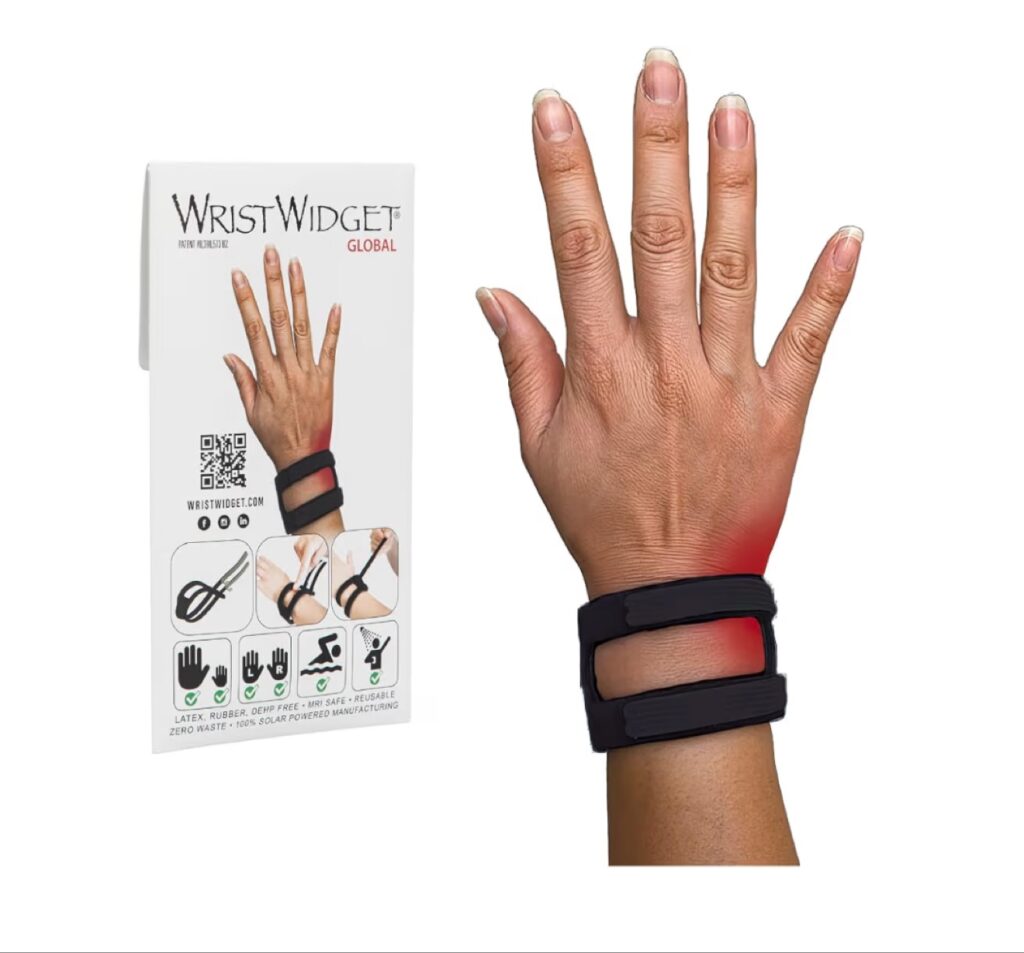
WristWidget TFCC Brace on Amazon
Best for: The classic TFCC presentation — ulnar-sided pain with gripping, rotation, and weight-bearing — in someone who needs to keep using the hand.
Runner-Up: Bullseye Wrist Band
A different mechanical answer: a soft silicone O-ring sits over the ulnar head region giving targeted, cushioned stabilization, with an adjustable D-ring strap. It’s a middle ground between the WristWidget’s strap mechanism and bulkier braces, and the anti-migration design matters — it’s the pick for active patients who found the WristWidget slipping during exercise. Also reasonable for ECU tendonitis and DRUJ instability alongside TFCC. Sized XS–L/XL (measure the wrist; the ring has to sit over the ulnar head or it doesn’t work), full range of motion, breathable and hand-washable.
Caveats: thinner track record than the WristWidget (newer brand, no published clinical history), sizing is more critical, and some heavy sweaters still report slippage.
Typically around $35–45.
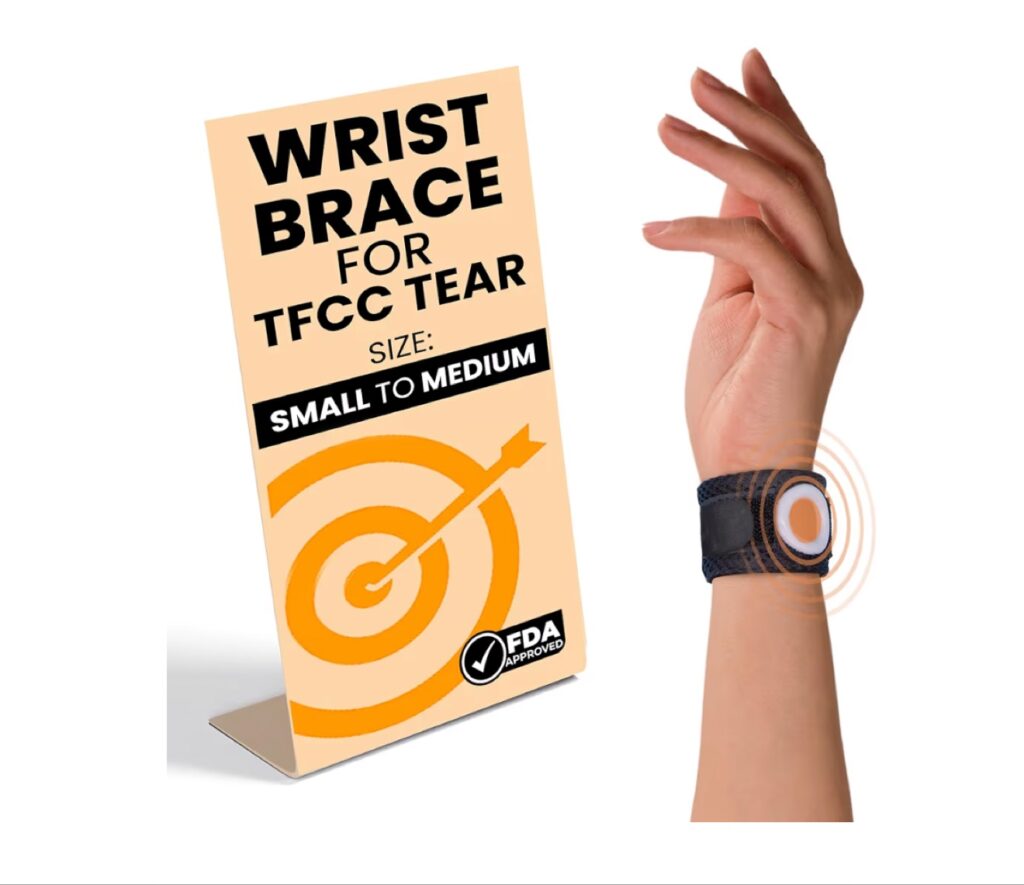
Bullseye Wrist Band on Amazon (choose your size on the listing)
Best for: Active patients and athletes who need the brace to stay put, and anyone wanting targeted ulnar-side compression with full motion.
Most Supportive: Comfort Cool Ulnar Booster (North Coast Medical)
When lighter supports have failed, this is the step up: a hand-therapist-designed neoprene splint where a foam “boost” disc over the pisiform creates counterforce — lifting the ulnar carpus while depressing the ulnar head — with two wrist straps wrapping in opposite directions to realign the carpus. It’s semi-restrictive (closer to a true splint), with eight sizes plus trimmability for near-custom fit. The most structured daytime option here, and the right mindset match for TFCC with midcarpal instability or persistent post-fracture ulnar pain.
The costs: neoprene runs warm despite perforations, it’s the bulkiest and least discreet option, and left/right-specific sizing plus insert placement takes more patient education.
Typically around $39–55 through rehab suppliers.
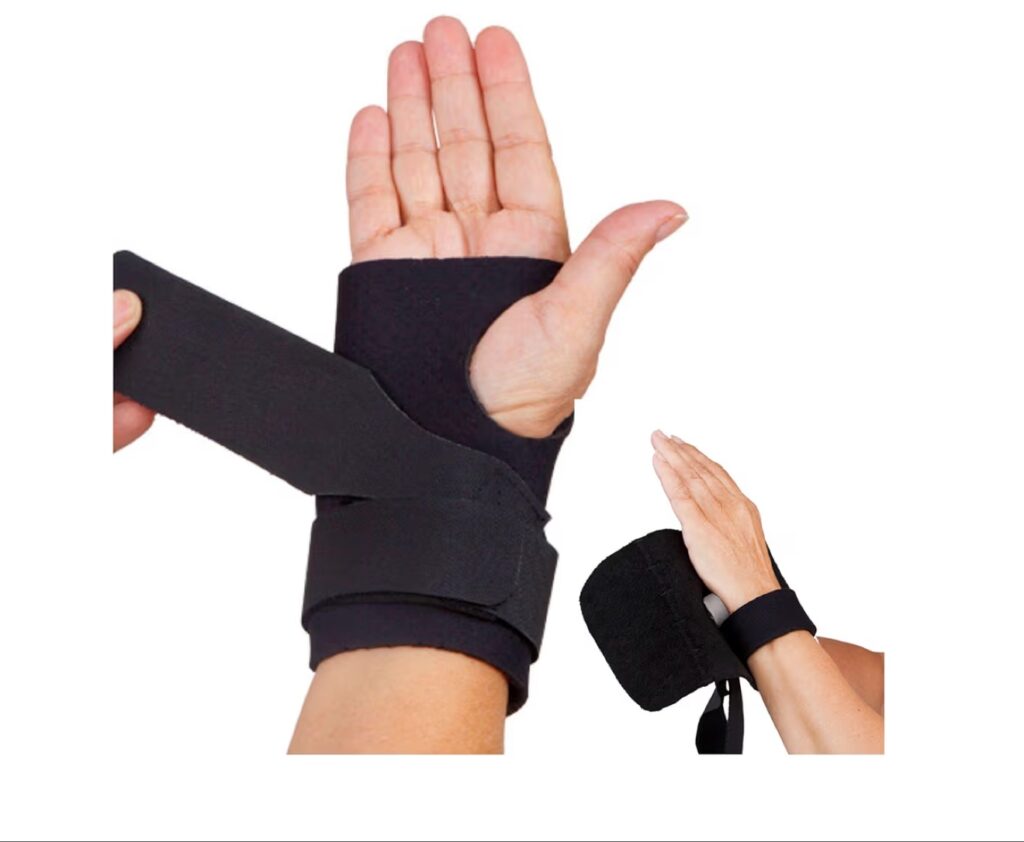
Comfort Cool Ulnar Booster on Amazon (choose your size and left/right on the listing)
Best for: Patients who failed lighter supports, midcarpal instability, or anyone needing a structured daytime splint rather than a motion-preserving band.
Best Budget: JOMECA TFCC Wrist Brace
A ring-pad concept similar to the Bullseye at a lower price — built-in soft O-ring pad over the ulnar side, 360° Velcro stabilization, full motion, breathable perforated fabric. Reasonable as a first-try brace for mild ulnar-sided pain or a travel backup. But it’s a generic brand with no clinical pedigree, marketed broadly for everything from carpal tunnel to arthritis (which tells you the TFCC specificity is thin), sizing accuracy is flagged in reviews, and the materials won’t last like the WristWidget.
Typically around $20–35 on Amazon.
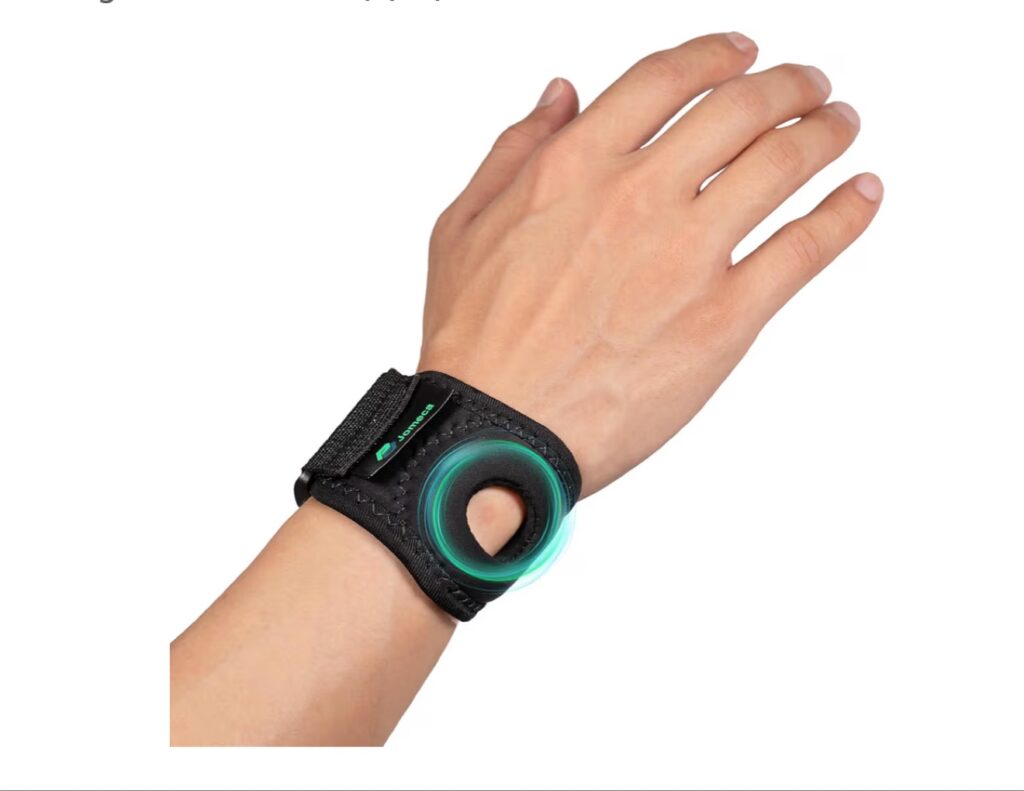
JOMECA TFCC Wrist Brace on Amazon (S/M shown — confirm your size on the listing)
Best for: Mild symptoms on a budget, or a trial before committing to a pricier brace.
How to Choose
Match the mechanism to the diagnosis. True TFCC tear or DRUJ instability: radius/ulna approximation (WristWidget) or targeted ulnar stabilization (Bullseye, Ulnar Booster). Vague ulnar-sided ache without a diagnosis: start with the WristWidget as the lowest-risk, highest-function option — and get the diagnosis if it persists.
Decide how much motion you need. Full-motion bands (WristWidget, Bullseye, JOMECA) for people who must keep using the hand — workers, athletes, parents. Semi-restrictive (Ulnar Booster) for failed lighter supports or instability that needs real structure. Full immobilization is a different category (rigid wrist splint, usually nighttime) — not this page.
Fit is the therapy. The WristWidget’s one-size simplicity is a feature; the Bullseye’s ring must sit over the ulnar head; the Ulnar Booster’s foam disc goes over the pisiform. A mispositioned TFCC brace is just an expensive wristband — follow the fitting instructions.
When NOT to brace it yourself: pain after a fall or trauma (possible fracture — get imaged), clicking with a sense of the wrist “giving way” (instability needing surgical assessment), numbness into the ring and small fingers (could be ulnar nerve, not TFCC), or no improvement after 6–8 weeks of consistent bracing. All of those need a hand specialist.
FAQ
How is a TFCC brace different from a regular wrist brace? A regular brace compresses the whole wrist to limit motion. A TFCC brace specifically stabilizes the distal radioulnar joint — bringing the radius and ulna together — while allowing wrist motion. Different problem, different mechanics.
Can I wear it during sports or in water? The WristWidget is explicitly water-safe and designed for full activity, including weight-bearing sports. Neoprene options (Ulnar Booster) handle sweat poorly by comparison — another reason to match the brace to the lifestyle.
How long until it helps? Mild cases often feel better within days to weeks of consistent wear; the tissue itself typically needs 6–12 weeks of protected loading. If there’s zero improvement at 6–8 weeks, reassess rather than re-buy.
Should I wear it at night? TFCC braces are daytime, activity-based supports. Nighttime ulnar wrist pain usually wants either nothing (if positional) or a rigid resting splint — ask your hand therapist rather than sleeping in a motion-preserving band.
The OT Review may earn a commission on purchases made through links on this page, at no extra cost to you.