Best Standard Wheelchair for Seniors
Wheelchair prescription looks simple from the outside — pick a chair with footrests — but seat-to-floor height is where the clinical outcomes live. Too high and the foot-propeller can’t reach the floor; too low and transfers become a deep squat. The chairs on this page all have swing-away footrests and adjustable rear-wheel/axle positions, and my top two also have adjustable caster height — the adjustments that let you actually fit the chair to the patient instead of fitting the patient to the chair.
I’m Josh Ramsey, a licensed occupational therapist in long-term care. Here’s what I’d recommend.
Our Top Pick: Drive Medical Viper Plus GT
The most adjustable chair at its price point, full stop. Three-position adjustable-angle caster forks, dual-axle rear wheels giving 17.5″ (hemi) or 19.5″ (adult) seat-to-floor height, telescoping seat depth (16″–18″), back angle adjustable 5°–20° with height from 17″–19″, universal flip-back removable arms with 8 height positions, and tool-free swing-away footrests. One SKU genuinely fits multiple body types, which is why it works for discharge planning when you don’t know exactly who’s getting the chair.
It’s aluminum with 24″ quick-release composite wheels and 8″ front casters, so at under 32 lb (frame, without rigging) it’s the lightest chair here for caregivers loading cars — that matters more than most families expect. The hemi conversion (17.5″) supports foot-propelled patients, a key geriatric population. Seat widths 16″ through 22″ (the 22″ bumps capacity to 350 lb; the rest are 300 lb).
The honest costs: $500–700 is two to three times a basic steel chair, a hard sell for self-pay. And more adjustments mean more maintenance points — caster-fork angle and telescoping rails need periodic checks, which is a caregiver education item.
Typically around $500–700 through DME retailers (ADW Diabetes, RehabMart, and similar).
Best for: Discharge planners and families who need one chair to fit the patient properly — especially foot-propellers and anyone between standard sizes.
Best Value: Drive Medical Cruiser III
Same three-position caster adjustment and dual-axle hemi conversion as chairs costing twice as much — the best adjustability-per-dollar on this page. Carbon steel frame (heavier, but proven in facility and rental fleets), sealed wheel bearings, flip-back removable arms, swing-away footrests, seat widths 16″–20″, 300 lb capacity. Realistic street price from in-stock retailers is around $270–340. (One retailer’s headline price near $184 is frequently out of stock — don’t plan around it.)
The steel frame runs about 36 lb, so it’s the harder lift for frail caregivers, and the flip-back arms aren’t height-adjustable like the Viper’s.
Typically around $270–340.
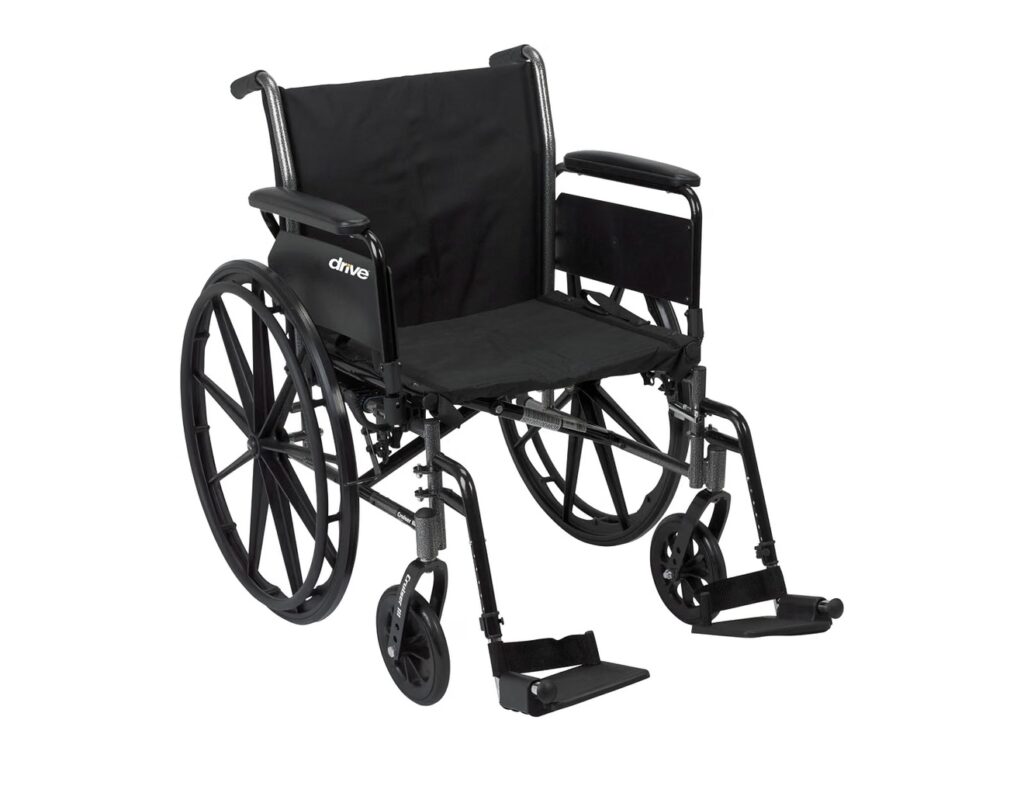
Drive Medical Cruiser III on Amazon (20″ seat shown — choose your seat width on the listing)
Best for: long-term care discharge fleets, rental stock, and budget-conscious families who still want real adjustability.
Budget Dual-Axle: Medline Excel 2000
The cheapest dual-axle hemi chair from a major manufacturer — around $214–350 — with easy-clean vinyl upholstery (an infection-control advantage in facilities) and a lifetime frame warranty. Here’s the critical, verified distinction: the Excel 2000 does not have adjustable caster height. Medline’s own spec copy claims only the dual-axle hemi conversion (seat-to-floor roughly 18″–20″, though some variants list 17.5″–19.5″ — verify). If caster adjustment is a requirement, the two Drive chairs above are your options. It’s also the heaviest chair here at ~38 lb with no quick-release wheels, and the removable arms aren’t flip-back, which makes lateral transfers harder.
Typically around $214–350.
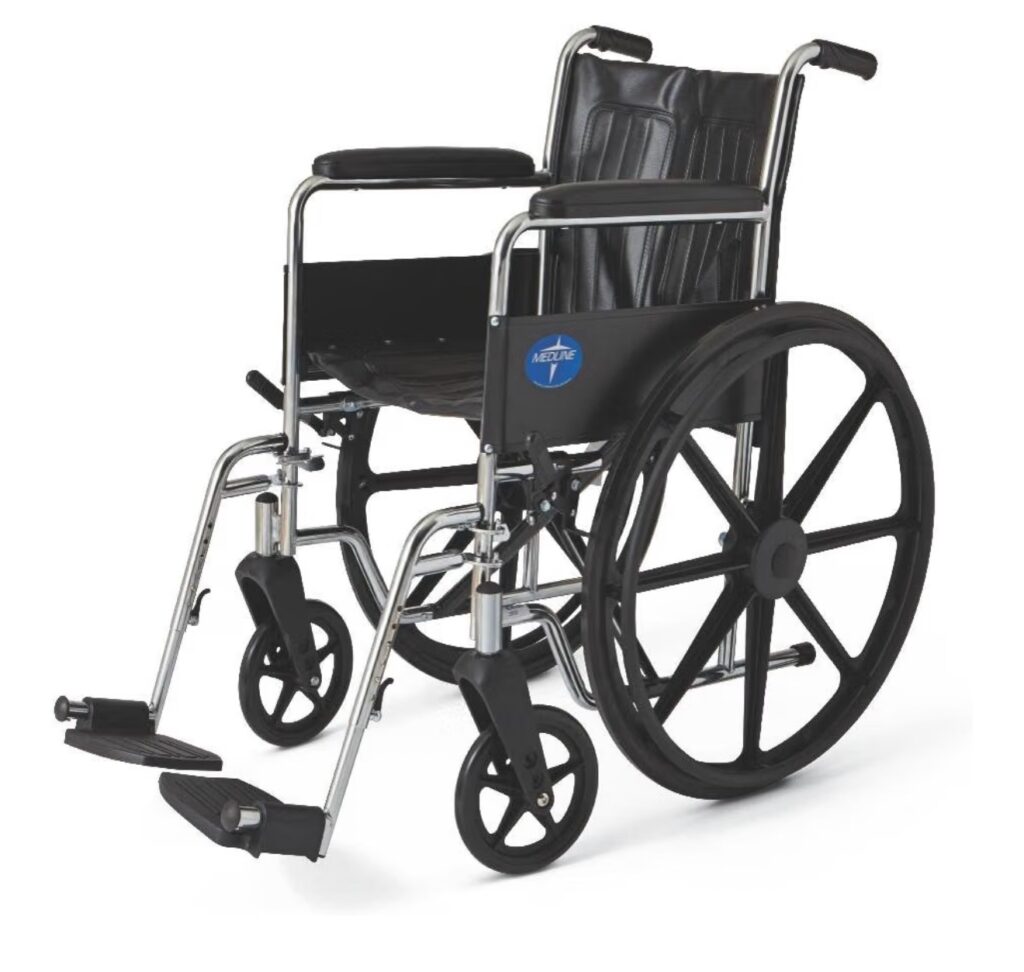
Medline Excel 2000 on Amazon (confirm the dual-axle hemi variant on the listing)
Best for: Facilities and families who need hemi-height foot propulsion at the lowest price and don’t require caster adjustment.
Widest Size Range: Invacare Tracer SX5
The broadest seat-width range here (16″–22″, with the 20″–22″ at 300 lb capacity), 14-gauge cross braces, and a modular front-rigging system that swaps across the Tracer line — a good single-line stock choice for a facility. Dual-axle conversion from 19.5″ standard to 17.5″ hemi. Two verified caveats: no manufacturer-claimed caster height adjustment (8″ casters on fixed forks), and front rigging is often sold separately — swing-away footrests can add $50–90 to the real price, so confirm what’s in the box. The common 16″–18″ sizes are rated 250 lb, the lowest here.
Typically around $420+ before rigging.
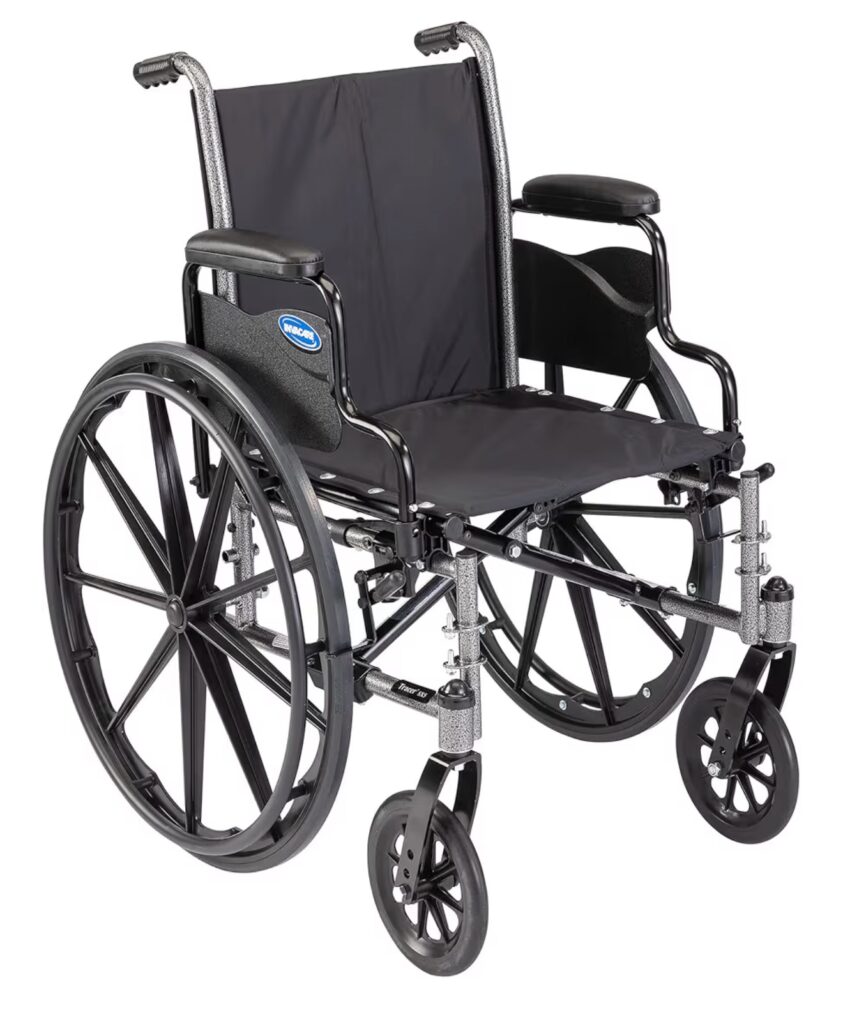
Invacare Tracer SX5 on Amazon — confirm the listing includes swing-away footrests; they’re frequently sold separately.
Best for: Facilities standardizing on one line across sizes, and patients needing the 22″ width.
How to Choose
Start with propulsion method. Can the patient foot-propel? Then you need hemi seat-to-floor height (around 17.5″) — every chair here converts. Can’t propel at all and will always be pushed? Then prioritize transport weight and caregiver ease over adjustability, and don’t overpay for features nobody will adjust.
Understand what the adjustments do. Rear-axle position sets seat-to-floor height (foot propulsion, transfer height, pressure distribution). Caster-fork height keeps the frame level when you change the axle — without it, a hemi conversion can leave the chair tipping slightly forward. That’s why I weight caster adjustment heavily: it’s the difference between a chair that’s fitted and a chair that’s approximated.
Measure the patient, not the doorway first. Seat width: hips plus an inch per side. Seat depth: back of buttocks to back of knee, minus two inches. Then check the doorways — a 20″+ chair doesn’t fit every home bathroom.
When NOT to buy a standard wheelchair: anyone who needs postural support or pressure relief beyond a cushion needs a proper seating evaluation, not a catalog chair. Tilt-in-space, reclining, and custom seating are different categories entirely. And if the long-term plan is community mobility, talk to your OT or PT about a lightweight or ultralight chair — standard “depot” chairs are heavy by design.
FAQ
What’s the difference between hemi height and standard height? Hemi (about 17.5″ seat-to-floor) lets a patient with one functional leg reach the floor to propel with their foot — the most common self-mobility method in geriatrics. Standard (about 19.5″) suits patients who’ll always be pushed. Dual-axle chairs convert between the two.
Do I really need swing-away footrests? Yes, for almost everyone. They swing aside for stand-pivot transfers and remove entirely for slide-board transfers. Fixed footrests turn every transfer into an obstacle course.
How much does chair weight matter? Enormously for the caregiver. A 38 lb steel chair vs. a 32 lb aluminum one is the difference between a spouse who can load the car and one who can’t. If the patient travels, weight is a top-three criterion.
Will Medicare cover a standard wheelchair? Manual wheelchairs are routinely covered DME with qualifying documentation (typically a face-to-face exam and documented mobility limitation in the home). The supplier usually handles verification.
How do I size seat height for a patient who propels with their feet? Measure from the patient’s heel to the back of the knee (the popliteal fold) — that’s the seat-to-floor height they need, measured to the top of the cushion, so their feet rest flat on the floor. Then subtract the cushion’s compressed thickness to get the wheelchair’s actual seat-to-floor height. And don’t forget: a cushion raises the seat. A 3-inch cushion on a standard 19.5-inch chair puts the sitting surface over 22 inches — high enough to strand a foot-propeller’s feet off the floor. That’s exactly what hemi-height chairs (about 17.5 inches) are for.
What are casters, and does their size matter? Casters are the small front wheels of the wheelchair. Their size matters more than people expect: larger casters roll over thresholds and door lips more easily, while smaller ones make the chair shorter and easier to turn in tight indoor spaces. If the chair starts to flutter, wobble, or drag on one side, worn casters are the first thing to check — they’re a cheap fix that restores how the whole chair handles.
The OT Review may earn a commission on purchases made through links on this page, at no extra cost to you.