Best Carpal Tunnel Splints
Carpal tunnel syndrome is a mechanical problem with a mechanical solution: keep the wrist neutral, especially at night, because sleeping with the wrist bent is what bathes the median nerve in pressure for eight hours. A good splint doesn’t need to be fancy — it needs to hold neutral, fit the wrist, and actually get worn. Compliance beats engineering every time.
I’m Josh Ramsey, a licensed occupational therapist. A quick but important note before the picks: splints manage symptoms; they don’t diagnose. If you have persistent numbness, dropping objects, or thumb weakness, see your physician or a hand therapist — those can signal nerve changes that need more than a brace.
Our Top Pick: Breg Cock-Up Wrist Splint
The clinic favorite, and the one I’d hand a patient first when they need true rigidity. The key feature is the removable, malleable palmar stay — a clinician (or the patient) can contour the exact wrist angle, which matters when someone needs slight extension rather than strict neutral. The padded 8″ construction balances that rigidity with all-day comfort, fingers stay completely free, and the size range (XXS through XL, by wrist circumference from under 5.75″ up to 9″) fits small-statured patients far better than one-size options. Latex-free, left/right specific, HCPCS L3908.
Caveats: right/left-specific sizing complicates clinic stocking (you need both hands in each size), the 8″ length can feel short for patients wanting more forearm leverage, and hook-and-loop-only closures don’t contour as precisely as laced designs.Typically around $29–49 through DME retailers (Serfinity Medical, USA Wheelchair, Grayline Medical — stock varies by size).
Best for: Moderate CTS needing true rigidity — nighttime wear or daytime flares — and anyone whose wrist angle needs clinician fine-tuning.
Best for Day Wear: Mueller Green Fitted Wrist Brace
Two rigid stays — one palmar, one dorsal — plus a padded palmar spoon, which gives firmer immobilization than the palmar-stay-only budget braces and gets closer to a clinical splint. The breathable recycled-PET fabric has antimicrobial treatment for odor, and the slip-on design with two adjustable straps is one of the easiest donnings here — genuinely one-hand feasible, which matters when the affected hand is the problem. Latex-free.
The compromises: only two size ranges (S/M 5–8″, L/XL 8–10″), so borderline patients can get a poor fit — one reviewer with an 8″ wrist found the straps barely fastened. Some users report heat retention despite the “breathable” marketing, and the stays aren’t malleable, so no angle customization.
Typically around $20–32.
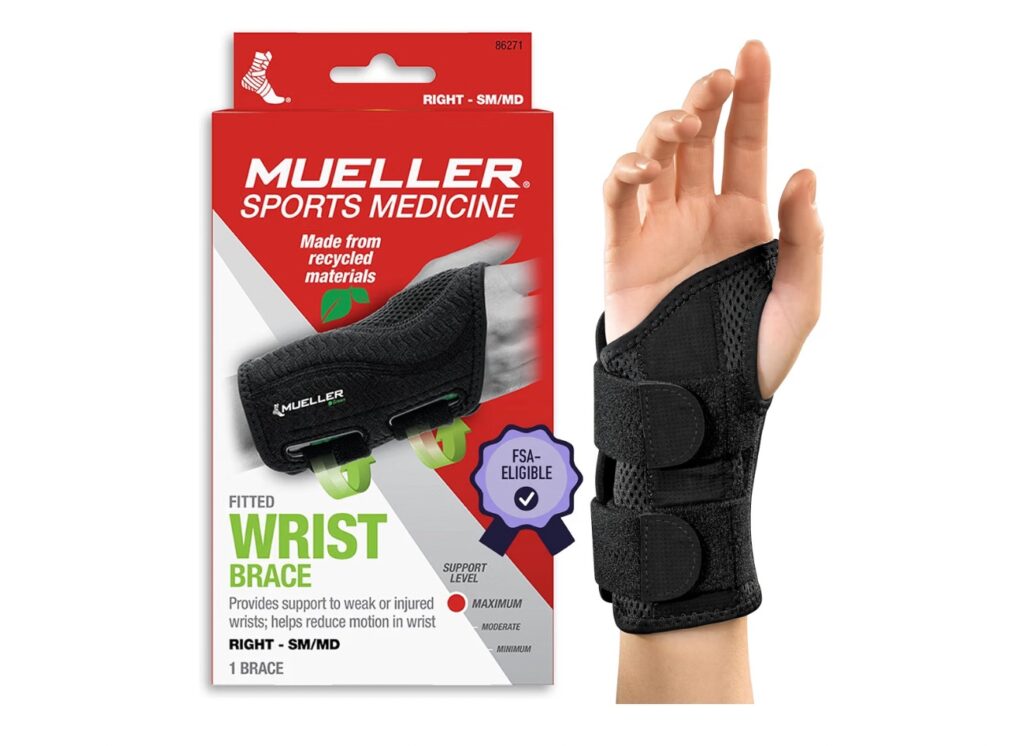
Mueller Green Fitted Wrist Brace on Amazon (choose your size and left/right on the listing)
Best for: Mild-to-moderate CTS during the day — typing, desk work — where easy one-handed donning matters.
Best for Nighttime: FUTURO Night Wrist Sleep Support (3M)
Designed specifically for the nighttime problem: cushioning beads in the palm promote a neutral hand position while you sleep, and the easy-sleeve slide-on with three straps is the simplest application here — ideal for limited dexterity or bilateral symptoms. One size (5.25–9″), reversible for either hand, latex-free, cheap, and everywhere (Amazon, Walmart, Target).
Be clear-eyed about what it is: hand specialists note it has no true rigid volar stay — just a foam pad — so it provides considerably less support than the Breg or Mueller. It’s moderate support, not immobilization. Wrong pick for heavy work, and the one-size design can’t fit very small or very large wrists precisely.
Typically around $15–26.
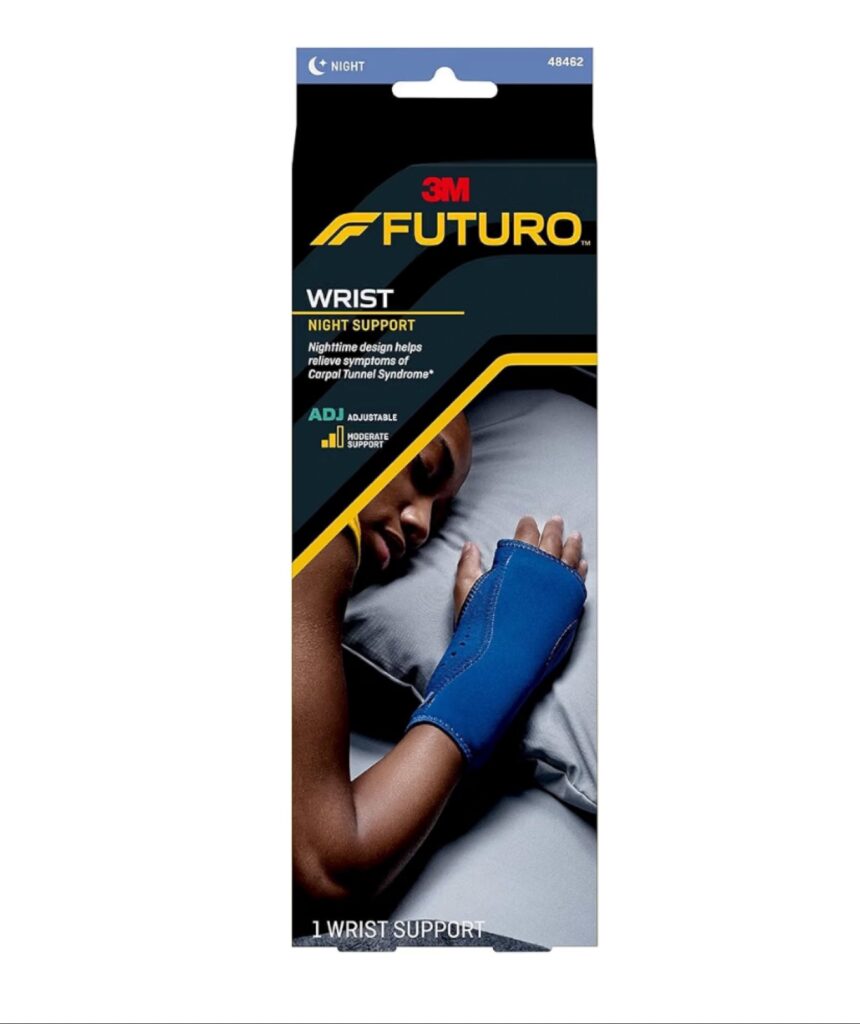
FUTURO Night Wrist Sleep Support on Amazon
Best for: First-line nighttime conservative management of mild CTS — especially patients who won’t tolerate rigid splints.
Best Budget: Vive Health Carpal Tunnel Wrist Brace
The lowest price here (around $13–14) with a removable composite splint — which gives you a built-in step-down: full support, then compression-only once symptoms settle. Machine washable, three colors, 60-day guarantee. But the composite splint is less rigid than metal stays, the neoprene body retains heat, and latex-free status could not be verified — don’t recommend it for latex- or neoprene-sensitive patients without checking. One-size fit is imprecise, and it has less clinical pedigree than the others.
Typically around $13–14 direct from Vive Health.
Best for: Cost-sensitive patients with mild symptoms, or a trial brace before investing in a Breg.
How to Choose
Night vs. day is the first fork. Night splints fight the flexion problem during sleep (FUTURO’s whole reason to exist). Day splints need to balance support with hand function — rigid enough to matter, open enough to type and grip. Many patients end up with one of each, and that’s fine.
Measure the wrist. This is where prefabs fail: a splint that doesn’t fit doesn’t get worn. Measure wrist circumference and match the manufacturer’s size chart — don’t eyeball it. One-size products are a compromise; sized products (Breg’s XXS–XL) fit better.
Rigid vs. moderate support. True rigidity (Breg, Mueller) for moderate symptoms and flares; moderate support (FUTURO, Vive) for mild symptoms and patients who won’t tolerate rigid. When in doubt, start rigid at night — that’s where the evidence for conservative CTS management is strongest.
When NOT to splint it yourself: worsening numbness, constant (not intermittent) tingling, thumb weakness or visible thenar muscle wasting, symptoms after a traumatic injury, or no improvement after a few weeks of consistent night splinting. Those all need a clinician, not a better brace.
FAQ
How long should I wear a wrist splint each day? Night splints: all night, every night — consistency is the treatment. Day splints: during aggravating activities, with breaks. If a splint makes numbness worse, stop and get evaluated rather than pushing through.
Can I wash my splint? Most, yes — remove any metal or composite stays first, then hand or machine wash gentle and air dry. The Vive is explicitly machine washable; the Breg’s felt liner does fine with gentle washing.
How tight should the straps be? Snug but not compressive — you should be able to slip a finger under the straps. Over-tightening doesn’t add support; it adds nerve compression, which is the opposite of the goal.
Do I need a right- or left-specific splint? The Breg, Mueller, and Vive are handed — order the correct side. The FUTURO is reversible. Double-check before ordering; it’s the most common purchasing mistake in this category.
What does “neutral wrist” actually look like? Not straight — that’s the most common misconception. True neutral for carpal tunnel purposes is typically about 20 degrees of extension (wrist tipped slightly back). That’s the position where the carpal tunnel has the most space and median nerve pressure is lowest. A splint holding you dead straight is better than a bent wrist, but a splint holding ~20 degrees of extension is doing the actual job.
Can I work or type while wearing my splint during the day? Don’t try to power through work in it. A rigid splint worn during the day turns every wrist-flexion task into a fight against resistance — you’re adding load to the exact tendons you’re trying to rest, which defeats the purpose. Wear the splint during aggravating activities and take it off for breaks; if your job requires constant wrist motion, that’s a conversation about modifying the activity, not tightening the splint.
The OT Review may earn a commission on purchases made through links on this page, at no extra cost to you.