Best Bed Rail for Seniors
Getting in and out of bed is a transfer, and transfers are where falls happen. A bed rail gives the patient something stable to push and pull against during sit-to-stand — and at night, a longer rail keeps a restless sleeper from rolling out. But bed rails are also the category with the sharpest safety edges: wrong type, wrong mattress, or a cognitively impaired patient, and the “safety” device becomes the hazard. Match the rail to the patient, not the marketing.
I’m Josh Ramsey, a licensed occupational therapist in long-term care. Here’s what I’d recommend for existing home beds — not hospital beds, which are a different world.
Our Top Pick: Stander EZ Adjust Bed Rail
The most versatile rail here: it collapses into a short bedside assist handle for daytime transfers and extends into a full-length fall-prevention rail at night — converting after installation, so one product covers both jobs. It pivots down 180° for bed access (caregiving, sheet changes, getting in and out without the rail in the way), which is rare at this price. Dual safety strap secures it to the bed frame, 300 lb capacity, fits twin through king on traditional home beds with 12–18″ mattresses, and it ships with a 4-pocket organizer pouch — which genuinely reduces risky reaching for nightstand items.
The limits are specific: NOT for adjustable beds or extra-soft mattresses, needs 14–15″ of under-bed clearance to pivot (low platform beds may not qualify), and it’s 14 lb with minor 4-bolt assembly — not truly tool-free. Stander backs it with a lifetime satisfaction guarantee.
Typically around $114–185 (Amazon’s Stander store has been cheapest, around $114–120).
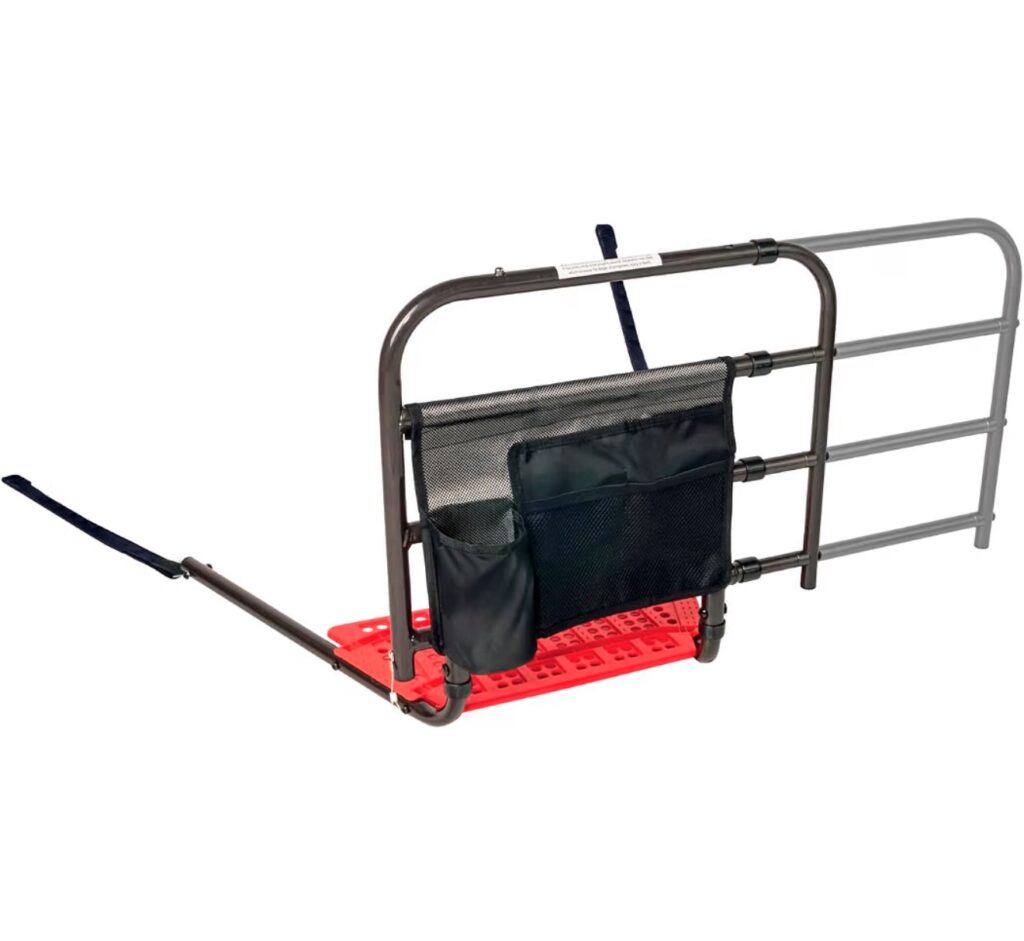
Stander EZ Adjust Bed Rail 8000 on Amazon
Best for: The standard aging-in-place bedroom — daytime transfer assist plus nighttime fall protection on a traditional bed.
Best for Adjustable Beds: Able Life Bedside Extend-A-Rail
The headline here is compatibility: it’s advertised as compatible with both home and many adjustable beds — a growing segment as more seniors sleep on electric adjustable bases — but adjustable-base compatibility genuinely varies by frame, so confirm your specific bed before ordering. Length adjusts 20–30″ with push-button, so it scales from grab bar to meaningful fall protection as needs change. It’s certified to ASTM F3186-17 (the adult portable bed rail safety standard — only a few products pass it), 300 lb capacity, fits 8–15″ mattresses, tool-free install, about 7 lb, and typically around $84–101 — strong value-to-safety ratio.
Two cautions: adjustable-bed compatibility still varies by frame (split bases and retainer bars can conflict — verify the specific combo), and the push-button length adjustment could theoretically be released accidentally, which is a caregiver-education point for cognitively impaired users.
Typically around $84–101.
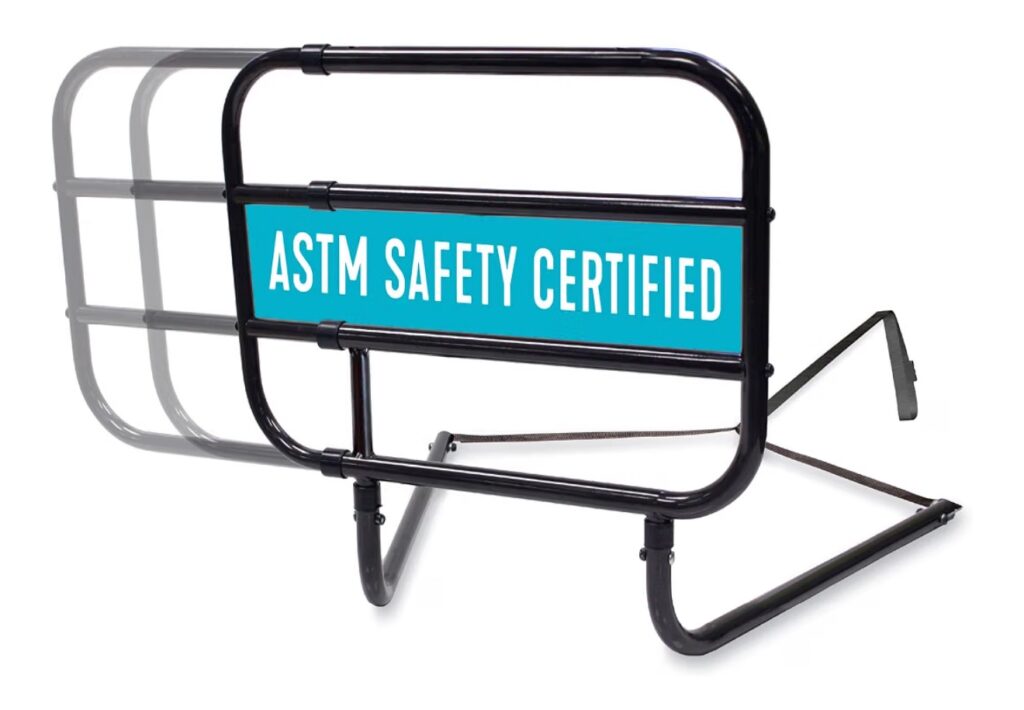
Able Life Bedside Extend-A-Rail on Amazon
Best for: Adjustable-base beds, and anyone who wants the rail length to grow with changing needs.
Best Compact Handle: Stander BedCane
For the patient who needs a steadying point and nothing more — and who’d reject anything that looks medical. The BedCane is a low-profile padded handle on a wooden base board that slides between mattress and box spring; it looks like furniture, which is an acceptance factor I take seriously in home OT. It’s ASTM F3186-17 certified, 300 lb capacity, tool-free placement with a safety strap, reversible for either side, and portable enough for travel — the only one here practical for hotels or a relative’s house.
But be clear about what it isn’t: a 10.5″ handle provides zero meaningful fall protection. Wrong pick for anyone at real risk of rolling out of bed. It also fits only 6–14″ mattresses (per the manufacturer — thick pillow-tops are out).
Typically around $120 direct from Stander.
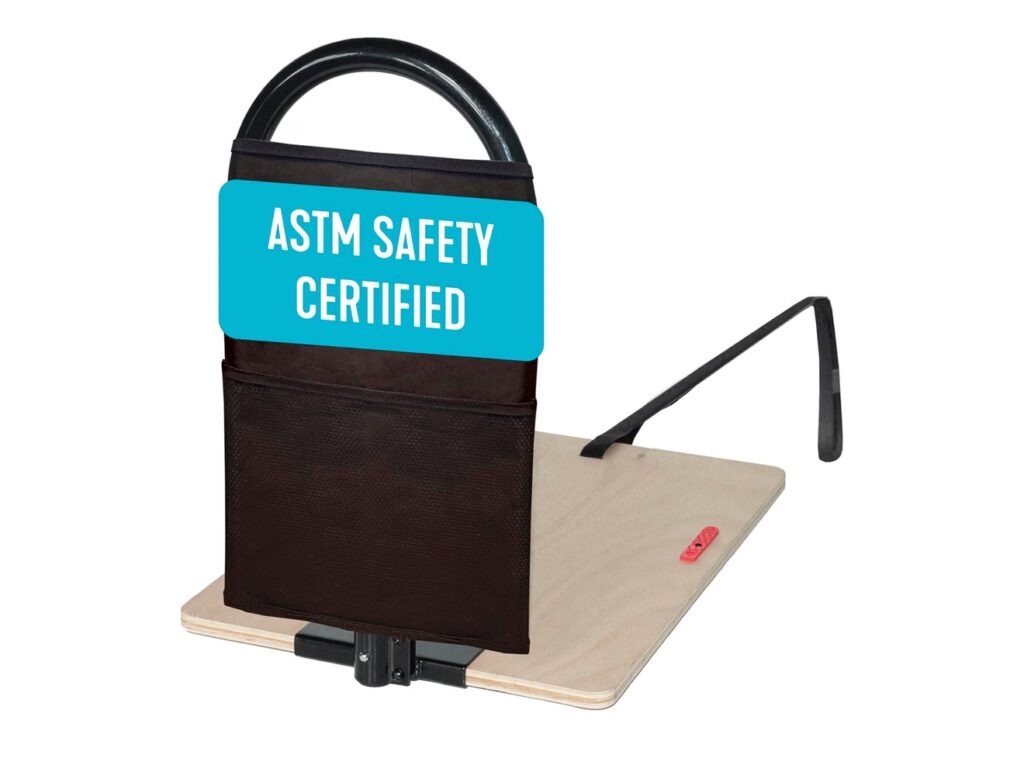
Stander BedCane 2041 on Amazon
Best for: Independent seniors who need a steadying point for sit-to-stand and will reject anything institutional-looking.
Best Budget (With a Big Caveat): Medline Bed Assist Bar
At around $36–50, it’s the cheapest option by far — floor-standing legs plus safety straps, so it doesn’t depend on mattress thickness or a box spring, and it works on platform beds where under-mattress rails struggle. Lightweight (about 6.4 lb), tool-free, includes a storage bag.
Now the caveat, stated as plainly as I can: Medline explicitly rates this as NOT weight-bearing. It is a balance and steadying aid — not a pull-up bar. For a patient who will haul themselves upright with their arms (weak quads, heavy upper-extremity reliance), this is the wrong product and potentially a dangerous one. Frame it as balance assist only. It also has a bulky 28″-deep floor footprint that can obstruct walking paths in small bedrooms, and no ASTM certification was found.
Typically around $36–50.
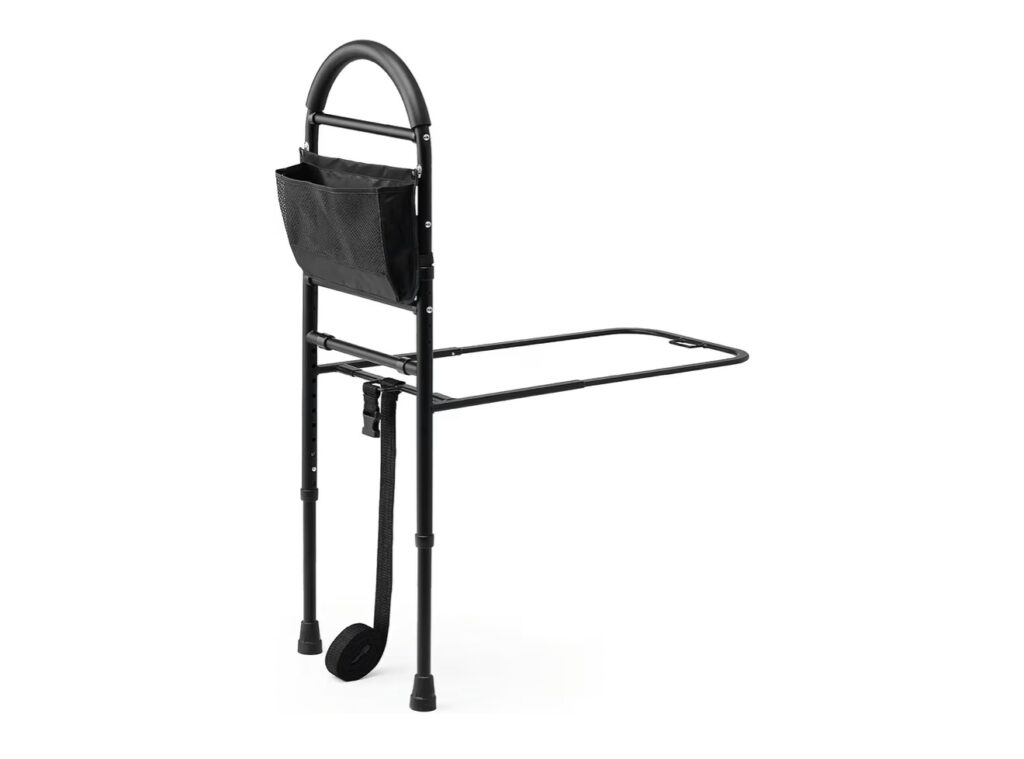
Medline Bed Assist Bar on Amazon
Best for: Tight budgets and platform beds — but ONLY for patients who need steadying, not pulling, during the transfer.
How to Choose
Start with the job: transfer assist, fall prevention, or both. Transfer assist only → a compact handle (BedCane) or floor-standing aid. Fall prevention at night → a longer rail (EZ Adjust extended, Extend-A-Rail). Both → the convertible EZ Adjust. Buying a handle for a fall-risk patient is the most common mismatch I see.
Verify the bed, not just the mattress size. Traditional innerspring/box spring? Almost everything fits. Adjustable base? The Able Life is the only one here marketed for them — and even then, verify the specific frame combo. Extra-thick pillow-top or very soft mattress? Under-mattress rails lose stability — the floor-standing Medline or a different solution. Measure mattress thickness and check it against the rail’s stated range.
The strap is the safety device. Weight capacity is a static rating; what keeps a rail from becoming a lever that tips the patient is proper strap anchoring to the bed frame. Install it exactly per instructions and re-check strap tension periodically — they loosen.
When NOT to use a bed rail: patients with cognitive impairment who may climb over, get limbs caught, or become entrapped — entrapment between rail and mattress is a documented fatal hazard, and no rail is safe for a patient who can’t understand it. Also: anyone who needs to pull hard to stand needs a weight-bearing solution (or a different transfer method), not a balance aid. When in doubt, this is a conversation with the patient’s OT or PT, not a purchase decision.
FAQ
What is ASTM F3186-17 and why does it matter? It’s the voluntary safety standard for adult portable bed rails, covering structural integrity and entrapment testing. Only a few products pass it (the Stander BedCane and Able Life Extend-A-Rail here do). It’s the closest thing this category has to independent safety validation — I weight it heavily.
Can bed rails be used on adjustable beds? Most under-mattress rails: no — the moving base defeats the anchoring. The Able Life Extend-A-Rail is advertised as compatible with many adjustable beds, but this varies by frame. Always verify the specific bed-and-rail combination.
Are bed rails safe for dementia patients? This needs individual clinical judgment. Entrapment risk is real and serious for patients who may thrash, climb, or wedge limbs. Discuss with the care team — sometimes the safer answer is a low bed with floor mats, not a rail.
Do I need one rail or two? One, on the patient’s exit side, for most people. Two rails effectively create an enclosure — that’s a restraint-adjacent decision with entrapment implications, not a shopping decision. Talk to the OT.
The OT Review may earn a commission on purchases made through links on this page, at no extra cost to you.