It’s a situation I see a lot in long-term care: someone had polio years ago, lives with the weakness it leaves behind, and just had surgery. Now they’re non-weight-bearing on one leg, and the family needs a way to get them from the bed to the wheelchair, the wheelchair to the toilet, and the wheelchair into the car — without hurting the person or the caregiver.
I’m Josh Ramsey, a licensed occupational therapist with 16 years of experience, most of it in long-term care. These are the devices that actually work at home, matched to what the person can and can’t do with their legs — and where each one falls short.
Before you buy anything: this is general information, not a prescription for your person. The right device depends on their strength, balance, weight, pain, and the layout of their home. A physical therapist or occupational therapist doing an in-home evaluation is the right next step. If you’re not sure, get the eval first and buy second.
How to Choose: Start With Weight-Bearing Status
- Non-weight-bearing on one leg, but the other leg works → a sliding transfer board. They scoot across a board from one seat to another. No standing required.
- One good weight-bearing leg, and they can stand briefly with help → a pivot disc or turner. They stand up on the good leg, pivot on the disc, and sit down in the new seat.
- Can bear most of their weight but needs help getting up → a sit-to-stand assist device or a floor-to-ceiling pole for leverage.
- Neither leg can bear weight, or they can’t stand at all → a patient lift (Hoyer-style). Not a board, not a disc. A lift.
Get this wrong and the device doesn’t just fail — it creates a fall. A pivot disc used by someone who can’t stand is a fall waiting to happen. A transfer board used by someone with no trunk control is a slide off the edge of the bed.
A note on post-polio weakness: if your loved one had polio, the “good” leg probably isn’t fully good. It may fatigue fast, and overloading it all day can make the weakness worse. In practice, that often means a sliding board is the safer choice even if one leg can bear some weight, because the board takes the load off both legs instead of asking the stronger one to do all the work.
If hip precautions apply: if the surgery was a hip replacement, the standard posterior hip precautions usually apply for 6 to 12 weeks — check with the surgeon on the exact restrictions: don’t bend the hip past 90 degrees, don’t cross the operated leg past midline, don’t twist the operated leg inward. A transfer board helps here, because it keeps the hip level and avoids the twisting a pivot turn requires. My full hip recovery guide is here: Best Hip Replacement Recovery Essentials
Sliding Transfer Boards
The workhorse for non-weight-bearing on one leg. A board bridges the gap between two seats — bed to wheelchair, wheelchair to toilet, wheelchair to car — and the person scoots across it.
Our Top Pick: BeasyTrans Original (Model 1100)
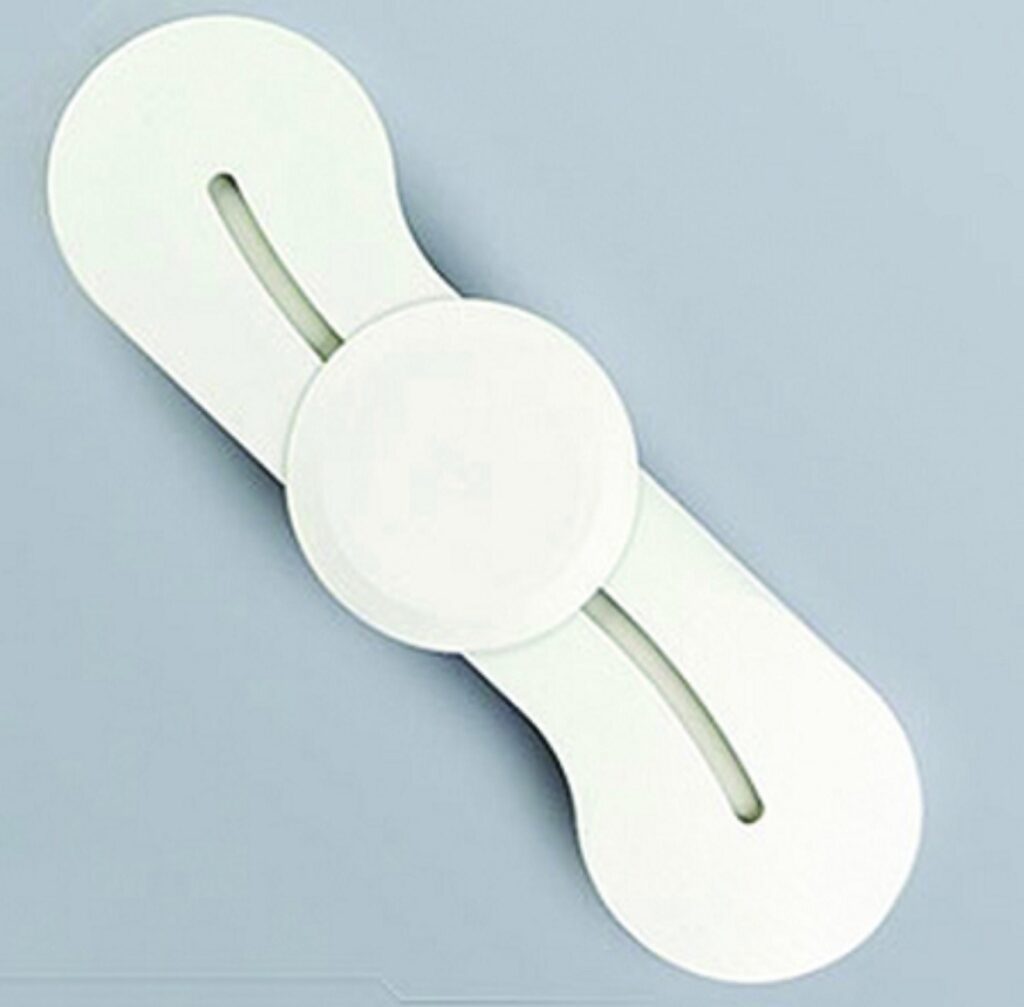
The board I reach for first when the transfer is hard: a wide gap, a heavy person, or skin that can’t take friction. Instead of sliding skin across wood, you sit on a round disc that glides along a track built into the board — you rotate and glide at the same time, which is exactly the motion a bed-to-wheelchair transfer needs.
It’s 40 inches long and 12 inches wide, rated to 400 lb, and weighs just 6.5 lb. The rotating seat is worth it for fragile post-polio skin or a fresh surgical incision that can’t be dragged across a board.
One warning: the disc can be a bit finicky — it has to be positioned right at the spot the person needs to sit and land, or the glide doesn’t work. Set the board and the disc placement before the transfer starts, not mid-transfer. And heavier patients don’t always slide easily on it, even within the 400-lb rating — if it sticks, don’t force it. Reposition and try again, or fall back to a plain board.
The honest costs: typically around $249–$445 depending on the seller — RehabMart has it at $249 on sale, while AliMed and Performance Health list it over $400. It’s long, so it needs clear space on both surfaces — tight bathrooms can be a problem.
Best for: Non-weight-bearing on one leg, fragile skin, wider gaps, or anyone transferring many times a day.
Best Value: DMI Wooden Slide Transfer Board (30″)

If the gap is short and the budget is real, a plain sealed-wood board does the job. The DMI board is 30 inches by 8 inches, rated to 440 lb, made of sealed Scotch pine with two cut-out handles and tapered ends. The Drive Medical RTL6045 is the same style of board you’ll find at any DME counter. Typically around $30 on Amazon (last verified October 2025) — at that price, buy two, one for the bedroom and one for the bathroom.
The honest costs: it’s a flat piece of wood, so there’s friction. Bare skin drags, and that means skin shear — a real concern for older adults and anyone with thin or fragile skin. Wear long pants, or put a slide sheet (see below) under the person. And 30 inches limits it: if the gap is wide, you need the longer BeasyTrans instead.
Best for: Short gaps, tight budgets, and anyone who wants a spare board in a second room.
View the DMI Wooden Slide Transfer Board on Amazon
Pivot Discs and Turners
For the person who can stand on one good leg with help: they stand up, turn, and sit down in one smooth motion. The caregiver guides the turn; the device does the rotating.
Our Top Pick: Etac Turner Pro
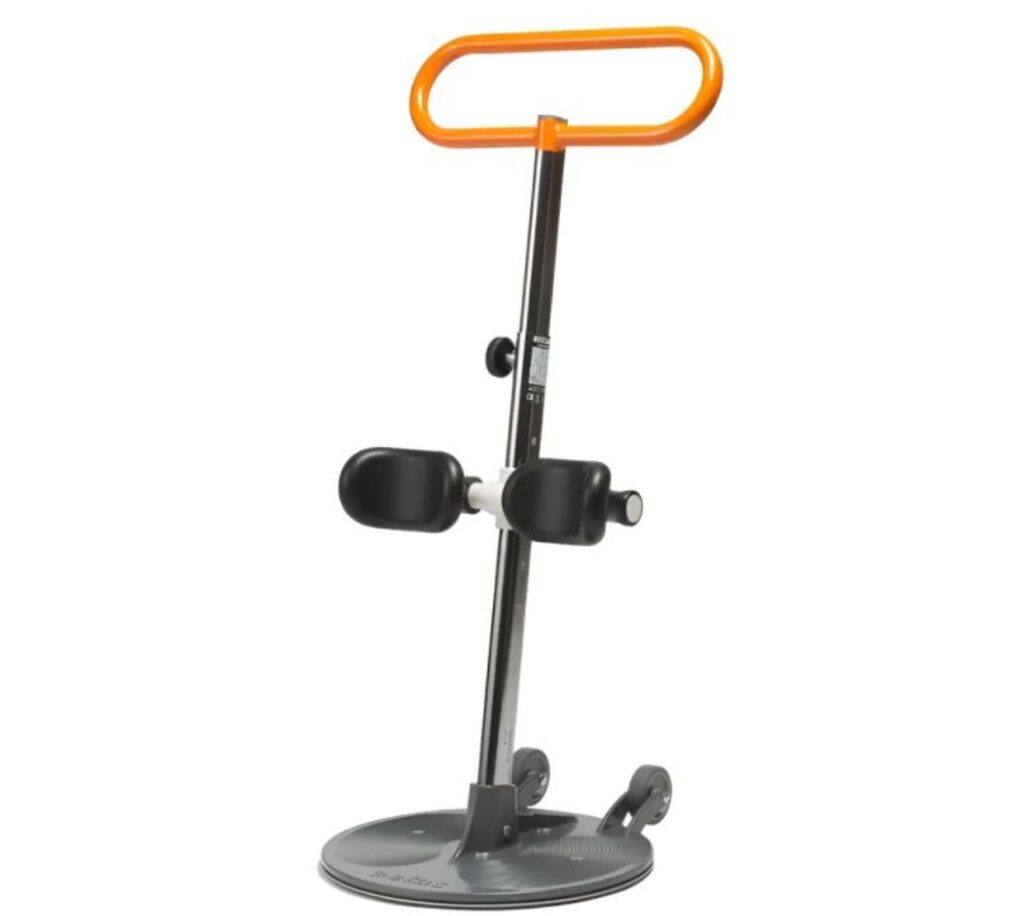
The best-built turner I’ve used. A standing frame with a 15.75-inch pivot platform, adjustable padded knee rests, and a bright orange dual handle the person pulls on to stand. The handle adjusts from about 31 to 47 inches, the whole unit folds flat, and it’s rated to 440 lb at about 16.5 lb.
What makes it worth the money is the knee rests. They brace the lower legs so the person can’t buckle forward during the stand — the moment most pivot transfers go wrong.
The honest costs: 1800wheelchair carries it at typically around $687 (checked October 2026). And it only works if the person can stand on one leg at all. If they can’t, this is the wrong device, full stop.
Best for: Someone with one good weight-bearing leg who can stand briefly with help — bed to wheelchair, wheelchair to toilet, wheelchair to chair.
View the Etac Turner Pro at 1800wheelchair
Budget Option: Vive Patient Turner

The same job — 360-degree swivel base, adjustable padded knee rests, ergonomic handles, built-in wheels to tilt and roll it between rooms — for typically around $270 on Amazon (last verified May 2026). It weighs about 20 lb.
Here’s the honest part: Vive doesn’t publish a weight capacity for this one that I could verify, and one Amazon reviewer reported it didn’t feel sturdy for a 218-lb adult. I’d only buy it for a lighter person who stands well with help, and I’d buy the Etac for anyone heavier, less steady, or over about 200 lb. A turner that flexes during a stand is worse than no turner at all.
Best for: A lighter person with good standing strength who needs the pivot assist on a budget.
View the Vive Patient Turner on Amazon
Simplest Option: Sammons Preston Transfer Disc (12″)
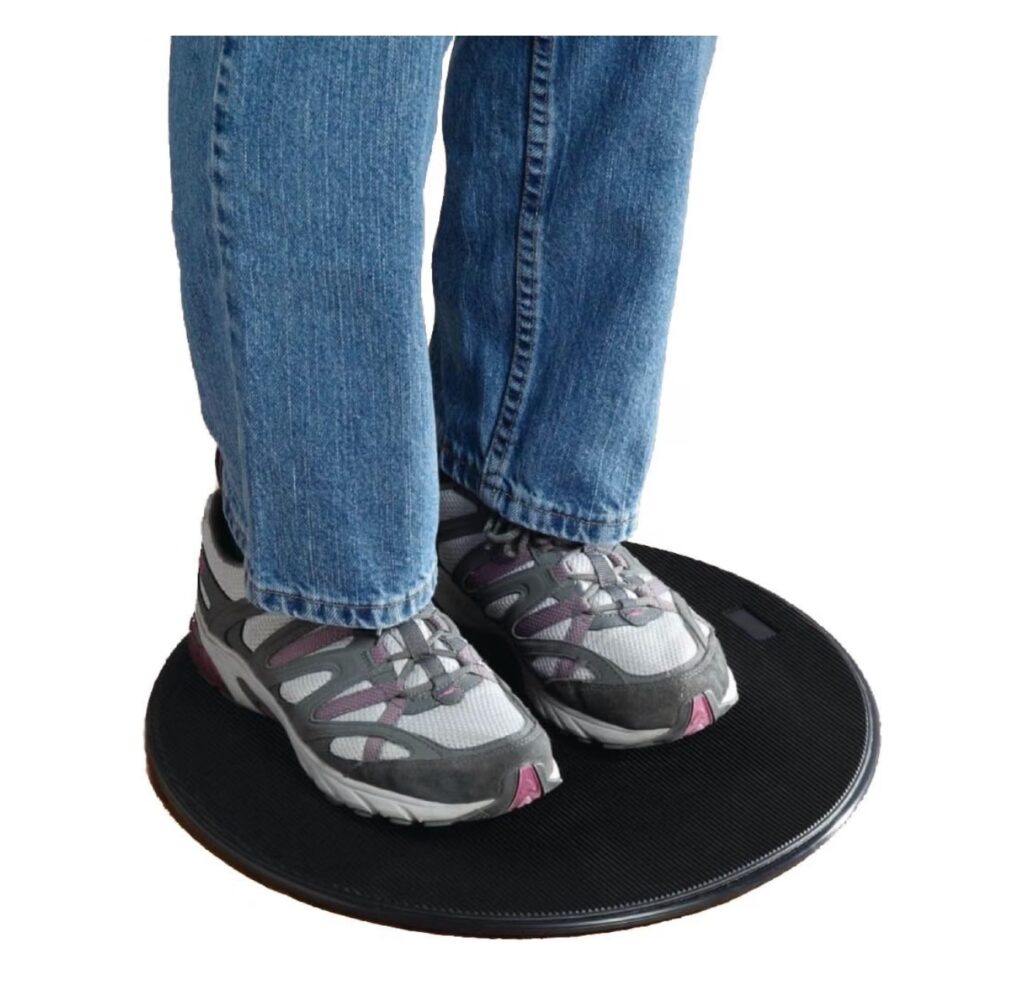
No handle, no knee rests — just a flat 12-inch disc the person stands on and pivots. It works when the person can stand and turn mostly on their own and just needs the rotation to be smooth instead of a shuffle-step on a bad leg. Typically around $75–$115. But it’s the least supportive option: good balance and a caregiver right there are non-negotiable, and never use it on a slick floor.
View the Sammons Preston Transfer Disc on Amazon
Floor-to-Ceiling Transfer Pole
Stander Security Pole & Curve Grab Bar
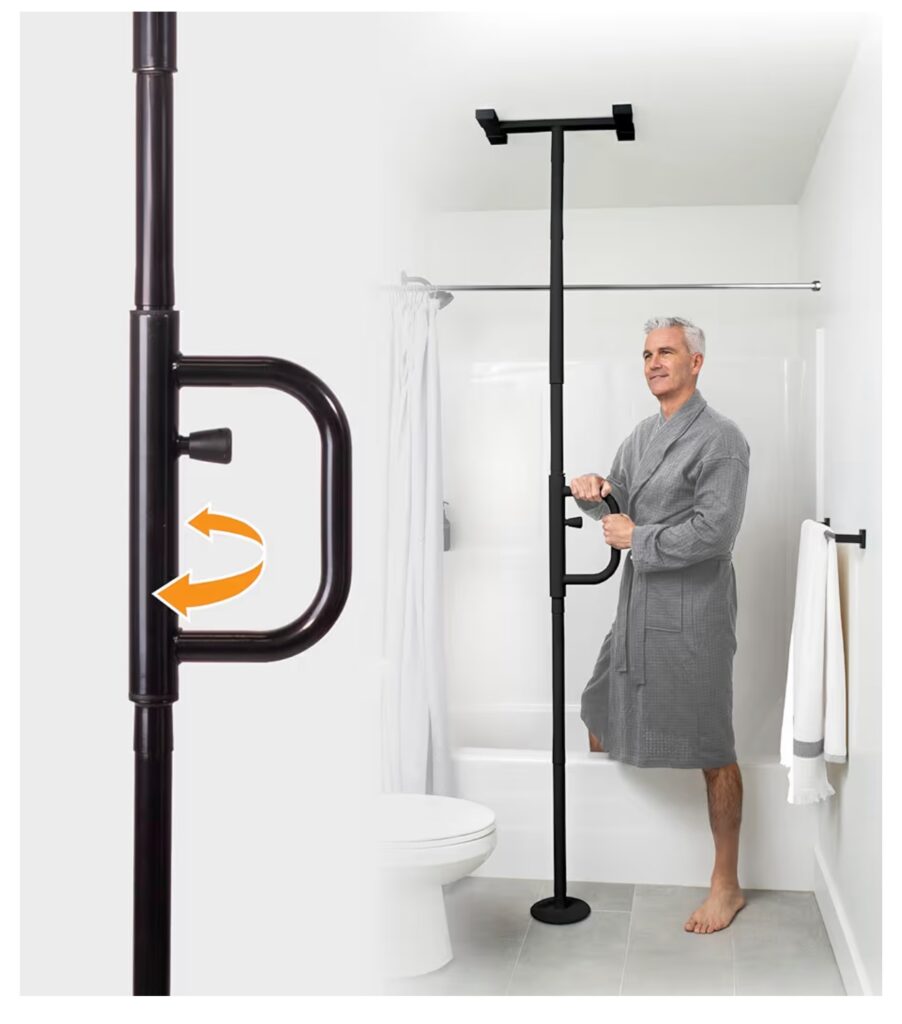
A pole that gives the person something solid to pull on when standing up from a bed, chair, toilet, or wheelchair. It tension-mounts between floor and ceiling (no screws, no drilling), fits flat ceilings from 7 to 10 feet, and the curved grab bar rotates and locks every 45 degrees. Rated to 300 lb, weighs 20 lb.
I like it because it stays in the room and gets used a dozen times a day — out of bed in the morning, up from the recliner, off the toilet. Pair it with a bed rail and grab bars and you’ve covered the three places most home falls start.
The honest costs: it needs a flat, solid ceiling — vaulted, drop, and sloped ceilings are all out, and it can’t go inside a bathtub or shower. The tension mount must be checked and re-tightened periodically; a pole that has worked loose is a trap. Typically around $179 on Amazon (Stander lists it at $209.99).
Best for: Bedside, toilet-side, or recliner-side standing help for someone who can pull themselves up but needs a solid grip.
View the Stander Security Pole & Curve Grab Bar on Amazon
Gait Belts: The Caregiver’s Best Friend
Vive Gait Belt with Handles

A wide, sturdy belt the person wears around the waist so the caregiver has something safe to hold onto during a transfer or a walk. Without one, caregivers grab arms — and pulling someone up by the arms is how shoulders get injured and how people get dropped. The Vive belt is 55 inches long, rated to 300 lb, with a quick-release metal buckle and handles spaced around the belt. Typically around $17 on Amazon. Buy two: one for the bedroom, one wherever the wheelchair lives.
The honest costs: it has to be snug — if it’s loose it rides up and does nothing — and it goes over clothing, never on bare skin. And it doesn’t make an unsafe transfer safe. If the person can’t bear weight, a belt doesn’t fix that. One caution: a Canadian Amazon listing for this belt says “discontinued by manufacturer,” though the US listing appears active — confirm availability before you order.
Best for: Every caregiver doing assisted transfers. This should be the first thing you buy, before any of the bigger devices.
View the Vive Gait Belt with Handles on Amazon
Sit-to-Stand Assist Devices
Vive Mobility Sit to Stand Patient Lift (MOB1043WHT)
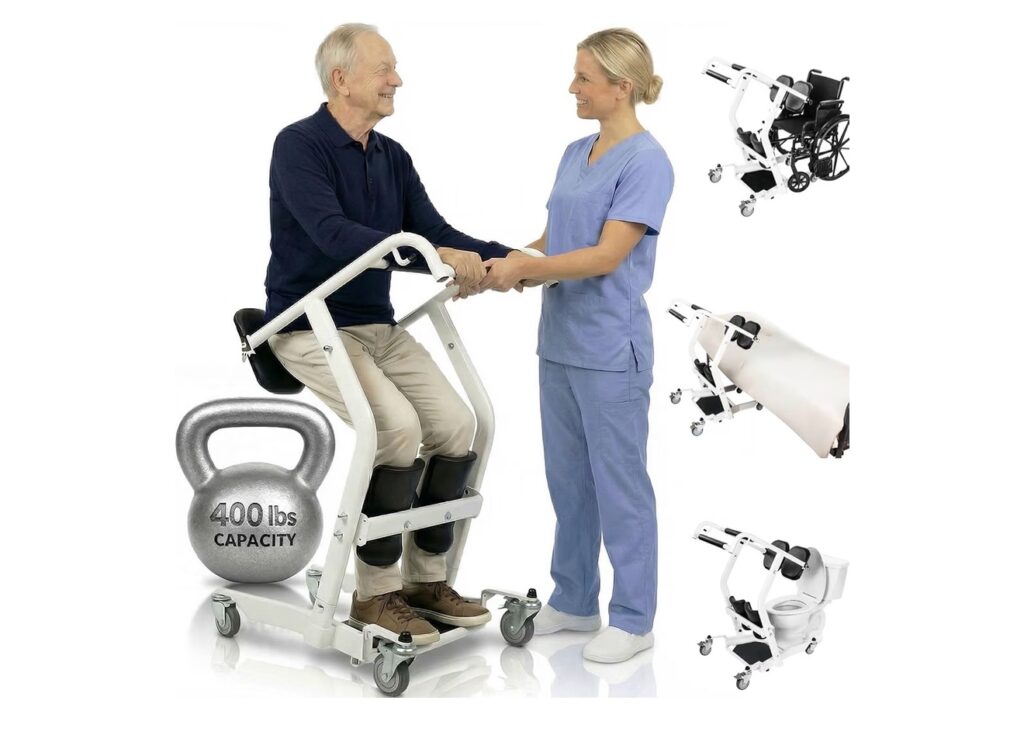
The middle ground between a turner and a full patient lift. A wheeled frame with a seat, a knee pad, and handles — the caregiver tilts the frame, and the person’s own leg strength, plus the frame’s leverage, brings them from sitting to standing. Then the frame rolls, with the person standing on it, to the new seat.
Rated to 400 lb, weighs 60 lb, fits users from 5’0″ to 6’5″. The base is 26 inches wide, so measure your doorways first — it won’t fit through a narrow bathroom door. Typically around $300 on Amazon (checked November 2026).
The honest costs: the person has to bear roughly 60–70% of their body weight. This is not a lift for someone who can’t stand — it assists a stand, it doesn’t replace one.
Best for: Someone who can bear most of their weight but can’t get from sitting to standing on their own — and a caregiver who needs the leverage instead of doing it with their back.
View the Vive Sit to Stand Patient Lift on Amazon
Patient Lifts: When a Board or Disc Is Not Safe
Hoyer Advance-E Power Lift (Joerns)
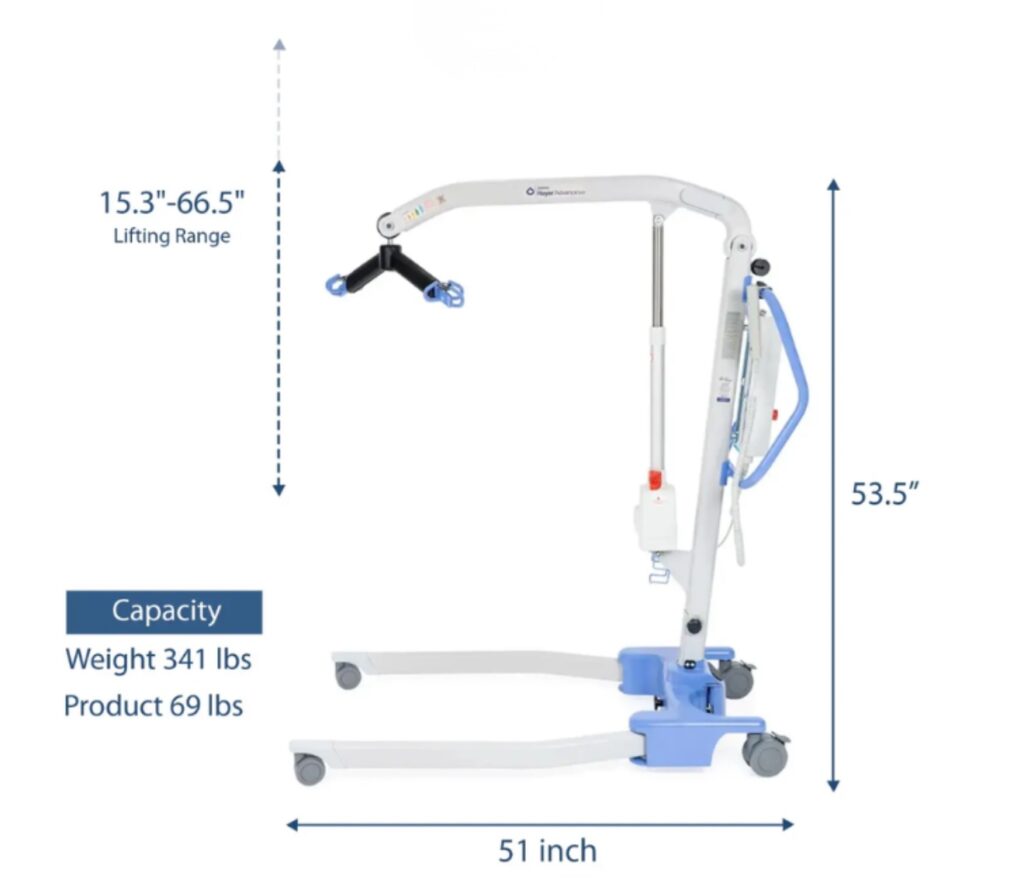
If neither leg can bear weight — or the person can’t follow instructions, can’t hold their trunk up, or is in too much pain to participate — stop shopping for boards and discs. That’s a lift situation. A Hoyer-style floor lift picks the person up in a sling and moves them from bed to chair to toilet without them bearing any weight at all.
The Hoyer Advance-E is the one I’d point a family toward. It’s electric, folds tool-free for storage and transport, lifts from the floor (which matters if someone has already fallen), and is rated to 341 lb with a lifting range of 15.3 to 66.5 inches. It weighs about 70 lb with a 2-year limited warranty. 1800wheelchair carries it at typically around $2,576 (checked November 2026), and their listing includes a free sling with purchase — confirm what’s included before you order, because slings are often sold separately at $125–$250.
The honest costs: $2,500 is real money, but a lift is often covered by insurance or Medicare with a doctor’s prescription and documentation of medical necessity — ask before paying out of pocket. Used and refurbished lifts are also common, typically $800–$2,000. What you can’t skip is training: a lift used wrong — wrong sling size, wrong sling position, legs not spread wide enough — is dangerous. Have a PT, OT, or the DME supplier train every caregiver who’ll use it.
Best for: Fully dependent transfers — neither leg weight-bearing, poor trunk control, or transfers that have become unsafe for the caregiver’s back.
View the Hoyer Advance-E Power Lift at 1800wheelchair
Car Transfers: Swivel Cushions and Slide Sheets
The car is where a lot of transfers go wrong: the seat is low, the door frame is in the way, and there’s nothing to grab.
HealthSmart 360° Swivel Seat Cushion

A 15-inch round cushion that sits on the car seat and rotates, so the person sits down facing out the door and swivels their legs into the car — no twisting, no lifting legs over the threshold. Rated to 300 lb, typically around $32 on Amazon. It also works on a dining chair at home. The honest costs: it adds height, which can be a problem in a low car, and it can slide on leather seats — it works best on cloth or with a non-slip pad underneath. And it doesn’t help if the person can’t get their legs into the car at all — that’s a board or lift situation.
View the HealthSmart 360° Swivel Seat Cushion on Amazon
YHK Tubular Slide Sheet (28″ × 47″)
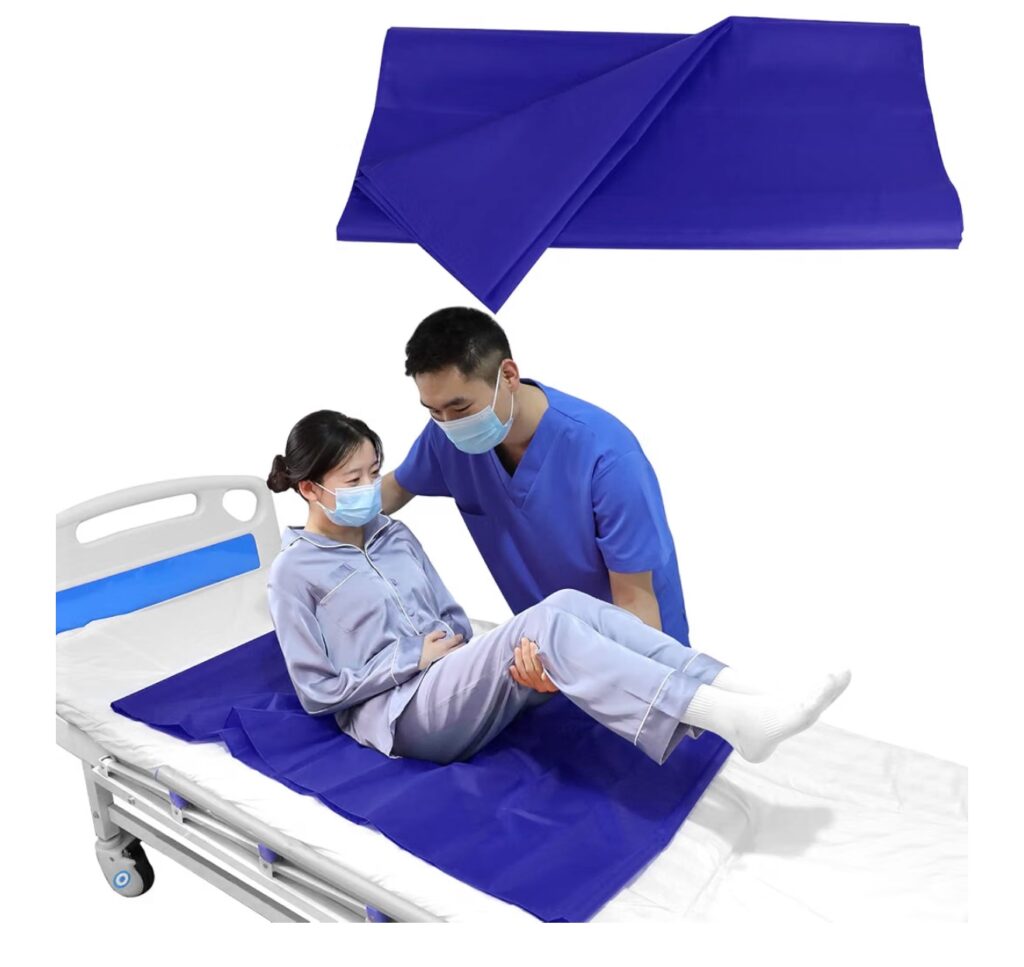
A tube of slick nylon that goes under the person in bed or on a board. It cuts friction to almost nothing, which makes lateral moves — scooting up in bed, sliding across a transfer board — far easier on both the person and the caregiver, and less friction means less skin shear. Typically around $15 on Amazon (checked November 9, 2026). The best value on this page. Keep one on the bed and one with the transfer board.
View the YHK Tubular Slide Sheet on Amazon
Caregiver Safety: The Rules That Prevent Injuries
The person transferring isn’t the only one at risk. Caregiver back injuries are the reason families end up needing help themselves, and most are preventable.
- Lock the wheelchair brakes, every time. Swing the footrests out of the way or remove them. An unlocked chair rolling mid-transfer is the most common transfer accident there is.
- Never lift someone by the arms. Pulling up on arms injures shoulders — theirs and yours. Use a gait belt, a board, or a lift.
- Level the surfaces. Bed and wheelchair at the same height, or the wheelchair slightly lower. A transfer uphill is a transfer that fails halfway.
- Wide base, bent knees, straight back. Feet shoulder-width apart, bend at the knees and hips, keep the person close. Don’t twist — move your feet instead.
- Two people when you’re not sure. If a transfer feels hard, it is hard. Get a second person, or use a lift.
- Practice with a therapist present first. The first transfer with a new device should happen with a PT or OT in the room.
- Protect the skin. Bare skin on a wood board, a rough sling, or a seat edge is a pressure injury in the making. Clothing, a slide sheet, or a padded board cover — pick one, every time.
Frequently Asked Questions
What’s the best transfer aid for someone who is non-weight-bearing on one leg? A sliding transfer board — the BeasyTrans if the gap is wide or the skin is fragile, the DMI wood board if the gap is short and the budget is tight. If the “good” leg is also weak, which is common after polio, the board is safer than a pivot device that loads that leg.
Can I use a transfer board if neither leg can bear weight? No. A board requires trunk control and the ability to scoot. If neither leg bears weight and the person can’t sit unsupported, that’s a patient lift — a Hoyer-style floor lift — not a board.
Do I need a prescription for a transfer board or a lift? Boards, discs, poles, and gait belts are over-the-counter. A patient lift is often covered by insurance or Medicare, but that usually requires a doctor’s prescription and documentation of medical necessity. Ask the doctor and the DME supplier.
How do I transfer someone from a wheelchair to a toilet? Same principles as any transfer: lock the brakes, footrests out of the way, board or turner in place, and use a gait belt. A raised toilet seat makes the toilet the same height as the wheelchair, which turns an uphill transfer into a level one. A bedside commode over the toilet is another option if the bathroom is tight. And a tub transfer bench handles bathing — a separate device from the transfer boards on this page.
Will Medicare pay for a patient lift? Often, yes, with a prescription and documentation that the person needs it for transfers at home and can’t do them another way. The supplier usually handles the paperwork. Boards and pivot discs are almost never covered — budget for those out of pocket.
The Bottom Line
For that situation — post-polio weakness, now non-weight-bearing on one leg after surgery — here’s where I’d start: a BeasyTrans board for bed-to-wheelchair and wheelchair-to-toilet transfers, a Vive gait belt for the caregiver, a slide sheet to protect the skin, and a swivel cushion for the car. That’s the kit that covers the day. If the good leg turns out stronger than expected and they can stand with help, add the Etac Turner Pro. And if transfers become unsafe for the caregiver’s back at any point, stop and get a Hoyer lift — and get the in-home PT/OT eval that should have happened first.
Transfers are the most dangerous part of the day at home, and they’re the part families get the least training on. The right device doesn’t just make it easier — it makes it safe enough to keep doing, day after day, without anyone getting hurt.
Related Guides
- Best Tub Transfer Bench — bathing transfers, a separate device from the boards on this page
- Best Raised Toilet Seats — getting the toilet to wheelchair height
- Best Grab Bars — wall-mounted support for the bathroom and beyond
- Best Shower Chairs — seated bathing once the transfer is done
- Best Bed Rails — bedside support for getting in and out of bed
- Best Standard Wheelchair — fitting the chair the transfers start from
- Best Hip Replacement Recovery Essentials — the full post-op kit, including hip precautions
- Home Safety for Seniors: A Room-by-Room Fall Prevention Guide — the whole-home version of the safety thinking on this page
Prices are “typically around” figures from listings checked November 10, 2026, except where a different check date is noted in the text. Prices change — confirm on the listing before you buy.