Best Fine Motor Games for Kids
If I could only prescribe one thing for hand development, it wouldn’t be worksheets or handwriting practice books. It would be play — the kind where little hands are squeezing, pinching, twisting, placing, and building without realizing they’re doing therapy. That’s what a good fine motor game does. It hides the work inside the fun.
Here’s what these games actually build: the pincer grasp (thumb meeting fingertip, the foundation of holding a pencil), hand strength (the endurance to write more than one sentence), bilateral coordination (two hands working together — one holds, one works), and the hand-eye precision that makes buttons, zippers, scissors, and eventually handwriting possible. None of that comes from drill sheets. It comes from hundreds of repetitions of grasping things, and games are how you get hundreds of repetitions out of a child who would revolt at “practice.”
I’m Allison Ramsey, a pediatric occupational therapist. I’ve spent 16 years in school-based practice, and I own OT4U, LLC, where I contract with two school districts. I’m also a mom of four. Several games on this list live at our house — I can tell you which ones survived, because the order history tells the story: Spike the Fine Motor Hedgehog since 2020, Mini Muffin Match Up since 2021, Noodle Knockout since 2021, Grab That Monster since 2023, and Fine Motor Feeding Friends since 2025. These are games we’ve actually owned, played, and watched work. Here’s what I’d actually recommend.
Best for Toddlers (18 Months–3)
Learning Resources Spike the Fine Motor Hedgehog
Our top toddler pick, and the one that’s been in our house the longest — since 2020. Spike is a smiling hedgehog whose back is full of holes, and the game is simple: push the 14 chunky, peg-shaped quills in, pull them out, and repeat. Every repetition is pincer grasp and hand-strength work disguised as play. The quills are color-coded and numbered, so sorting, counting, and color matching grow right alongside the motor skills.
Why it wins for toddlers: the quills are big enough for 18-month hands but still demand a real pinch to place, which is exactly the developmental window that matters. It’s self-correcting — the quill either fits or it doesn’t — so the child gets feedback without an adult hovering. And cleanup is built in: everything stores inside Spike’s body.
The honest limits: it’s a one-trick toy, and around age four most kids master it and move on. The quills are hollow plastic, so a determined chewer can dent them — check the ends for trapped saliva or bathwater now and then. And while the pink version exists (B08QM5NPR6), the link below is the original multicolor set, the one I’d buy first.
Sold as a 14-quill set (the Amazon listing below is the original multicolor hedgehog).
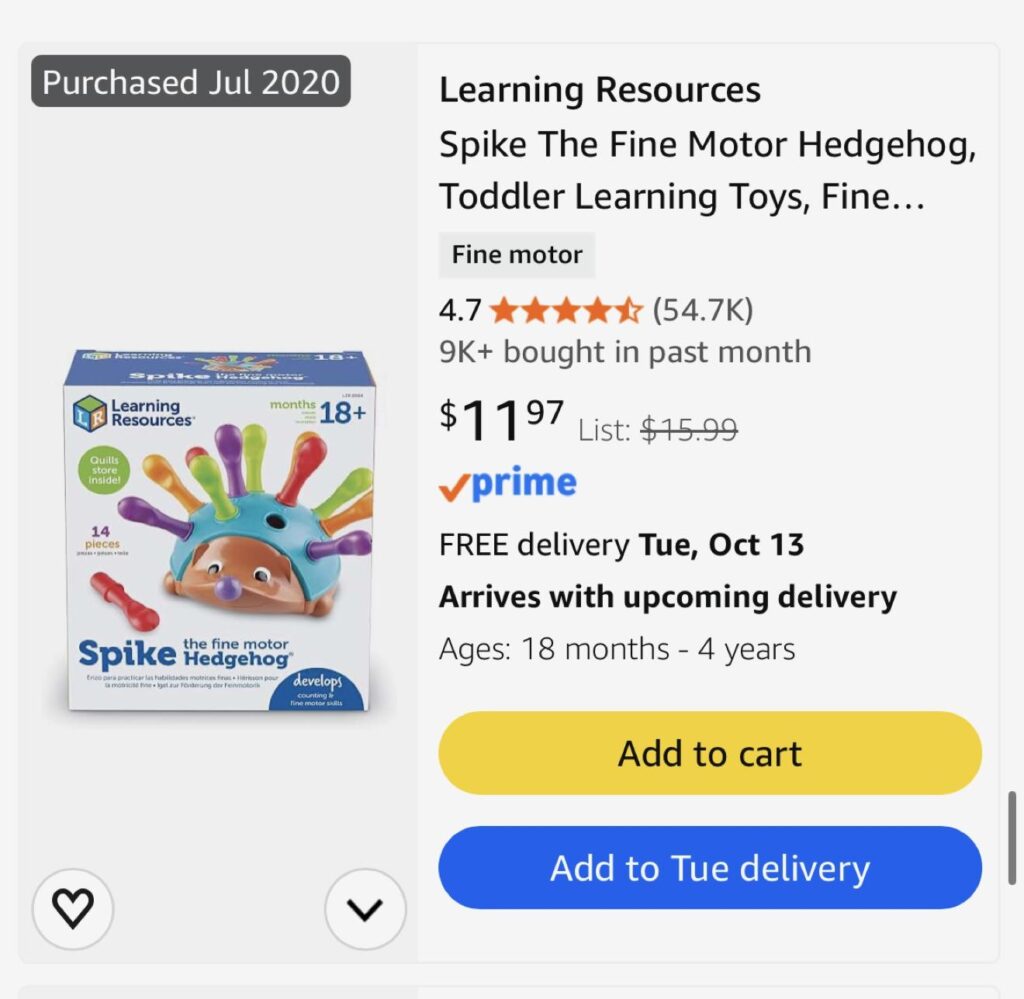
Learning Resources Spike the Fine Motor Hedgehog on Amazon
Best for: 18 months to 4 years — the first fine motor game to own, and the one I’d hand a new parent first.
Best for Preschoolers (3–5)
Educational Insights The Sneaky, Snacky Squirrel Game
The first board game I’d actually recommend, and the one I suggest to families more than any other. Spin the spinner, squeeze the matching acorn with the squirrel-shaped squeezer, and be the first to fill your log. It builds color matching, turn-taking, counting, and — the sneaky OT benefit — hand strength and fine motor control from the squeezer, which is pre-handwriting work disguised as play. No reading required, 2–4 players, about 15 minutes.
The honest limits: the squeezer is the whole point and also the weak link — a child with very low hand strength may struggle, so help without taking over. Losing an acorn to the “sneaky” spin can genuinely upset a three-year-old; it’s a good first lesson in losing gracefully, but expect some coaching. Small acorns mean ages 3 and up, no exceptions.
Typically around $18–25.
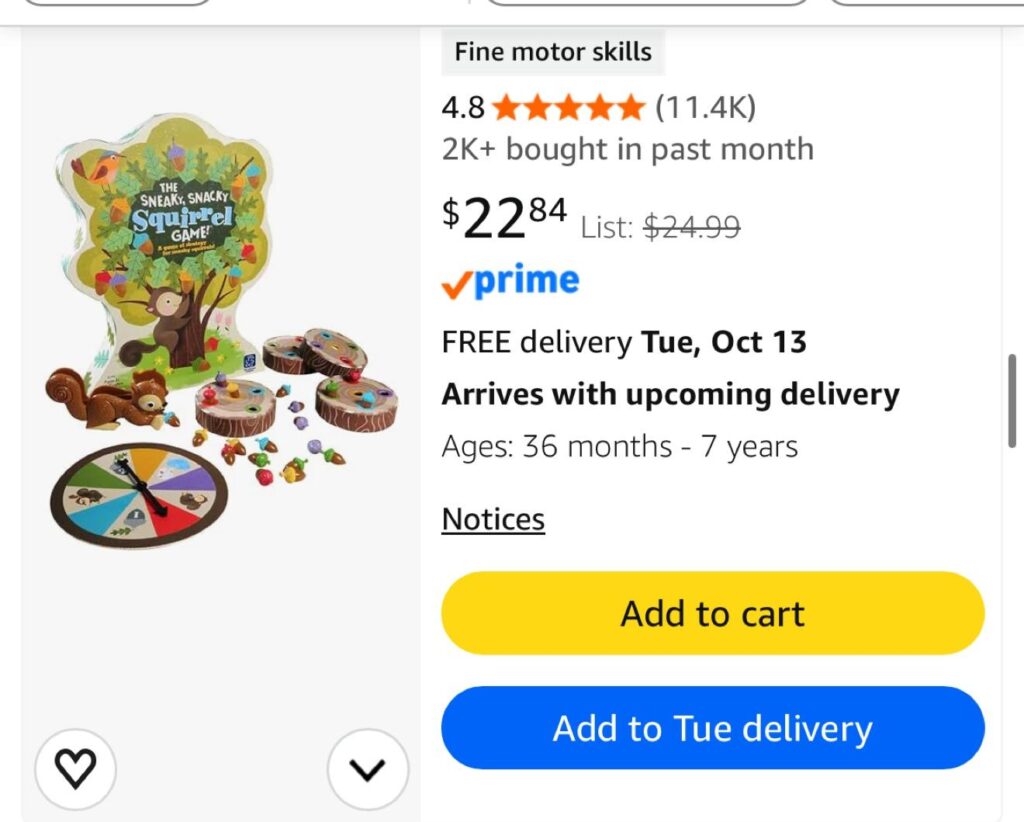
Educational Insights The Sneaky, Snacky Squirrel Game on Amazon
Best for: Ages 3 and up — the first board game, and secretly a hand-strengthening tool.
Learning Resources Mini Muffin Match Up Math Activity Set
This one has been in our house since 2021, and it’s earned its place. A mini muffin tin, 60 colorful muffin counters, sorting discs, dice, and — the star of the show — squeezy tweezers that build the pincer grasp with every single pick-up. Kids sort, count, match, and do early math, but the OT value is the tweezers: dozens of repetitions of pinch-place-release, which is exactly the motion writing demands.
Why it lasts: it genuinely grows with the child. Two- and three-year-olds sort by color; older preschoolers count and match; early elementary kids use the muffins as math manipulatives. Few preschool toys stay relevant that long.
The honest limits: the price. As of this writing it’s listed around $38, and Amazon itself is flagging it as a high price — it’s been cheaper historically, so this one is worth watching for a deal rather than buying at the peak. The muffins are small, so it’s strictly ages 3 and up. And the tweezers will walk off if you don’t have a home for them (ours live in the tin).
Sold as the 76-piece set (the Amazon listing below).
Typically around $30–40 — watch for sales.
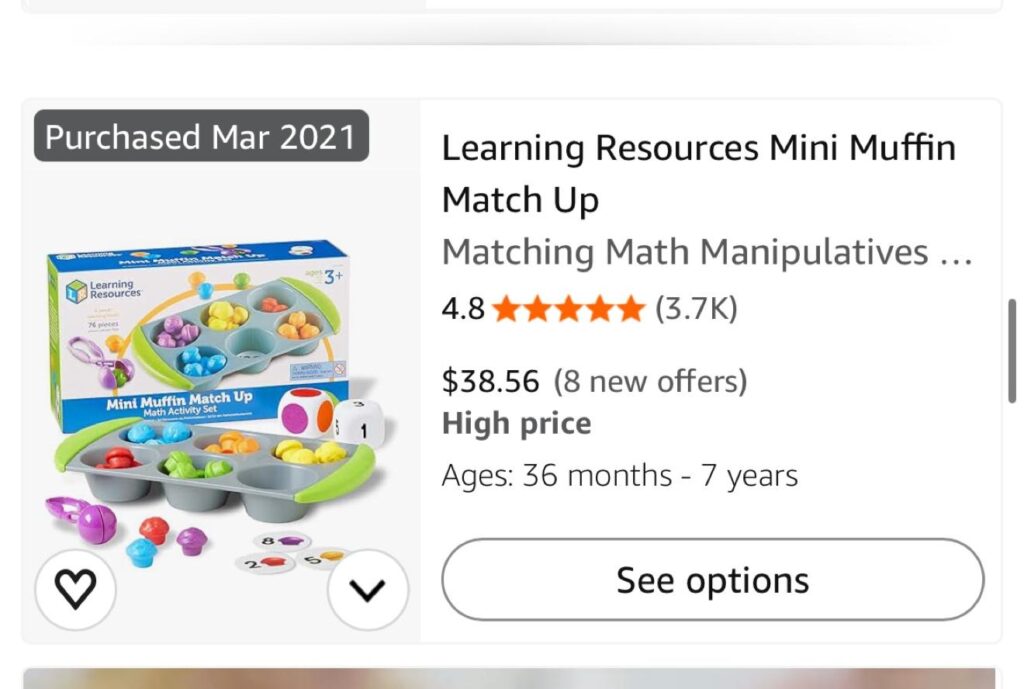
Learning Resources Mini Muffin Match Up Math Activity Set on Amazon
Best for: Ages 3 and up — the tweezer game that grows from sorting into real math.
Learning Resources Super Sorting Pie
The classic tweezer game, and the one most likely to be in a preschool classroom already. A pie plate with a removable divider, 60 fruit counters in five colors, three double-sided sorting cards, and two jumbo tweezers — enough for two kids to play side by side. Sort by color, count pieces, build patterns. The jumbo tweezers build the pincer grasp needed for writing, and because there are two of them, this is one of the few fine motor games that works as genuine parallel play.
The honest limits: two versions exist on Amazon — link the original 68-piece set (below), not the 63-piece variant, which has fewer counters. The pie is bulky to store, though everything fits inside it. And the fruit counters are small enough that younger siblings need to be elsewhere.
Sold as the 68-piece set (the Amazon listing below is the original, not the 63-piece variant).
Typically around $22–30.
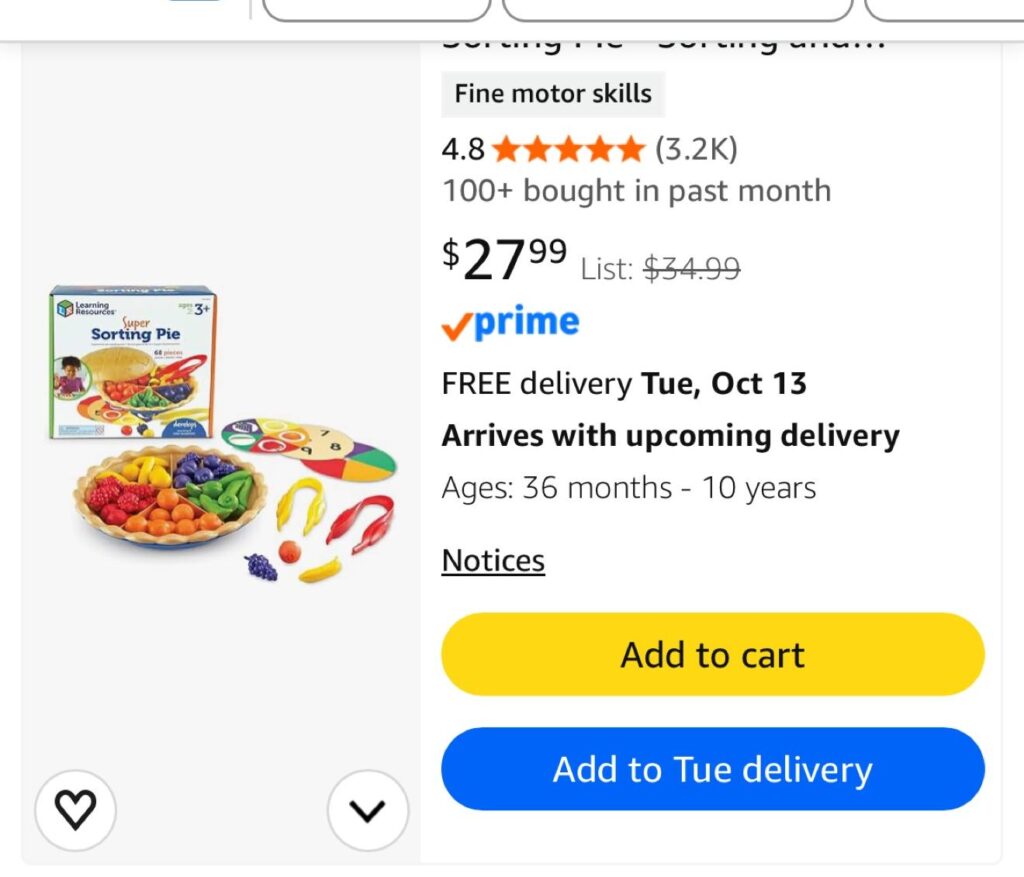
Learning Resources Super Sorting Pie on Amazon
Best for: Ages 3 and up — the classroom classic, and the best tweezer game for two kids at once.
Learning Resources Avalanche Fruit Stand
The most game-like of the tweezer games. Spin the picture spinner, then use the jumbo tweezers to pick fruit off — or place it onto — an adjustable cardboard fruit stand. The catch: the stand tips if you’re clumsy, so every placement demands controlled, graded movement. That’s the OT gold — it’s not just pinching, it’s pinching with precision and force control, which is what separates a functional grasp from a clumsy one.
The honest limits: the stand is cardboard, which means it’s adjustable (three difficulty levels) but also the thing most likely to wear out. Set it up on a table, not the floor — it needs a stable surface. Small fruit pieces mean ages 3 and up, and the spinner is a choking-adjacent small piece for mouthers.
Typically around $18–28.
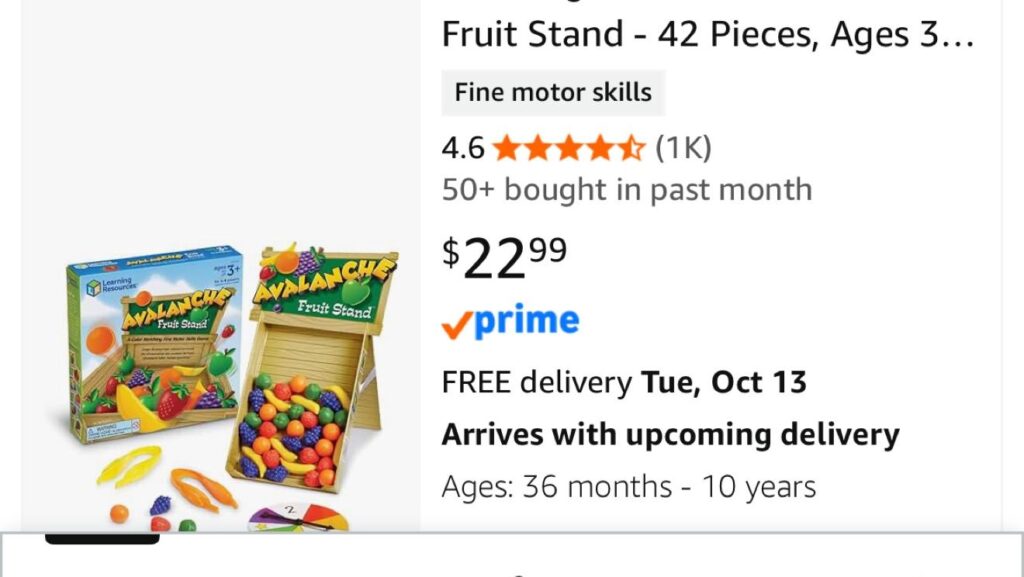
Learning Resources Avalanche Fruit Stand on Amazon
Best for: Ages 3 and up — the tweezer game that adds suspense and graded force control.
Learning Resources Fine Motor Feeding Friends
The newest game on this list — released in 2024, and ours arrived in 2025. Three animal bowls (a cat, a dog, and a bunny) with differently shaped mouth openings, 30 food counters, and three pairs of tweezers. Kids use the tweezers to feed each animal its favorite food: lettuce for the bunny, fish for the cat, bone-shaped treats for the puppy. The three mouth shapes create three difficulty levels, so the challenge scales as the child improves.
Why it’s worth a look despite being new: the pretend-play framing is the differentiator. Kids who won’t sit still for “sorting practice” will happily feed a hungry puppy for twenty minutes. Imaginative play plus pincer grasp work is a combination most fine motor games don’t offer.
The honest limits: it’s the least proven pick here — no years of classroom track record like the pie or the hedgehog. Thirty-nine pieces means real cleanup, and the food counters will migrate. Ages 3 and up; the small pieces are a firm line.
Sold as the 39-piece set (the Amazon listing below).
Typically around $18–25.
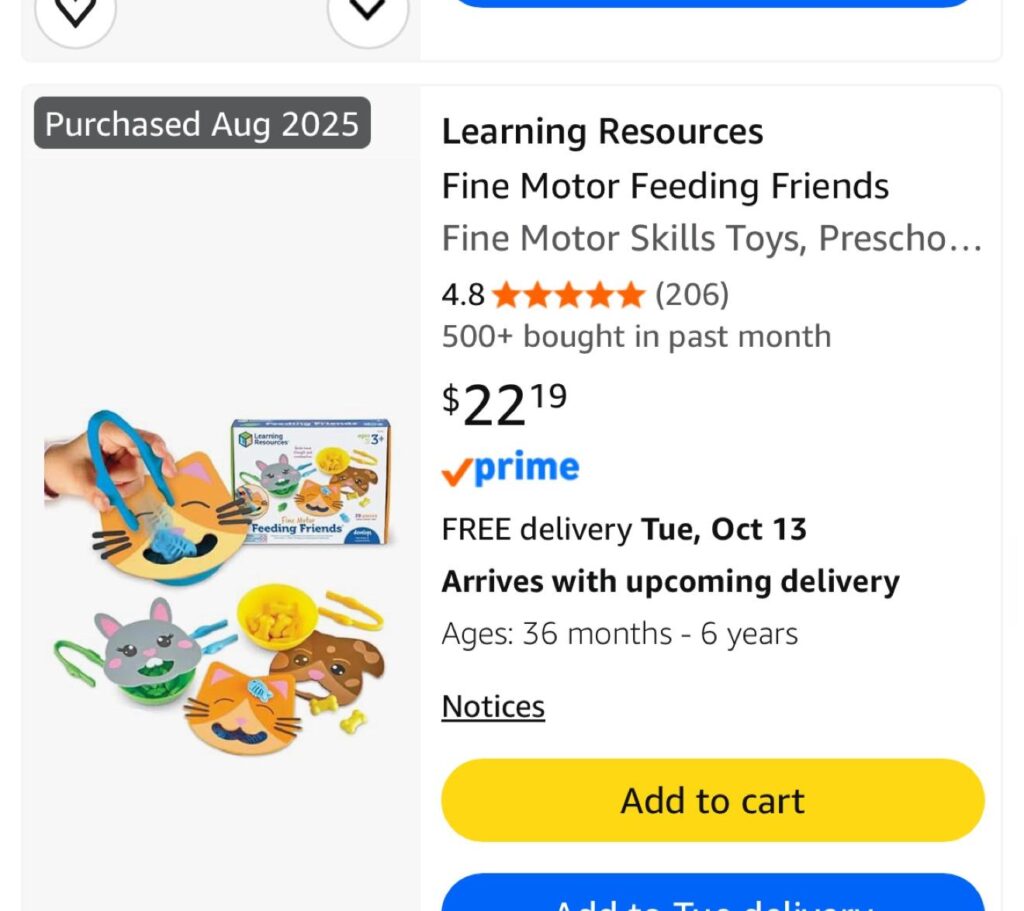
Learning Resources Fine Motor Feeding Friends on Amazon
Best for: Ages 3–6 — the pretend-play fine motor game for kids who learn through stories.
hand2mind Grab That Monster Fine Motor Activity Set
Ours since 2023, and the best pure hand-strengthener on this list. Two large monster grabbers — one designed to be hard to open, one hard to close — plus 48 mini monsters to grab, sort into monster houses by color or shape, and play structured spinner games with. The grabbers work one-handed and specifically train grasp and extension: the opening and closing motions that build the intrinsic hand muscles writing depends on.
Why I rate it: most fine motor toys train pinching. This one trains the whole hand — the squeeze-and-release cycle is closer to what the hand actually does during sustained writing. The activity guide includes four real games, so it’s not just free play.
The honest limits: the grabbers are genuinely stiff at first, which is the point, but a child with very low hand strength may need the easier one only (or help) until they build up. Forty-eight mini monsters is a lot of small pieces — ages 3 and up, firmly. And link the standalone set below, not the bundle that pairs it with an unrelated phonics product.
Sold as the standalone activity set (the Amazon listing below — not the bundle).
Typically around $15–22.
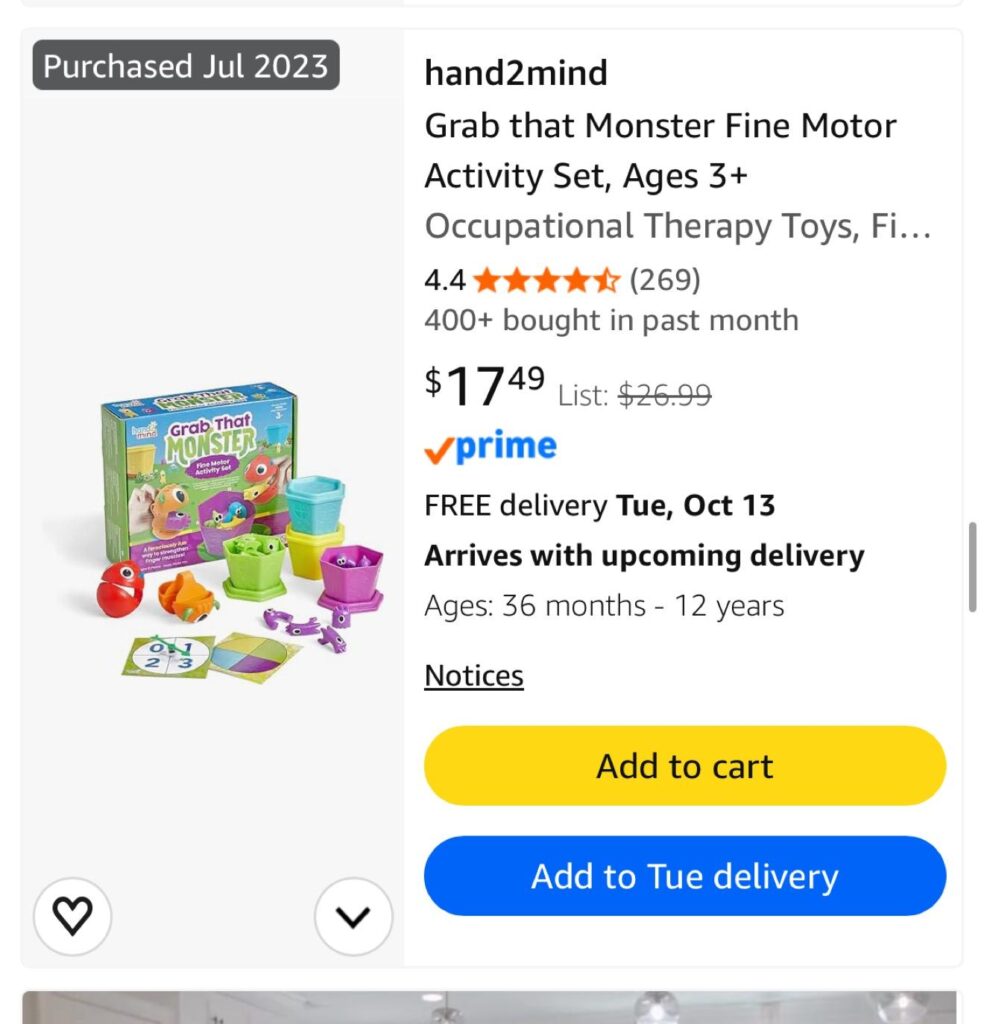
hand2mind Grab That Monster Fine Motor Activity Set on Amazon
Best for: Ages 3 and up — the hand-strength workout disguised as a monster game.
hand2mind Learn My Letters Fine Motor Clips
Clothespins, but make them educational. Forty-five chunky clips printed with letters that twist to read in any orientation, plus an activity guide full of clothespin games. Squeezing a clip open is one of the best isolated pincer-strength exercises there is — it’s the exact thumb-index opposition writing requires, with built-in resistance. Pairing it with letters means the child is getting early literacy exposure at the same time.
The honest limits: it’s more of an activity set than a game — there’s no win condition out of the box, so it works best with a grown-up setting up the play the first few times. The clips are plastic and sized for small hands, which means adults with big fingers will find them fiddly to demonstrate. Ages 3 and up.
Sold as the 45-clip set with activity guide (the Amazon listing below).
Typically around $15–22.
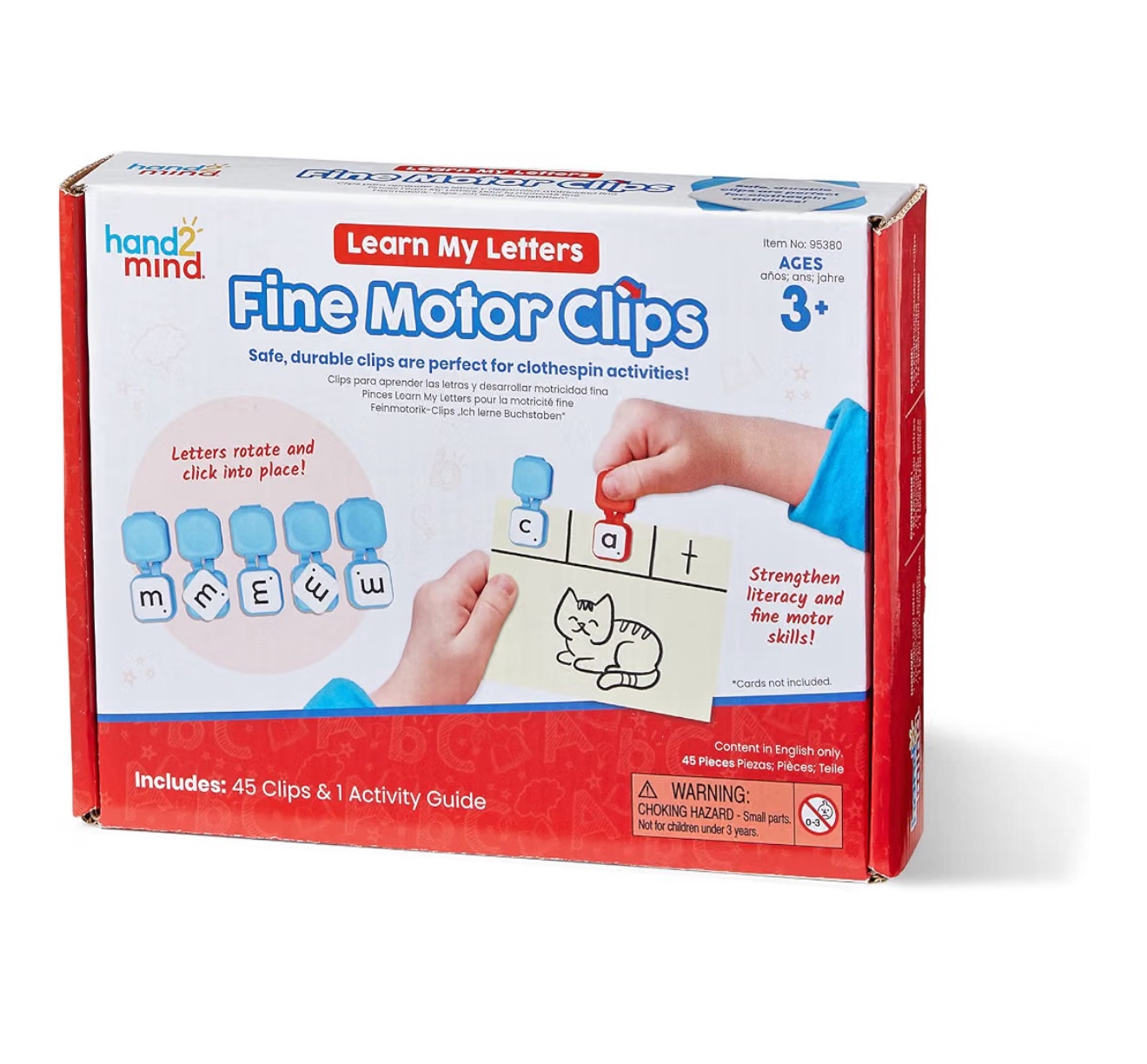
hand2mind Learn My Letters Fine Motor Clips on Amazon
Best for: Ages 3 and up — the pincer-strength builder that sneaks in letter learning.
Best for Early Elementary (5–8)
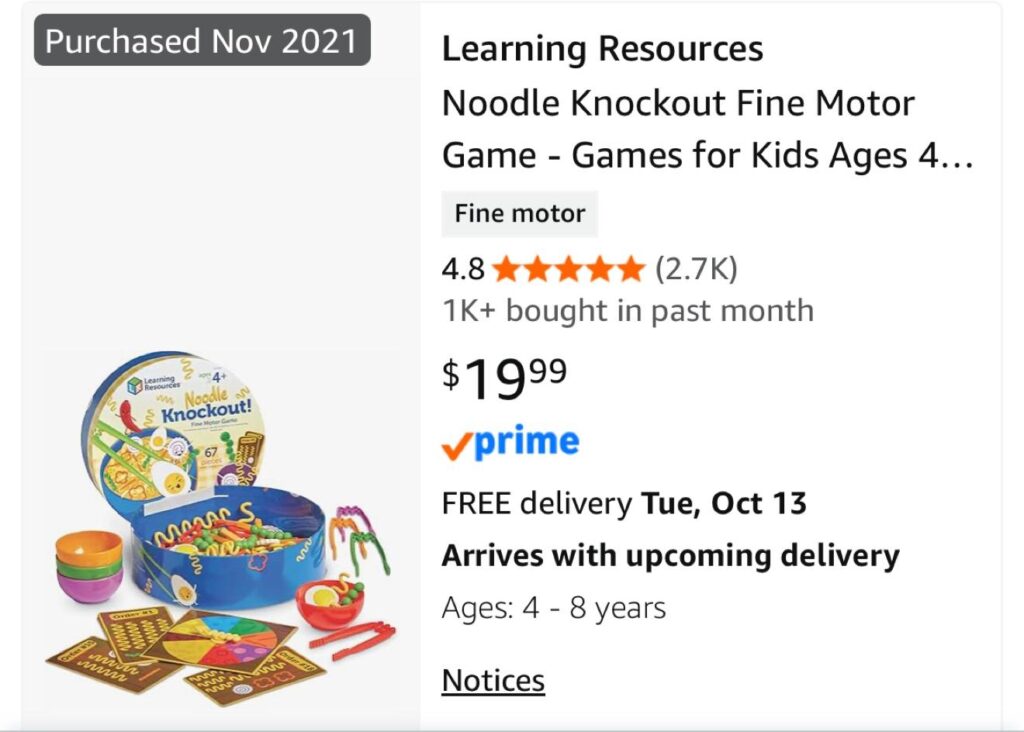
Learning Resources Noodle Knockout Fine Motor Game
In our house since 2021, and the family-favorite game night pick on this list. It’s a ramen shop: 20 soft silicone noodles, 27 toppings, order cards, sorting bowls, and four sets of kid-sized chopsticks. Players race to fill orders by snagging wiggly noodles with chopsticks — three game variations, 2–4 players, ages 4–8. Chopstick work is elite fine motor training: sustained pincer grasp, graded pressure (squeeze too hard and the noodle slips), bilateral coordination, and endurance.
Why it wins for this age: it’s a real game the whole family will actually play, not a disguised exercise. The silicone noodles are weirdly satisfying to handle, and the three play modes mean it doesn’t get stale.
The honest limits: the noodles are the mess — they’ll end up everywhere, and they’re small enough that younger siblings shouldn’t be at the table unsupervised. It needs 2–4 players to be fun, so it’s not a solo-play toy. And chopstick frustration is real for first-timers; let them practice without the timer.
Sold as the 67-piece set (the Amazon listing below).
Typically around $16–25.
Learning Resources Noodle Knockout Fine Motor Game on Amazon
Best for: Ages 4–8 — the family game night pick that builds chopstick-level precision.
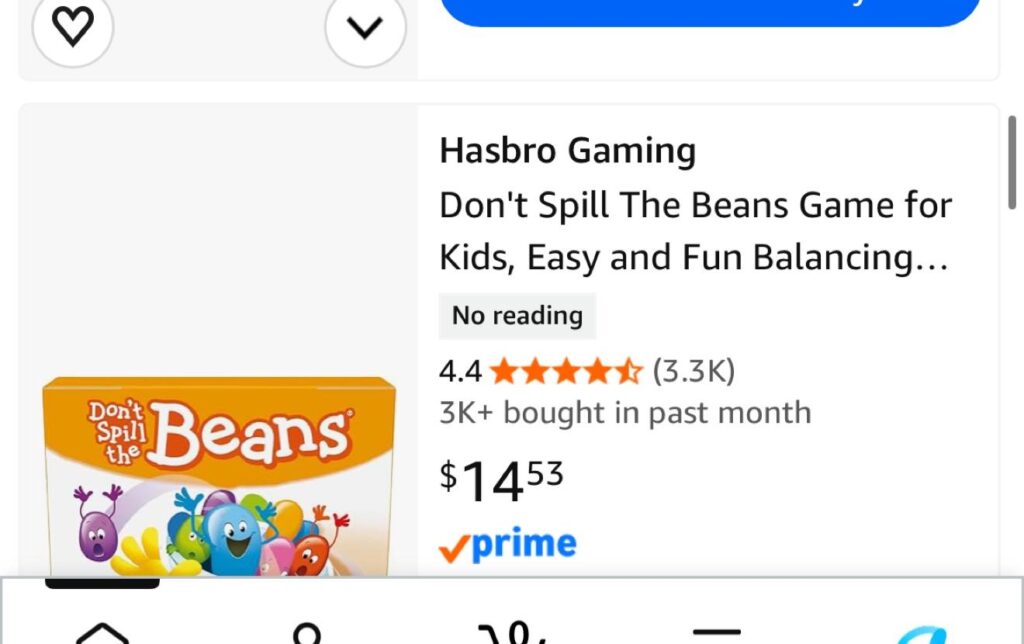
Hasbro Don’t Spill The Beans Game
The budget family pick, and proof that fine motor games don’t have to be therapy-catalog products. A wobbly bean pot, 60+ tiny plastic beans, and one rule: place your beans on the lid without tipping it. Every placement is a study in graded force and precision — the pot gets more unstable with every bean, so the last placements demand real control. No reading required, 2 players, ages 3 and up, about ten minutes.
The honest limits: the beans are tiny and numerous, so this is a table-only game and a firm no for households with mouthing toddlers roaming free. It’s luck-heavy — skill matters, but the pot tips when it tips. And it’s loud when it goes (which is also the fun part).
Sold as the single game (the Amazon listing below — not the 2-pack).
Typically around $12–18.
Hasbro Don’t Spill The Beans Game on Amazon
Best for: Ages 3 and up — the cheapest real fine motor game on this list, and a genuine family classic.
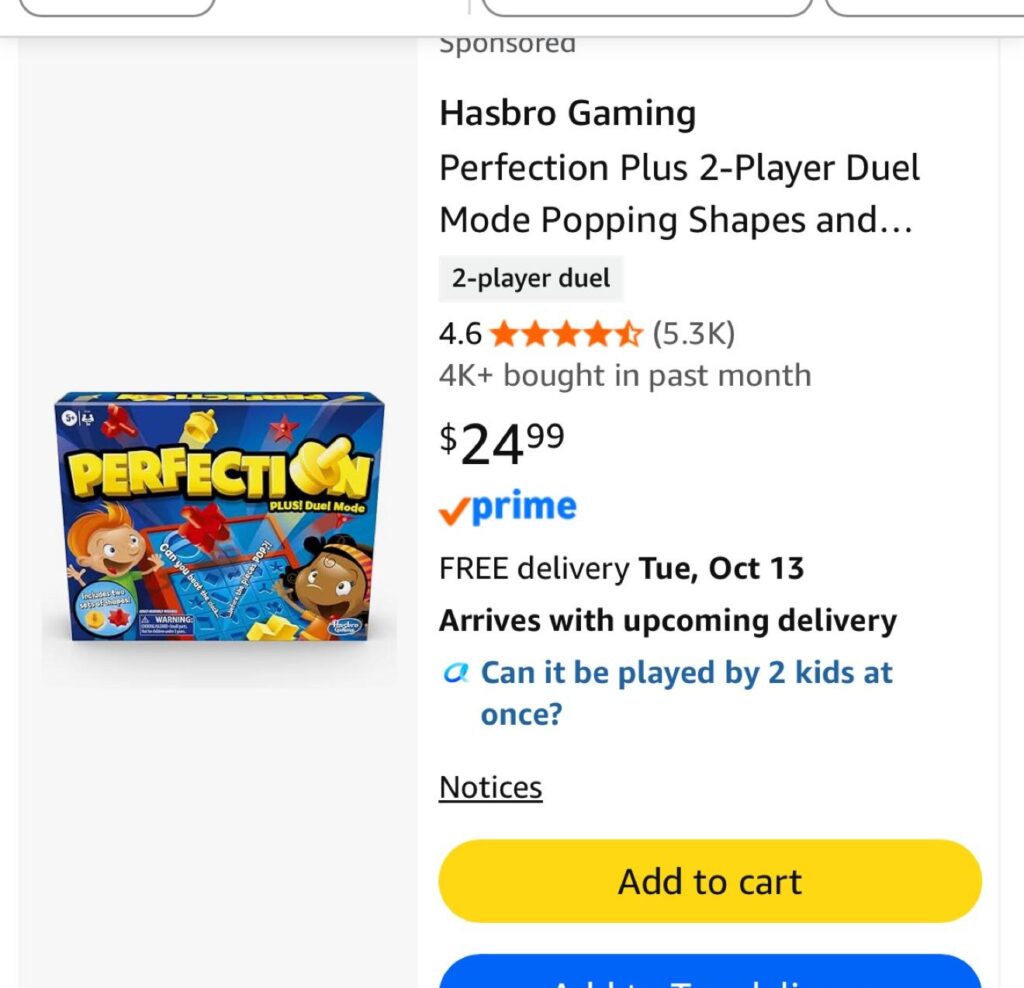
Hasbro Perfection Plus 2-Player Duel Mode
The speed pick for older kids. The classic Perfection timer game — fit 25 shapes into matching holes before the tray pops — upgraded with a duel mode: two players, red vs. yellow shapes, racing side by side. It’s shape recognition, visual-motor speed, and hand-eye coordination under time pressure. The timer adds just enough stress to make it exciting without making it miserable, and you can play without the timer for younger or more anxious kids.
Why it’s the older-kid pick: most fine motor games top out around age six. This one stays challenging because speed is the variable — a ten-year-old racing a sibling is getting genuine motor-speed practice. It’s an Amazon Exclusive, ages 5 and up.
The honest limits: the popping tray is startling the first time (warn sensitive kids). Twenty-five small shapes per player means real cleanup and a real choking hazard for younger siblings. And duel mode needs two players — solo play is the classic mode, which is fine but less exciting.
Sold as the 2-player duel edition (the Amazon listing below).
Typically around $20–28.
Hasbro Perfection Plus 2-Player Duel Mode on Amazon
Best for: Ages 5 and up — the speed-and-precision game that stays challenging for older kids.
How to Choose
Match the tool to the skill, not just the age. Weak pincer grasp (can’t pick up small objects with thumb and fingertip) → tweezer games: Mini Muffin, Super Sorting Pie, Avalanche Fruit Stand. Low hand strength (tires quickly, presses too hard or too lightly) → resistance tools: Spike, Grab That Monster, the letter clips. Poor bilateral coordination (one hand doesn’t help the other) → games that need two hands: Noodle Knockout, Sneaky Snacky Squirrel. The age bands are a starting point; the skill gap is the real guide.
Tweezers are the workhorse. If you buy one category, buy a tweezer game. The pinch-place-release cycle is the single most transferable motion to handwriting, and these games generate hundreds of repetitions without a single complaint. Mini Muffin for one child, Super Sorting Pie for two, Avalanche for the child who needs a challenge.
Respect the age floors — they’re safety lines. Everything here except Spike is ages 3 and up because of small pieces, and that’s a choking-hazard rule, not a suggestion. If you have a mouther under three, Spike is your pick, supervised.
Games beat tools for reluctant kids. A child who won’t do “hand exercises” will play a game for thirty minutes. That’s the whole thesis of this list: the best fine motor intervention is the one the child asks to repeat.
When NOT to buy a fine motor game: if your child already has strong hands and a solid pencil grasp, you don’t need a shelf of these — one or two for fun is plenty. And if fine motor skills aren’t progressing by age four or five despite real play, talk to your child’s OT — games supplement, they don’t diagnose.
FAQ
My child hates “learning toys.” Will these actually get played with? That’s exactly why this list is games, not workbooks. Noodle Knockout and Don’t Spill the Beans are family game-night material — kids ask for them by name. The tweezer sets work best when you don’t announce the agenda: just put the muffin tin on the table and let curiosity do the rest.
Are these good for kids with developmental delays or special needs? Often, yes — but match the game to the child’s developmental stage, not their birthday age. A 7-year-old working on early fine motor skills may get more from Spike than from Perfection, and that’s exactly right. Your child’s OT can help you pick if you’re unsure.
What’s the difference between the tweezer games — do I need more than one? No. Mini Muffin Match Up (one child, grows into math), Super Sorting Pie (two kids, classroom classic), Avalanche Fruit Stand (adds suspense and difficulty levels), and Feeding Friends (pretend-play framing). Pick the one that matches your situation — they all train the same core skill.
Can these replace handwriting practice? No — they prepare for it. Fine motor games build the strength, endurance, and coordination that make handwriting possible, but actual letter formation still needs its own practice. Think of it this way: these games build the athlete; handwriting practice teaches the sport.
The OT Review may earn a commission on purchases made through links on this page, at no extra cost to you.