I’ve walked into a lot of classrooms and living rooms where the “calm-down corner” is really just a corner with a cute rug and a basket of toys nobody reaches for. It looks the part on Pinterest. It does nothing when a child is actually dysregulated. So here’s my honest list — the products I reach for over and over in real classrooms, and why.
The uncomfortable truth first: the single most important thing in a calm-down corner is the adult, not the stuff. Co-regulation — your calm nervous system lending itself to theirs — does more than any product on this page. The space itself comes second: a defined, low-stimulation spot the child recognizes as theirs when things feel big. The products are third, and they’re the supporting cast. But the right supporting cast matters, because in the moment a kid is melting down, you don’t have time to invent a strategy. The corner should already know what to do.
Everything below has earned its place in my therapy bag or in the classrooms I work in. I’ve included what to actually look for, what each item does well, and — because this is what I’d tell a parent face to face — where each one falls short.
I’m Allison Ramsey, a pediatric occupational therapist. I’ve spent 16 years in school-based practice, and I own OT4U, LLC, where I contract with two school districts.
What to Look For
Match the sensory input to the child, not the other way around. Proprioceptive input (weight, squeezing, pushing) is organizing and calming for most dysregulated kids. Visual input (slow, predictable motion like a liquid timer) anchors attention. Auditory input reduction (ear muffs) helps the child whose nervous system is overwhelmed by noise. If you don’t know which a child needs, watch what they seek on their own: the climber and crasher wants proprioceptive input; the kid covering their ears wants less auditory input. Buy for that.
The space matters more than the stuff. A tent, a defined corner, even a beanbag behind a bookshelf — a child needs a clear boundary that says “this is the reset spot.” Ten products scattered across the classroom are just clutter. Two or three inside a defined space is a system.
Avoid overstimulation traps. A calm-down corner full of blinking, beeping, vibrating toys is a playground, not a refuge. If a toy speeds the body up, it doesn’t belong in the corner — no matter how cute it is. Every item here is quiet and slow on purpose.
Durability is a clinical issue, not just a budget one. In a classroom, a calm-down product gets used dozens of times a day, sometimes roughly. Anything flimsy becomes trash by October and teaches the kid the corner isn’t reliable. I picked items that survive real kids.
Portability between home and school. The kids who need a calm-down corner most are the same kids who need consistency. Favor items light enough to travel in a backpack — a breathing card deck and a lap pad ride along; a tent lives wherever it lives.

The Home Base: Special Supplies Blackout Sensory Tent for Kids

This is the space itself. A pop-up tent that cuts the visual input down to almost nothing — roughly a 35-inch cube, dark inside, one child plus a pillow or a stuffed animal. Pops up in seconds, folds flat into a carry bag, so a teacher can set it up in the corner and put it away when it’s not needed, and a family can use it in a living room or take it on a trip.
I’ve watched kids who won’t sit still anywhere else crawl into a dark tent and go quiet within a minute. That’s the whole point: it turns the volume of the world down. It’s also genuinely useful as a reading nook or a sensory-light-play space (a small projector or fiber-optic toy inside a blackout tent is magic), but keep the calm-down version boring — pillow, one comfort object, done.
Why this one: It’s the actual definition of a calm-down corner, in a box. The pop-up design means no assembly battles, and the dark interior is what makes it work — a plain pop-up play tent with mesh windows everywhere doesn’t do the same job.
The honest limits: This is not a time-out box, and you have to be explicit about that with everyone who uses it. The child chooses it; it’s never where they’re sent as punishment, or you’ve just ruined the one safe spot. It’s also small — one kid, no siblings piling in. And in a warm room, a blackout tent can get stuffy, so it’s a short-visit tool, not a nap spot.
Best for: The cornerstone of the corner itself — any classroom or home building a real calm-down space, especially for kids who shut down or escalate in busy, visually loud environments.

The Anchor: Harkla Weighted Lap Pad for Kids, 5 lb
Proprioceptive input — deep pressure — is the most reliably organizing sensory input I know, and a lap pad is the most practical way to deliver it in a classroom. This one is 5 pounds of glass beads in a soft minky dotted cover, about lap-sized, and it does double duty: the dotted texture gives tactile input while the weight settles the body. The cover is removable and washable, which matters in schools, and Harkla stands behind their sensory products with a lifetime guarantee.
I’ve had kids carry these from desk to carpet like a security blanket. There’s a reason the deep-pressure science keeps showing up: it lowers nervous system arousal in a way the child doesn’t have to think about. No instructions required, which is exactly what you want when a kid is past the point of following instructions.
Why this one: The weight is distributed well, the minky dots give a second layer of sensory input for kids who need something to touch, and it’s built to survive being dragged around a school. This is the single item I’d put in a calm-down corner if I could only pick one.
The honest limits: Weighted products need adult guidance — on weight, on time, on which kids. Five pounds is substantial; as a rule of thumb, a child’s OT should weigh in (no pun intended) on whether 5 lbs is right for that child, especially for smaller or younger kids. Don’t drape it over a child who’s sleeping, and don’t use it as a restraint or a “sit still” device. It’s a tool, not a seatbelt.
Best for: The crasher, the wiggler, the kid who calms when squeezed — and for any classroom where one item needs to do the heaviest calming work.
The Volume Knob: Muted Kids Noise-Cancelling Ear Muffs
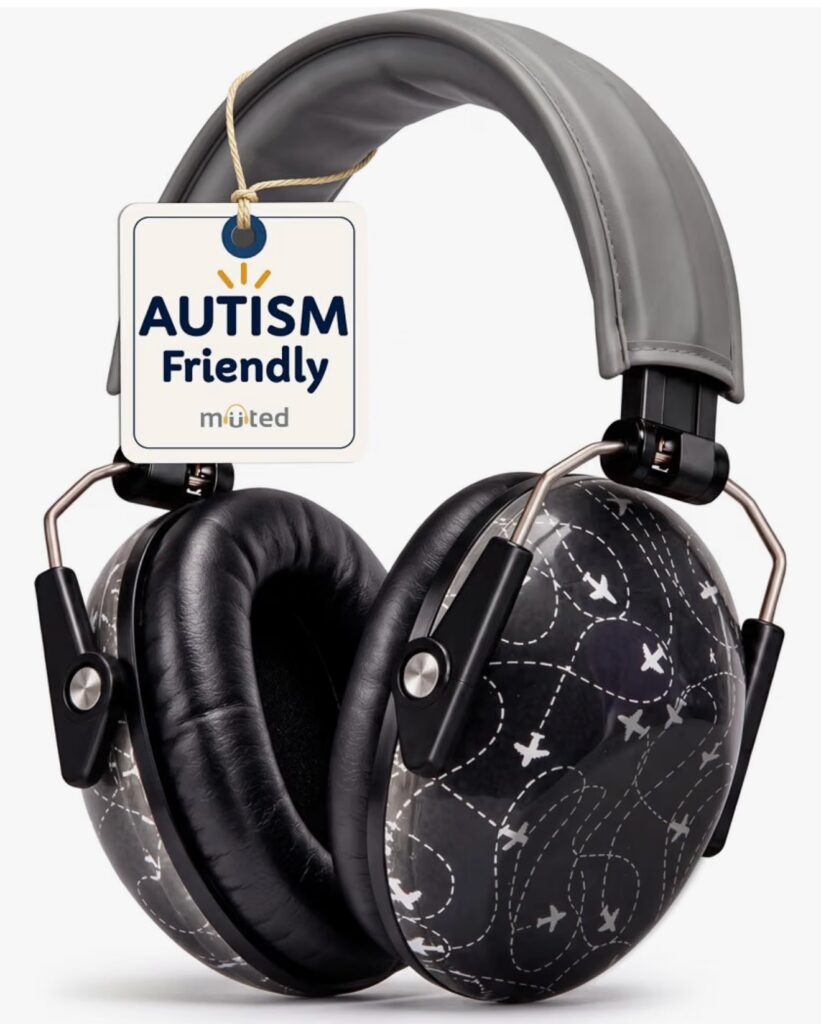
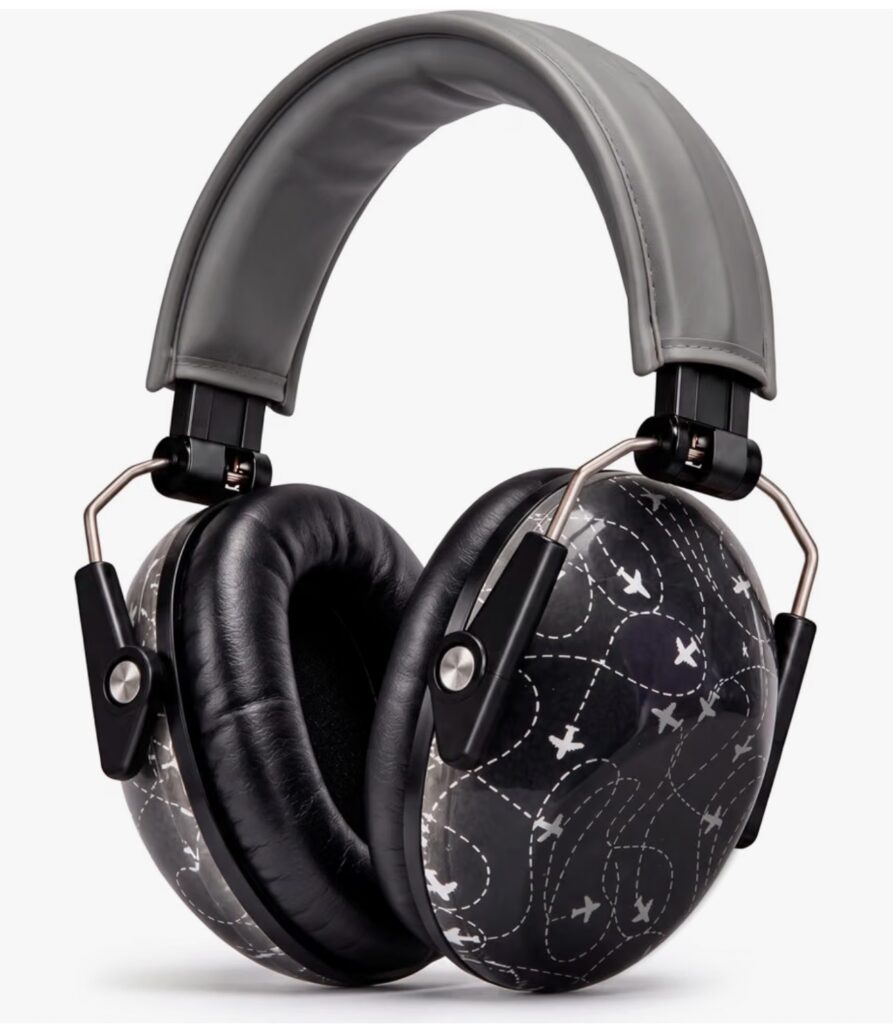
For the noise-sensitive child, the calm-down corner fails if the cafeteria noise still reaches it. These are passive earmuffs (no batteries, no electronics — they just muffle) rated around 27 dB of noise reduction, which is the sweet spot: it takes the sharp edge off a loud room without sealing the child off from voices. They can still hear you speak, which matters, because you need to be able to co-regulate.
The design is what sells me for school use: soft cushioned cups, a padded adjustable headband that fits a wide age range, and kid-friendly colors and patterns so wearing them doesn’t feel medical. A child who reaches for these independently is a child learning to self-regulate, and that moment is worth celebrating.
Why this one: The 27 dB reduction level is the right call for sensory use — enough to help, not so much that the child is isolated. Comfortable enough for extended wear, adjustable enough to last years, and they look like something a kid would actually choose.
The honest limits: They muffle, they don’t erase — a fire drill will still be a fire drill. Some kids find the headband tight at first until it breaks in, and younger children may need help getting them on. And a word of caution: earmuffs are for managing overwhelming noise, not for opting a child out of the classroom all day. If they’re on from 8 to 3, that’s a conversation with the team, not a product win.
Best for: Kids who cover their ears, startle at loud sounds, or fall apart in noisy transitions — assemblies, cafeterias, fire drills, and the general roar of a busy classroom.

The Breath Teacher: ORB Curiosities Hoberman Sphere EXTREME Expand-A-Ball
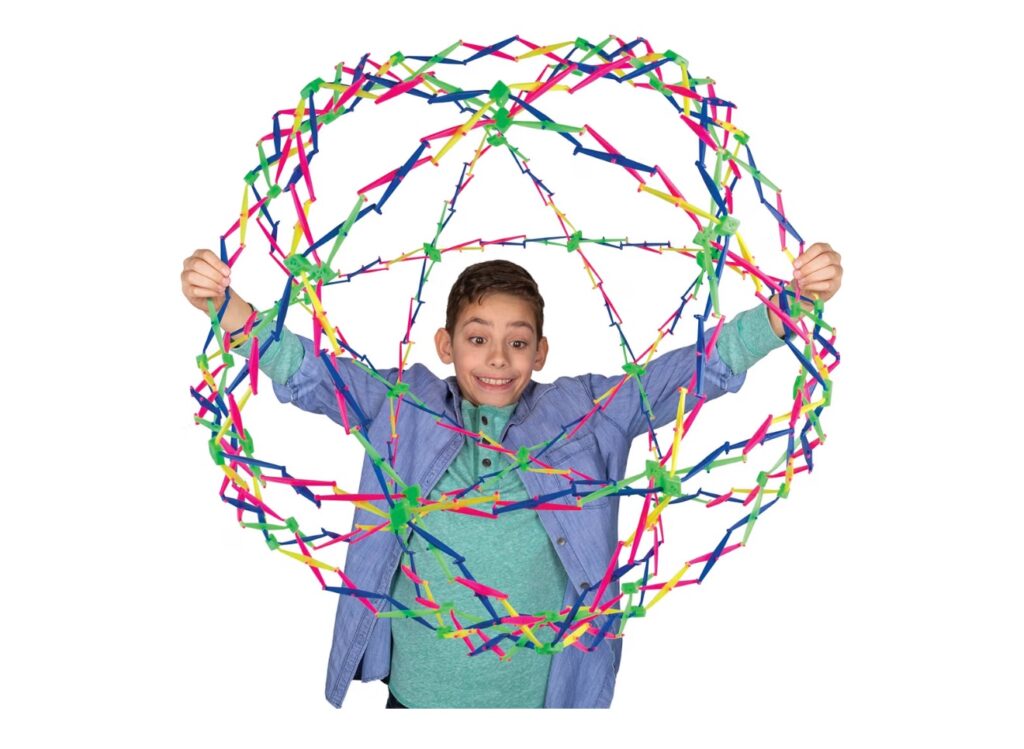
Every OT who works with kids knows the breathing ball. You expand it as the child breathes in, contract it as they breathe out, and suddenly an abstract skill — “take a deep breath” — is something they can see and copy. It gives the breath a visual anchor, which is exactly what a dysregulated brain needs, because “calm down” is not an instruction a flooded nervous system can follow.
The Hoberman sphere design is the classic here: a lattice of linked struts that blossoms open and folds back down with one smooth motion. Kids are mesmerized by it, which is the point — attention lands on the ball instead of on the spiral. I use it in whole-class breathing breaks too, not just one-on-one; hold it up, the whole group breathes with it.
Why this one: It’s the cleanest, most intuitive breathing visual I’ve used. No batteries, no parts to lose, and it doubles as a genuinely fascinating object that draws kids in rather than requiring them to be talked into calming down.
The honest limits: Match the pace to the child. A common mistake (with any breathing ball) is opening and closing it at an adult’s breathing pace — little lungs can’t follow that, and the kid ends up more frustrated. Keep it slow and short, and let the child lead once they know how. It also needs an adult to introduce it; a kid handed one cold will just play transformer-toy with it, which is fine, but that’s not the calming use.
Best for: Teaching the actual skill of paced breathing — the bridge between “I’m upset” and “I can calm myself” — in classrooms, therapy sessions, and at home.

The Slow Watch: YUE MOTION Liquid Motion Bubbler / Liquid Timer
Flip it over and watch colored droplets drift down, slowly, for about two minutes. That’s the whole product, and that’s why it works. The slow, predictable motion gives a revved-up brain something to track — visual tracking is inherently organizing — and the two-minute run doubles as a built-in timer: “watch it all the way down, then we’ll talk.” No batteries, no noise, nothing to break in the usual sense.
I keep one on my desk and in calm-down corners because it asks nothing of the child. A kid who can’t do a breathing exercise yet, who can’t talk about feelings yet, can still watch bubbles fall. It’s the lowest-demand calming tool on this list, and sometimes lowest-demand is exactly right.
Why this one: The two-minute cycle is longer than most liquid timers (many run under a minute), which means a longer stretch of settled watching. It’s also genuinely durable for a liquid toy and simple enough that there’s nothing to learn.
The honest limits: It’s a liquid-filled plastic toy, so the honest durability note is: check it periodically, especially in a classroom. If it ever cracks or leaks, retire it — the liquid inside isn’t something you want on skin or surfaces. Keep it out of direct sunlight, which fades the colors over time. And it’s a passive tool, not a skill-builder; pair it with the breathing ball or the cards when the child is ready for more.
Best for: The child who needs to just sit and watch something slow — early calm-down stages, transitions, and kids who aren’t ready for active coping strategies yet.
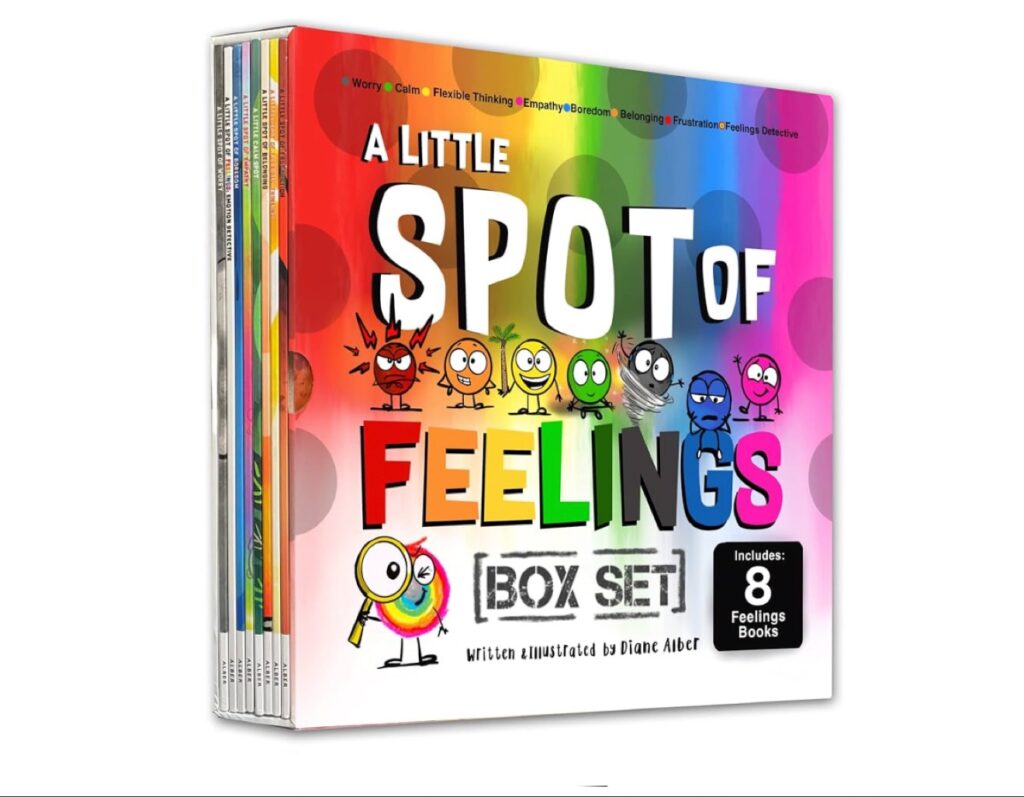
The Feelings Vocabulary: A Little SPOT of Feelings 8-Book Box Set (Diane Alber)
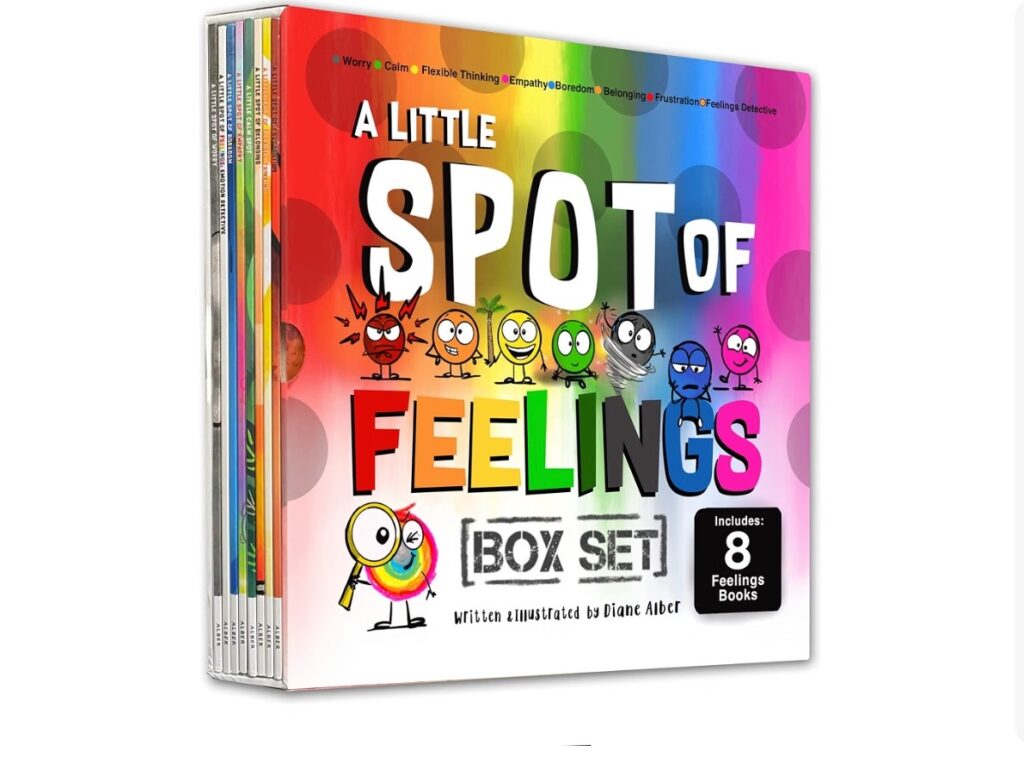
A calm-down corner without feelings language is just a quiet spot — useful, but it doesn’t teach anything. This box set (eight books: Empathy, Frustration, Calm, Belonging, Worry, Boredom, Flexible Thinking, and Feelings Detective) gives kids the words for what’s happening inside them, which is a prerequisite for managing it. You can’t regulate an emotion you can’t name.
Diane Alber’s SPOT books are a staple in early elementary classrooms for a reason: the illustrations are engaging, each book includes reflective activities, and the tone is warm without being preachy. A Little Calm SPOT and A Little SPOT of Frustration are the two I’d read first in a calm-down context; the Feelings Detective book ties the set together by teaching kids to read emotions in themselves and others.
Why this one: It covers the exact feelings that send kids to the calm-down corner — frustration, worry, boredom — rather than generic “be happy” messaging. The set format keeps the whole library together in the corner, and the reading level (roughly ages 4–8) matches the kids who use calm-down corners most.
The honest limits: Books are a teaching tool, not an in-the-moment tool. Don’t hand a sobbing child a book about frustration and expect reading to happen — the books do their work before and after the meltdown, in the calm teaching moments. Older kids (upper elementary and up) will find the format babyish, so this set has a ceiling. And it’s eight paperbacks; in a classroom they’ll need a bin, not a shelf, or they’ll wander.
Best for: Building the feelings vocabulary that makes every other calm-down tool work better — circle time, counseling sessions, and bedtime reading at home.

The Practice Deck: Kids Yoga Stories Breathing Exercise Cards
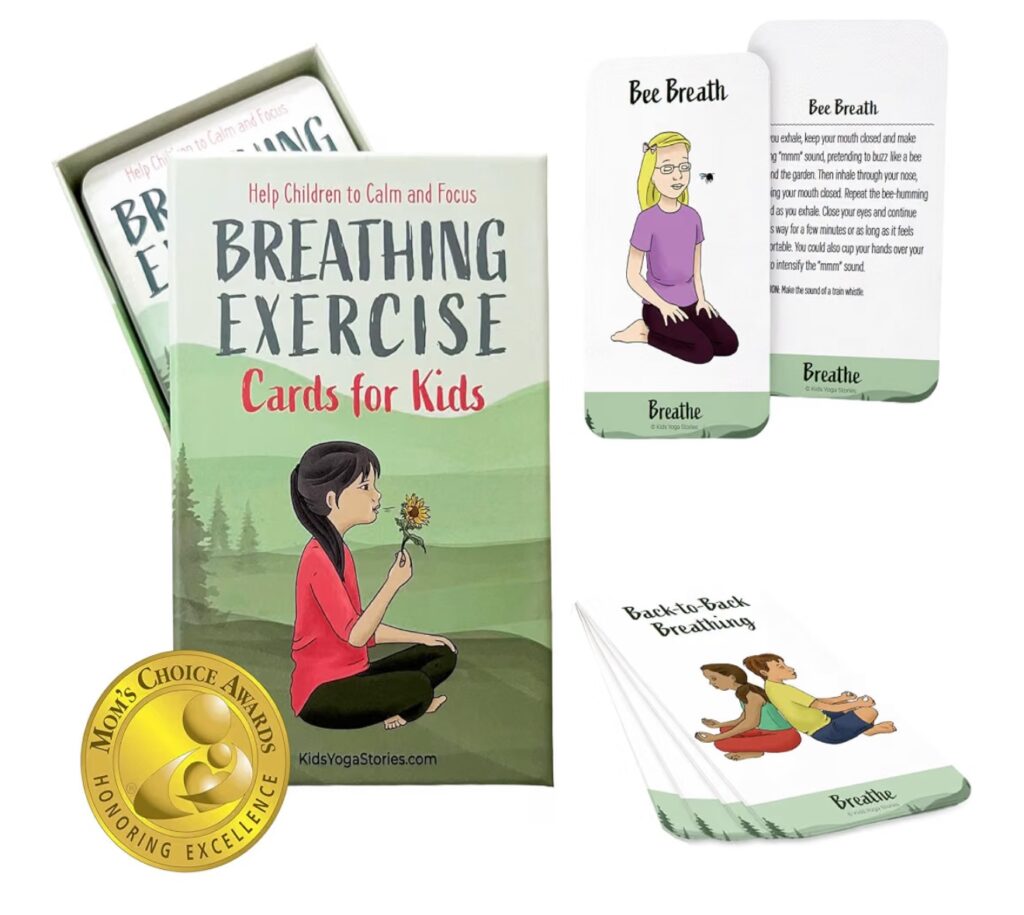
Thirty-four illustrated cards, each one a breathing exercise with kid-friendly imagery — balloon breath, bunny breath, bee breath — plus instructions and teaching tips. This is the bridge between the breathing ball (which shows the breath) and independent practice (which is the goal). A child who’s learned three or four of these cards has a portable coping toolkit that works anywhere: the hallway, the bus, the grocery store.
Kids Yoga Stories is a well-established name in children’s yoga and mindfulness, and it shows in the quality of the illustrations and the clarity of the instructions. I like that the deck includes an index and detailed guidance, because the adult has to teach these well for the child to use them independently later.
Why this one: Breathing is the single most transferable self-regulation skill, and these cards make it teachable in two-minute increments. They live happily in a calm-down corner, a teacher’s desk drawer, or a backpack — the most portable item on this list.
The honest limits: Cards don’t teach themselves. If they sit in the corner untouched, they’re decoration. Somebody — teacher, counselor, parent — has to practice a few cards with the child during calm moments before the child will reach for them independently. Also, the animal-breath names that delight a five-year-old will embarrass a ten-year-old, so this deck skews young elementary.
Best for: Teaching portable breathing strategies to preschool through early elementary kids — and for teachers who want a structured, no-prep way to run breathing breaks.
What to Buy for Whom
For a teacher building a classroom corner from scratch: Start with the tent, the lap pad, and the breathing cards. That’s the space, the sensory anchor, and the skill-builder — everything else can come later.
For a parent at home: The lap pad, the breathing ball, and the SPOT books. The lap pad travels to school in the backpack, the ball teaches the skill, and the books build the vocabulary at bedtime.
For the noise-sensitive child specifically: Ear muffs first, tent second. Reduce the input that’s actually causing the problem before adding calming tools on top.
For a tight budget: The breathing cards and the liquid timer. Both are inexpensive, both are portable, and together they cover visual calming plus an actual coping skill.
FAQ
How is a calm-down corner different from time-out?
Everything. Time-out is something done to a child as a consequence — they’re sent away. A calm-down corner is something a child chooses when they recognize they’re getting overwhelmed. The moment it’s used as punishment, it stops working, because the child now associates the space with shame instead of safety. Teach the corner during calm moments, never introduce it mid-meltdown.
What age is a calm-down corner for?
Most useful from about age 3 through early elementary, but the concept scales. Older kids need a version that doesn’t look babyish — swap the picture books for journaling supplies and the breathing ball for the cards, and keep the tent only if the child still wants the enclosed space. The principle (a defined low-stimulation reset spot) works at any age.
How long should a child stay in the calm-down corner?
As long as it takes to reset, not a minute longer. For most kids that’s 3–10 minutes. If a child is camping out there for half the school day, the corner isn’t the problem — something in the environment is, and that’s a team conversation. The liquid timer on this list is a nice natural boundary: watch it all the way down, check in with yourself, then decide.
Do I need all of these products?
No. Start with the space and one sensory tool matched to the child, then add only what fills a gap. A corner with three well-chosen items that get used beats a corner with ten items that gather dust. Watch what the child actually reaches for and build around that.
Can a calm-down corner replace professional help?
No, and I want to be clear about this as an OT. A calm-down corner is a support, not a treatment. If a child’s meltdowns are frequent, intense, long-lasting, or getting worse, that’s a conversation with your pediatrician and possibly an occupational therapist — not a shopping list.
From our shop: our Calm-Down Pack — printable breathing cards, feelings visuals, and calm-choice boards designed by two OTs.
As an Amazon Associate, we earn from qualifying purchases.