Here’s the scene I walk into weekly in long-term care: a patient is finally cleared for discharge, everything is arranged, and then the nurse watches them try to put on a sock and we all hold our breath. They can’t reach their feet. They bend past 90 degrees on a brand-new hip. They grab a chair that isn’t rated for it. The first injury of discharge planning happens in a bedroom, over a sock.
Dressing is the day’s first battle, and for anyone on hip precautions, anyone with spinal arthritis, anyone who just can’t reach past their belly anymore — it’s the one that decides whether they stay independent. A sock aid, a button hook, a dressing stick: these are fifteen-dollar tools that buy back an entire morning routine. I have watched people cry — actual relief-crying — the first time a sock aid works.
From the discharge-planner side, I don’t discharge someone to a home where they can’t dress themselves safely. If bending to your feet breaks your precautions, you need a system for getting dressed that never breaks them. The products below are that system: one tool for socks, one for buttons and zippers, one for pushing pants on and pulling them up, one for shoes, and one that turns lace-ups into slip-ons.
I’m Josh Ramsey, a licensed occupational therapist in long-term care.
What to Look For
Rigid vs. flexible sock aids. Rigid plastic sock aids (the most common type) hold the sock open so you can drop your foot in and pull up with the straps. They’re the easiest to learn and the ones I recommend first. Flexible cloth or nylon versions fold for travel, but they collapse on the floor and are harder to load one-handed. If this is your first sock aid, get rigid.
Handle length and foam grips matter for hand weakness. Most sock aids come with long straps or handles so you don’t have to bend to use them. For arthritic hands, look for foam-covered handles — they’re the difference between “I can do this myself” and “my hands are too sore to try.” Thin cord pulls hurt. Foam doesn’t.
Button hook vs. zipper pull vs. both. A button hook is a thin wire loop that pulls buttons through buttonholes for hands that can’t manage the pinch — arthritic fingers, post-stroke weakness, Parkinson’s. A zipper pull is a hook or ring that gives you something to grab on small or stiff zippers. Most dressing aids combine both in one tool, and if you need one, you probably need both.
Shoe horn length: longer is safer. A short shoe horn is fine when you can bend. On hip precautions or with a bad back, you need a long one so the shoe comes to you, not the other way around. Metal shoe horns last; plastic ones snap at the worst moment.
Elastic laces vs. relearning to tie. Elastic no-tie laces convert lace-up shoes into slip-ons — you set the tension once and never tie again. They’re the answer when bending to tie shoes breaks precautions or when fine motor coordination is the problem. The trade-off is fit: elastic doesn’t hold a heel as firmly as tied laces, so they suit daily walkers and around-the-house shoes better than serious athletic shoes.

Best Sock Aid: RMS Deluxe Sock Aid with Foam Handles
This is the sock aid I recommend by default, and it’s the one most of my patients actually succeed with. It’s the standard rigid design: a plastic form with a terry-cloth cover that holds the sock open, two long straps with foam handles that you pull to work the sock up your leg. You load the sock onto the form while it’s in your lap, drop the form to the floor, slide your foot in, and pull. No bending past 90 degrees, no contorting.
The foam handles are the reason this one wins over the cheaper bare-cord versions. After a hip replacement or with rheumatoid arthritis in your hands, gripping a thin cord and hauling is painful enough that people just stop trying — and then the sock aid lives in a drawer. The foam grips spread the pressure across your palm so you can actually pull with weak or sore hands. The deluxe version also tends to have a wider form, which handles men’s socks better than the narrow economy versions.
Why this one: It’s the design OTs actually stock in rehab gyms, with the one upgrade that matters most for seniors — handles your hands can tolerate. Wide enough for larger socks, simple enough to learn in one therapy session.
The honest limits: Sock aids and compression stockings are a bad match — this will not reliably pull on medical-grade compression socks; that’s a different tool (a compression stocking donner, and honestly those are hard for anyone to use alone). It also takes practice: the first few attempts, the sock slides off the form or the form tips over, and patients get frustrated. And the terry cover wears out eventually and needs replacing or the sock slips.
Best for: Anyone on hip precautions, anyone with back arthritis who can’t reach their feet, and post-op patients who need to dress independently in the first weeks.
Best Starter Kit: Vive Hip & Knee Replacement Kit
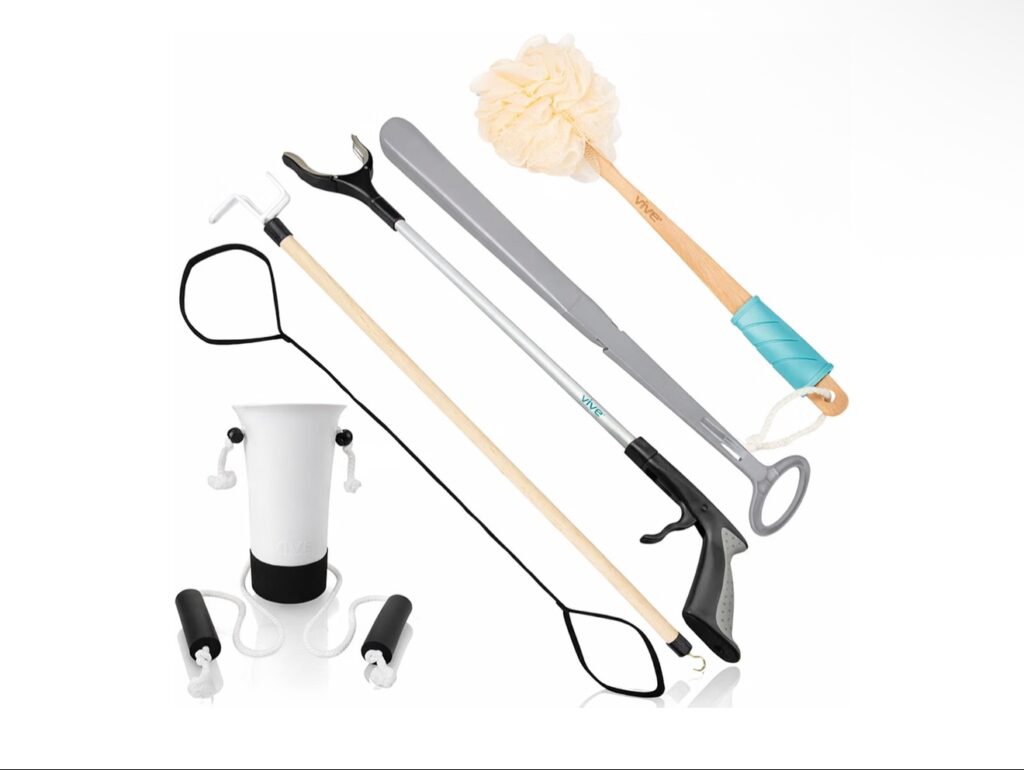
If you’re starting from zero — say, a hip or knee replacement is scheduled and you own none of this — the kit is the move. Six pieces: a reacher grabber, a long shoehorn, a sock assist, a leg lifter strap, a long-handle loofah, and a dressing stick. Every one of them maps to a task that precautions make dangerous: reaching the floor, getting shoes on, getting socks on, getting the operated leg into bed, washing your feet, and pushing pants on and off.
Why this one: Buying the pieces individually costs more and leaves gaps — there’s always the one tool you forgot and need on day two. The kit covers the full dressing-and-bathing sequence, and Vive’s build quality on these bundles is consistently solid for the price point. It also gives you the sock aid and dressing stick together, which is the combination that actually makes independent dressing work; either one alone leaves a gap.
The honest limits: A kit is a kit — each piece is good, none is the best in its category. The sock aid here is the basic version without the foam handles I’d recommend above, so if hand weakness is part of the picture, budget the standalone RMS sock aid anyway. And like every kit, it’ll include one piece you barely use (for most people, the loofah gets replaced by whatever shower routine they already have).
Best for: Pre-op shopping when you want one box that covers dressing, bathing, and reaching — especially for hip and knee replacement patients buying before surgery day.

Best Button Hook: Vive Button Hook with Zipper Pull
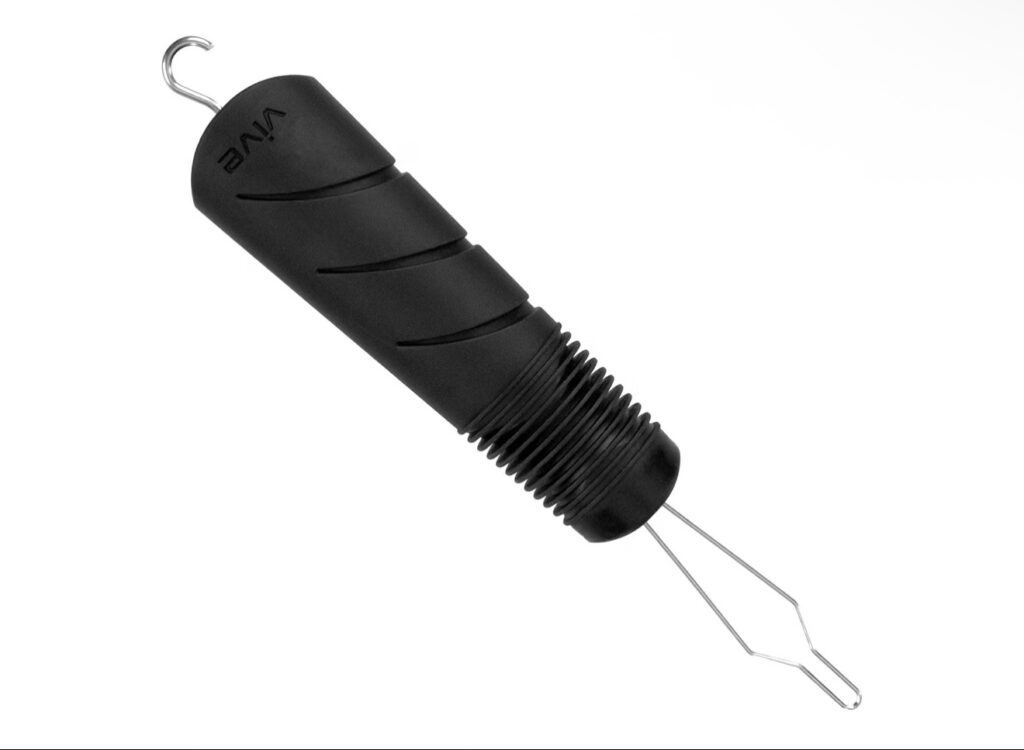
Buttoning a shirt is one of the most demanding fine-motor tasks in daily life — tiny pinch grip, precise alignment, sustained pressure. Arthritic fingers, post-stroke weakness, and Parkinson’s all turn it into a ten-minute ordeal or a reason to stop wearing buttoned shirts entirely. A button hook changes the mechanics: you push the wire loop through the buttonhole, catch the button, and pull it back through. The zipper pull on the other end handles stiff zippers on jackets and pants.
Why this one: The combined tool is the right design — if you need help with buttons, you almost certainly need help with zippers too, and one tool that does both stays in the drawer instead of two getting lost. Vive’s version has a decent handle that’s easier to hold than the old bare-wire hospital models, which matters when grip is the whole problem.
The honest limits: There’s a learning curve, and it’s real. The wire loop takes a few practice sessions before it stops feeling clumsy — I teach this in therapy and most patients need two or three supervised tries. It works best on standard shirt buttons; very small buttons (cuff buttons, some blouse buttons) and very tight new buttonholes will fight you. And if the problem is shoulder range of motion rather than hand function, a button hook doesn’t help — that’s a different adaptation.
Best for: Arthritis, Parkinson’s, post-stroke hand weakness — anyone whose fingers can’t manage the pinch-and-pull of buttons and small zippers.

Best Shoe Horn: HOUNDSBAY Extra-Long Metal Shoe Horn
A shoe horn is the simplest tool on this list and one of the most-used. You slide it into the back of the shoe, your foot follows it in, and the heel doesn’t collapse. The extra-long handle means you can do it standing or from a chair without bending to reach your feet — which, on hip precautions, is the entire point. Metal beats plastic here: it doesn’t flex, it doesn’t snap, and the smooth surface actually does the job.
Why this one: The length is the feature — it keeps you upright. The metal construction means it lasts years instead of cracking at the bend like the cheap plastic ones. The hanging hole or loop (depending on the version) means it lives on a hook by the door instead of disappearing into the closet, which is where shoe horns go to die.
The honest limits: This is for slip-ons, loafers, and lace-ups worn loose — it won’t help with shoes that need to be tied tight or boots you have to pull on. It also doesn’t solve the bending problem for tying; pair it with the elastic laces below if laces are part of the picture. And a metal shoe horn on a hardwood floor is loud when you drop it — minor, but you’ll do it.
Best for: Anyone on hip precautions, bad backs, or stiff shoes — the daily “get shoes on without a production” tool.
Best Dressing Stick: RMS Deluxe 28″ Dressing Stick
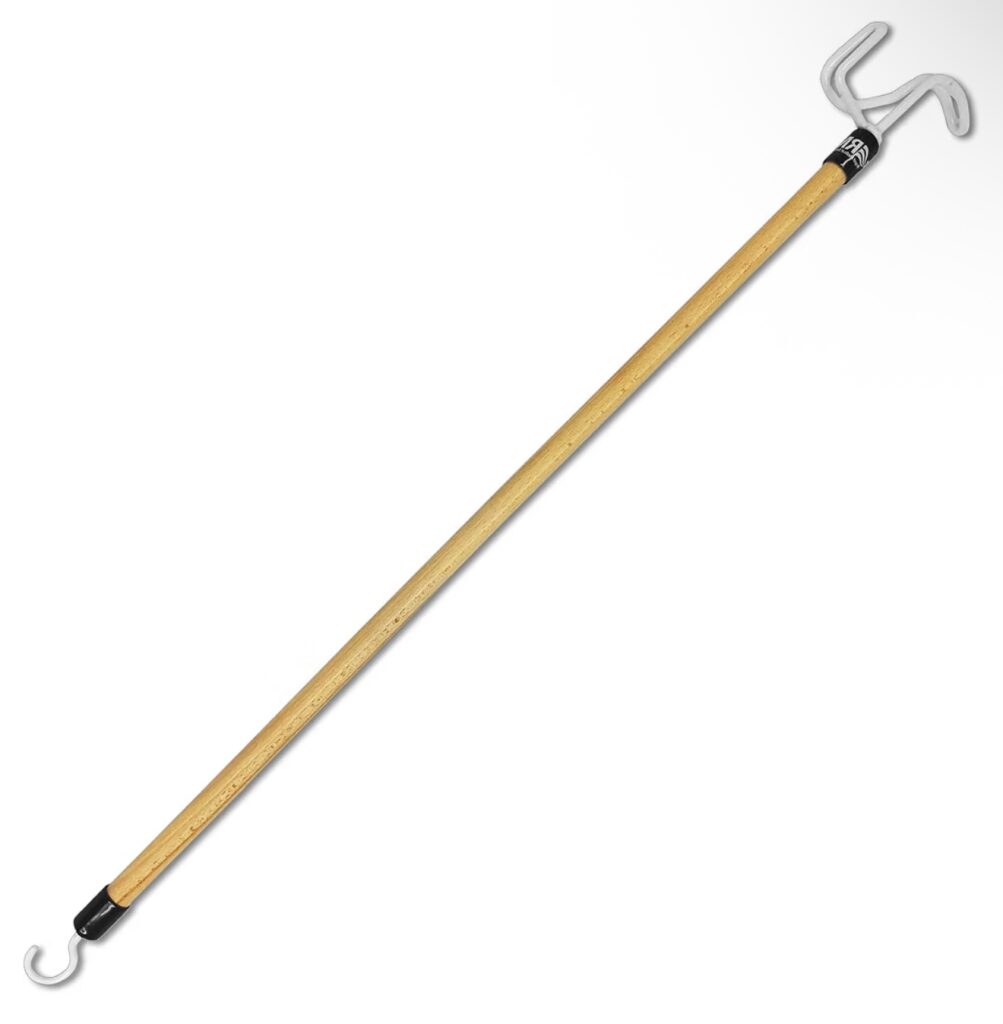
The dressing stick is the unsung hero of this list. It’s a long stick — 28 inches on this one — with a hook on one end and a smooth pusher on the other. You use the hook to pull pants legs up, pull zippers, and tug clothing into place; the smooth end pushes shirts down your back and pushes pant legs off your feet. For someone who can’t bend to reach their waistband or feet, it bridges the gap between “dressed” and “can’t.”
Why this one: The 28-inch length reaches from a seated position to the floor without leaning, which is what keeps you inside hip precautions. The dual ends (hook plus pusher) mean one tool does the pull-on and the push-off. RMS’s deluxe version has a comfortable grip, and — speaking as the therapist — this is the tool patients underestimate most and then won’t give up once they’ve learned it.
The honest limits: This one takes the most teaching of anything on the list. The motions aren’t intuitive — pulling a pant leg up with a hook while seated takes a guided practice session, and I always teach it in therapy before sending someone home with one. Used wrong, it’s just a stick. And it can’t do socks (that’s the sock aid’s job) — the two tools together are the system, not either one alone.
Best for: Hip precaution patients, spinal cord injury, severe arthritis — anyone who needs to manage pants, zippers, and shirts without bending or reaching.
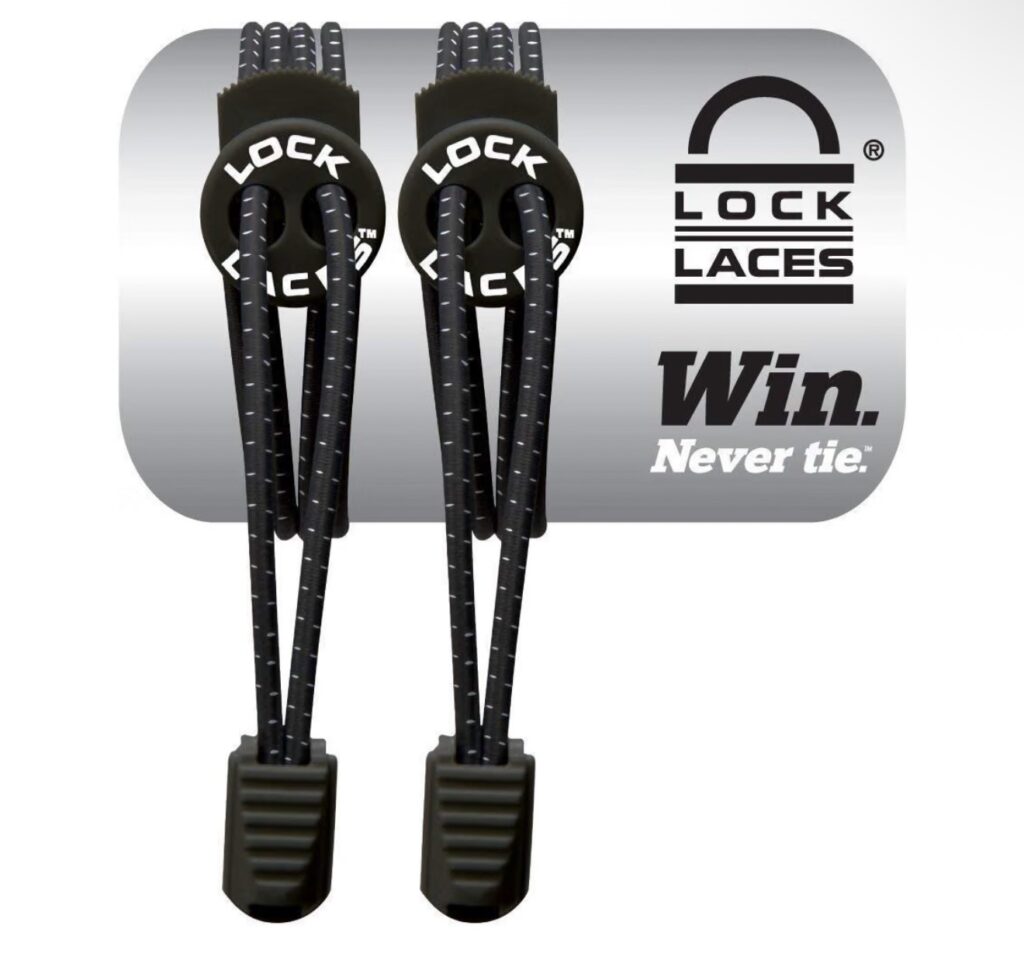
Best No-Tie Laces: Lock Laces Elastic No-Tie Shoelaces
Elastic no-tie laces turn any lace-up shoe into a slip-on. You thread them through the eyelets once, set the tension with the locking mechanism, trim the excess, and you’re done — the shoe stretches open for your foot and snugs back down, no tying, no bending, no fine-motor work. For someone on hip precautions who can’t bend to tie, or someone whose fingers can’t manage laces anymore, this is the difference between wearing real shoes and giving up on them.
Why this one: Lock Laces are the established name for a reason — the elastic holds tension well, the lock mechanism is simple, and they come in enough colors to not look like a medical device. They survive washing and daily wear. Paired with the long shoe horn above, lace-up shoes become a fully independent, no-bend operation: horn to get the foot in, elastic to keep the shoe on.
The honest limits: Elastic doesn’t hold a heel like tied laces do. For daily walking and around-the-house use they’re great; for serious athletic shoes, hiking, or anyone who needs a locked-down fit, they’re a compromise — your heel will lift more. They also need re-tensioning occasionally as the elastic relaxes. And they change the look of dress shoes, which matters to some people more than others.
Best for: Hip precaution patients who want to keep wearing lace-ups, arthritis and Parkinson’s patients who can’t tie, and anyone pairing them with a long shoe horn for a no-bend shoe routine.
What to Buy for Whom
Hip or knee replacement (pre-op): The Vive 6-piece kit covers the whole dressing sequence, and add the foam-handle RMS sock aid if hand weakness is in the picture. Pair the shoe horn with Lock Laces so shoes are a no-bend operation.
Arthritis in the hands: The button hook/zipper pull for shirts and jackets, the foam-handle sock aid (not the bare-cord kind), and elastic laces to retire tying altogether.
Can’t reach feet (back problems, belly, stiffness): The dressing stick plus the sock aid is the core system — stick for pants, sock aid for socks, long shoe horn for shoes.
Stroke or Parkinson’s (one-sided weakness): Sock aid and dressing stick for the dressing sequence, button hook for the fine-motor tasks. These are all one-hand-friendly once learned — which is exactly why I teach them in therapy.
FAQ
Can I put on compression stockings with a sock aid?
Not reliably with a standard sock aid — medical-grade compression is too tight and too long for the rigid form to handle. Compression stocking donners exist, but they’re difficult to use solo; this is one of the tasks where I’d honestly recommend arranging help or asking your therapist about alternatives.
Therapist trick: a plastic grocery sack works as a slide sheet. I take the handle end of the bag and place it between the big toe, letting a portion of the bag cover the heel — the stocking slides right on over the plastic. Then I pull the sack right out through the open toe section.
How long does it take to learn to use a sock aid?
Most people get it in one or two sessions. The common mistakes: not pulling the sock far enough onto the form (it slides off), and letting the form tip over on the floor before the foot is in. Practice with a regular sock before surgery, not a compression one, and not for the first time on discharge day.
Do I really need a dressing stick, or is it overkill?
If you can reach your waistband and feet without breaking precautions, skip it. If you can’t — hip precautions, severe arthritis, spinal issues — it’s the tool that makes pants possible. It’s the least intuitive and most-taught of these tools, so ask your OT to walk you through it.
Will elastic laces work in any shoe?
Any shoe with eyelets, yes. They work best in casual shoes and sneakers. Skip them for dress shoes if the look bothers you, and for athletic shoes where you need a locked-down heel fit.
As an Amazon Associate, we earn from qualifying purchases.