
Before a child can read a sentence, their eyes have to do something most of us never think about: glide smoothly across a line of text, left to right, drop down exactly one line, and start again — without skipping, without losing their place, without their eyes jumping all over the page. When that eye control isn’t there yet, reading feels exhausting, handwriting drifts all over the page, and the child gets labeled “careless” for what is actually a visual skills gap.
Here’s the good news: the foundation for all of it — visual tracking, visual scanning, and figure-ground perception — is built through play. Long before worksheets, kids develop these skills chasing bubbles, finding hidden pictures, and scanning a game board for the one piece that matches. These are the toys and games I actually recommend to parents and teachers when a child needs stronger visual skills, and with the holidays coming, most of them make genuinely good gifts — the kind that get played with instead of shelved.
I’m Allison Ramsey, a pediatric occupational therapist. I’ve spent 16 years in school-based practice, and I own OT4U, LLC, where I contract with two school districts. I’ve used every one of these categories of toys in therapy sessions and classrooms. Here’s what I’d actually buy.
What to Look For
Know which skill you’re targeting. Visual tracking is following a moving object with the eyes — a rolling marble, a bubble floating by. Visual scanning is searching a still field systematically — finding Waldo in a crowd, spotting the matching symbol on a card. Figure-ground is picking one target out of a busy background — finding the red crayon in the art bin, or one word on a crowded worksheet. Different games train different skills, and the best picks for reading readiness train scanning and figure-ground, because that’s what reading a page actually demands.
Look for a busy visual field. The whole point is the search. A game with three big pictures on a blank card isn’t training much. The ones that work have lots going on — crowded scenes, dozens of symbols, detailed pictures — so the eyes have to work to find the target. That’s the workout.
Make sure it can be graded. The best visual toys work for a wide range because you can make them easier or harder. A search-and-find book works for a 4-year-old if you point to the general area (“look near the top!”) and for an 8-year-old if you time them. Games that only have one difficulty level get outgrown fast.
Watch the frustration factor. Visual scanning is genuinely hard work for kids who struggle with it. If a child melts down two minutes into a puzzle, the visual demand is too high — not the child. Start with bigger targets and less clutter, then work up. Every pick below can be scaffolded down for younger or struggling kids.
Prioritize screen-free. All of these are. That’s deliberate — screens do the tracking for the child (things move, flash, and grab attention automatically). Real visual skill development happens when the child’s own eyes have to do the searching.
Think about where it’ll be used. A big floor puzzle is perfect for a classroom center or living room but terrible for a car ride. A travel-size book is the opposite. Match the toy to the setting where the child actually has downtime.
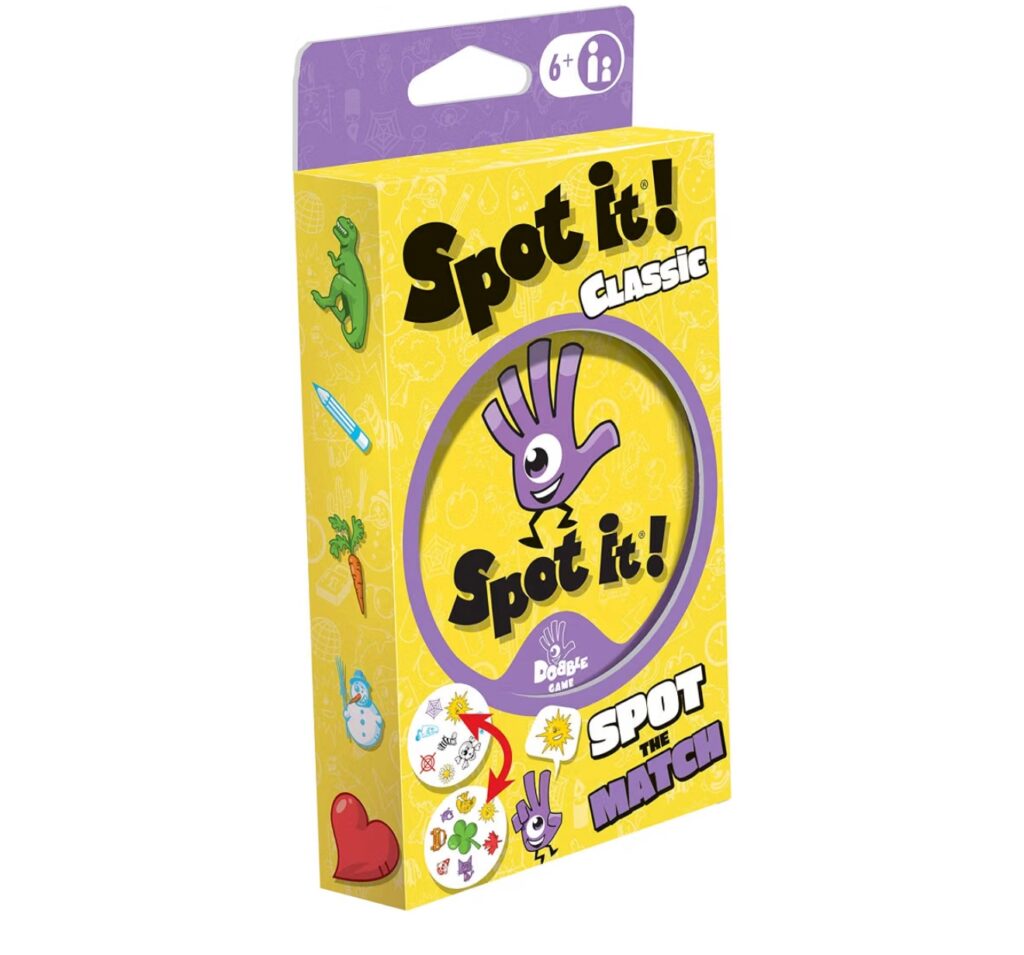
Our Top Pick: Spot It! Classic Card Game
If I could only recommend one visual skills game, this is it — and it’s the one I suggest most often to teachers. The premise is beautifully simple: 55 round cards, and any two cards share exactly one matching symbol. Players flip cards and race to spot the match first. That’s it. But underneath that simplicity is a serious visual workout — rapid scanning, figure-ground discrimination (finding one small symbol among eight on each card), and processing speed, all at game pace.
Why it wins: it’s genuinely fun, so kids ask to play it, which means the visual practice actually happens. It plays in about 15 minutes, works for 2 to 8 players (great for small groups or family game night), and the matching demand scales naturally — younger kids just try to find any match, older kids play the speed variants. I’ve used it in therapy sessions for everything from visual scanning goals to turn-taking, and I’ve watched kids who “hate” visual work beg for another round.
The honest limits: the symbols are small, so for a child with significant visual difficulties it can be frustrating at first — start by playing cooperatively (everyone helps find the match) rather than competitively. And the box says ages 6+, which is about right for independent play, though 4- and 5-year-olds can play with an adult partner.
Best for: The single best all-around visual scanning game — classrooms, family game night, therapy sessions, and holiday gifts for ages 6 and up.
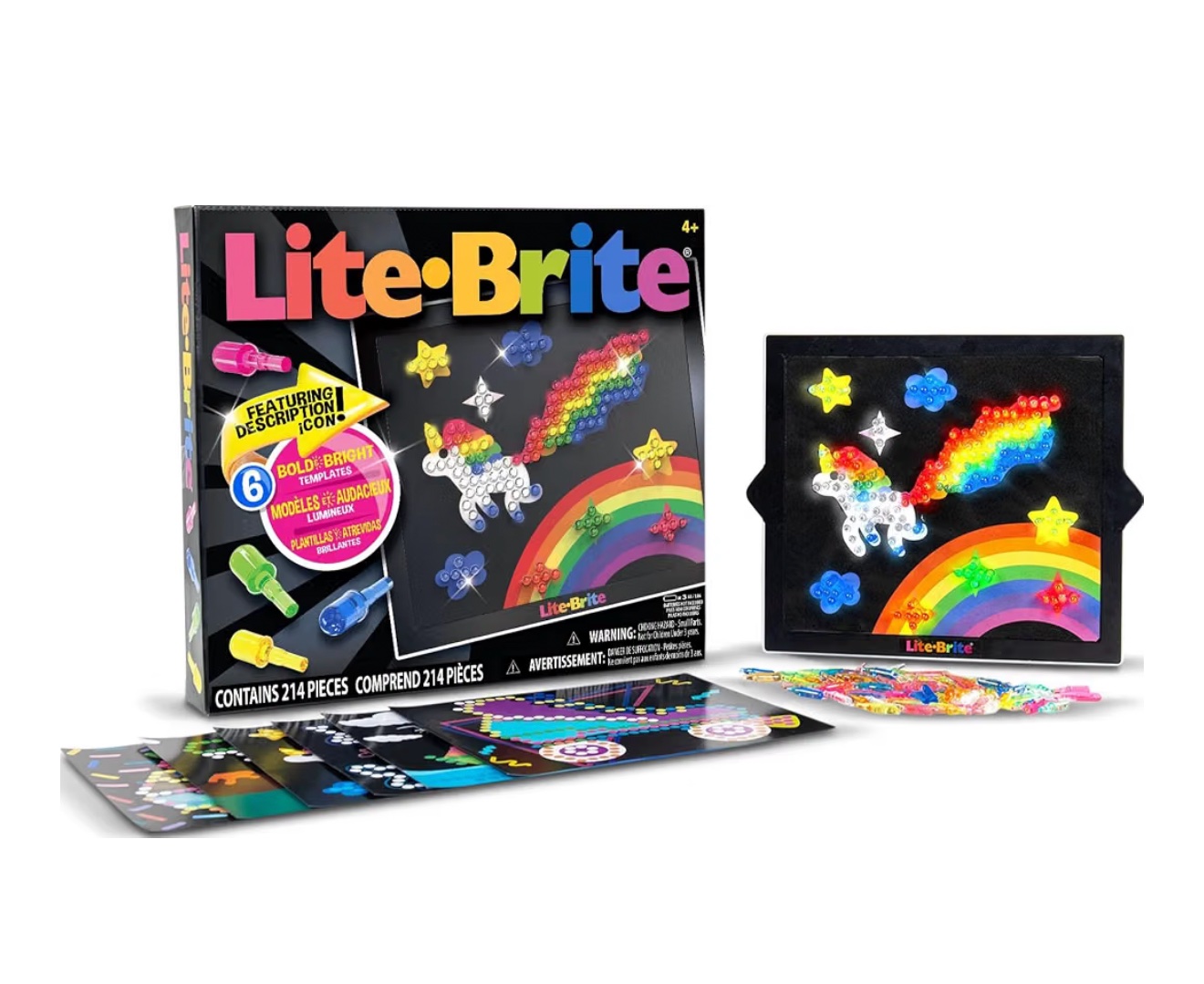
Best for the Classroom: Lite-Brite Ultimate Classic
Lite-Brite has been around forever for a reason. Kids place colored pegs into a light-up board following picture templates, and the finished picture glows. The visual demand is in following the template: the eyes have to track across the guide, find the right spot on the board, and place the peg — that’s visual tracking plus visual-motor integration, sustained over a whole picture.
Why it’s the classroom pick: it’s quiet, it’s absorbing (I’ve seen kids work on one picture for 30+ minutes, which is an eternity of sustained visual attention), and it works as an independent center activity while the teacher works with a small group. The templates range from simple to complex, so it grades well across ages. It’s also one of the few visual toys that doesn’t feel like “work” — kids just see it as making glowing art.
The honest limits: the pegs are small, so there’s a fine-motor demand alongside the visual one — a child who struggles with both may need the bigger-peg versions or hand-over-hand help at first. And pegs will end up on the floor; that’s just the tax.
Best for: Classroom centers, quiet independent work, and kids who need sustained visual attention practice disguised as art.
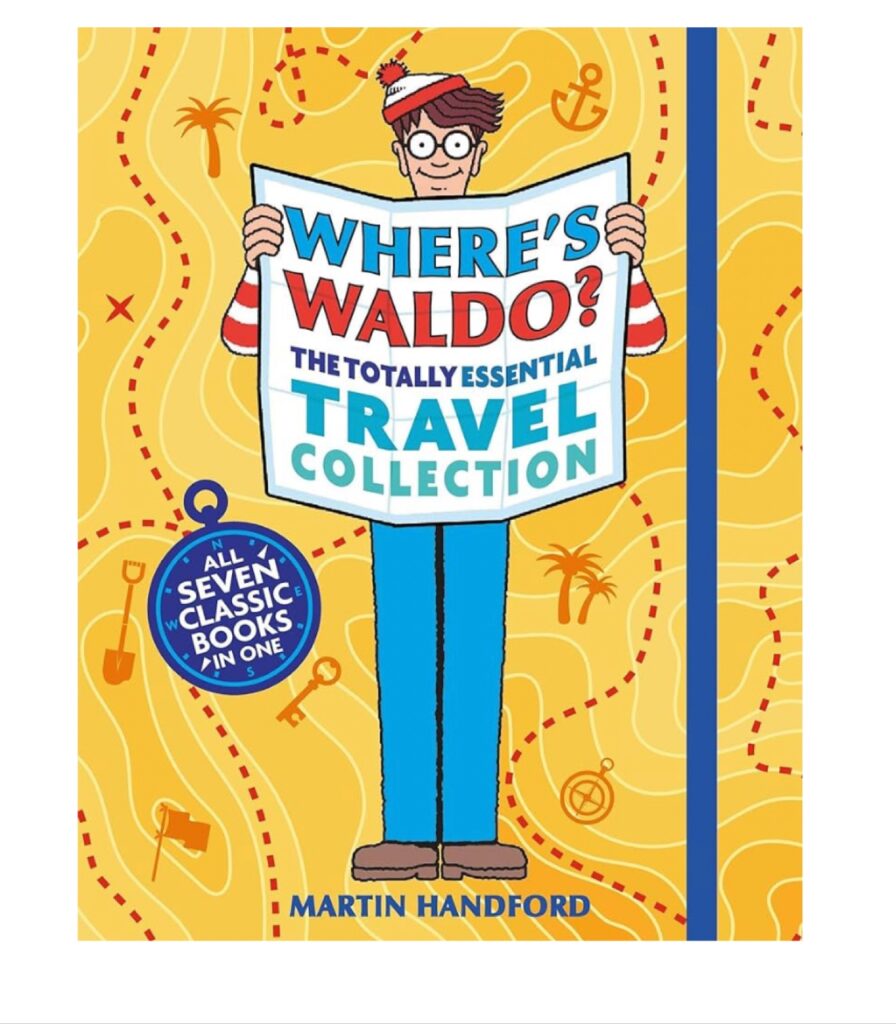
Best Travel Pick: Where’s Waldo? The Totally Essential Travel Collection
Waldo is the original figure-ground workout — find one specific guy in a scene packed with hundreds of near-identical people. This travel collection bundles the Waldo books in a portable format, which makes it the rare visual skills tool that fits in a backpack, a car seat pocket, or a waiting room bag.
Why it wins for travel: the visual demand is exactly what struggling scanners need — dense, busy scenes where the target is genuinely hard to find. But it’s also completely self-paced with no timer and no losing, so it never creates the frustration spiral that timed games can. Kids can work a single page for ten minutes or flip through casually. I’ve recommended this to more parents for long car rides and plane trips than probably any other single item.
The honest limits: it’s a book, so there’s no game structure — some kids need the competitive element to stay engaged. And the scenes are genuinely challenging; for younger kids (under 6 or so), start with the simpler early pages and help narrow the search area.
Best for: Car rides, flights, waiting rooms, and any situation where you need a quiet, absorbing, genuinely challenging visual activity.
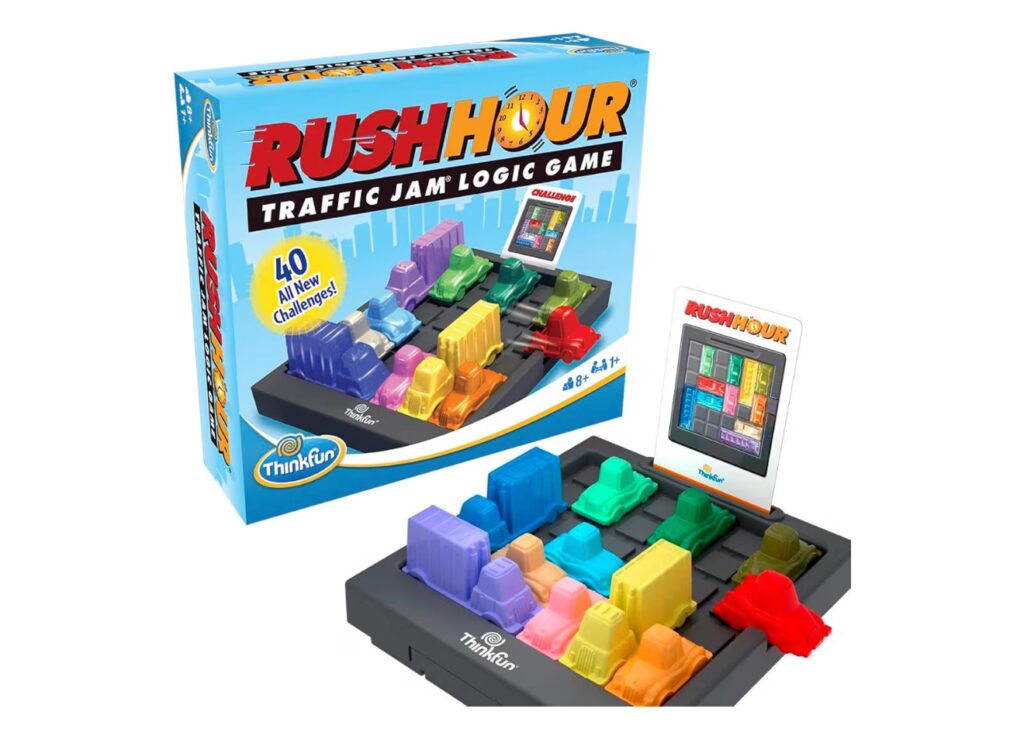
Best for Older Kids: ThinkFun Rush Hour
Rush Hour is a logic puzzle disguised as a traffic jam: slide the blocking cars and trucks around the grid to free the red car. The visual skill here is systematic scanning — the player has to visually trace paths, check what’s blocking what, and plan a sequence of moves. It’s scanning plus executive function, which is exactly the combination older kids need for things like multi-step math problems and dense textbook pages.
Why it’s the older-kid pick: most visual toys top out around age 8, but Rush Hour’s 40 challenges run from beginner to expert, so it stays challenging into the tween years. It’s single-player and quiet — ideal as a classroom “early finisher” activity.
The honest limits: the box says ages 8+, and that’s real — younger kids will just push the cars around. This is also pure logic/visual with no physical play component, so it’s not the pick for a kid who needs to move.
Best for: Ages 8 and up, logic-minded kids, early finishers, and anyone who’s outgrown the simpler matching games.
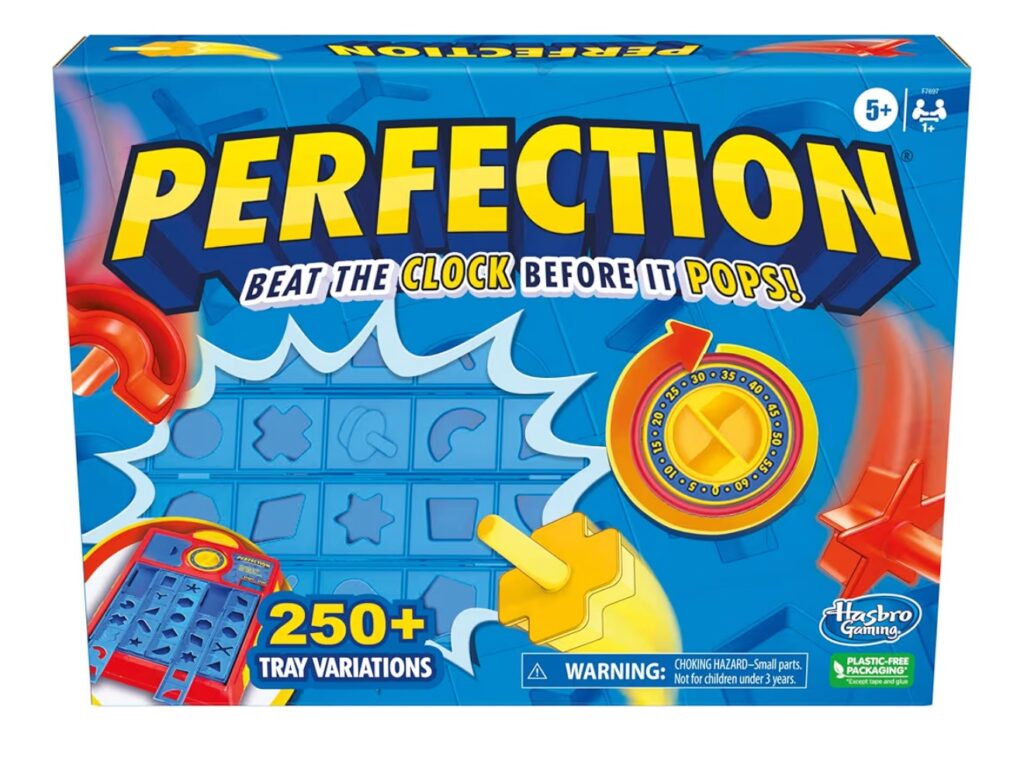
Also Great: Perfection Refresh Game
The classic race-the-timer shape sorter: fit all the pieces into the tray before time runs out and the whole thing pops. The visual demand is scanning under time pressure — finding the right hole for each shape while the clock ticks, which mirrors real-world skills like timed tests. Typically around $19.99, which makes it an easy gift.
The honest limits: the timer popping can genuinely upset anxious or sensitive kids. Know your child. For kids who can’t handle the pop, play without the timer and it still works as a scanning task.
Best for: Kids who thrive on speed and competition, and families who want a classic game-night option with real visual benefits.
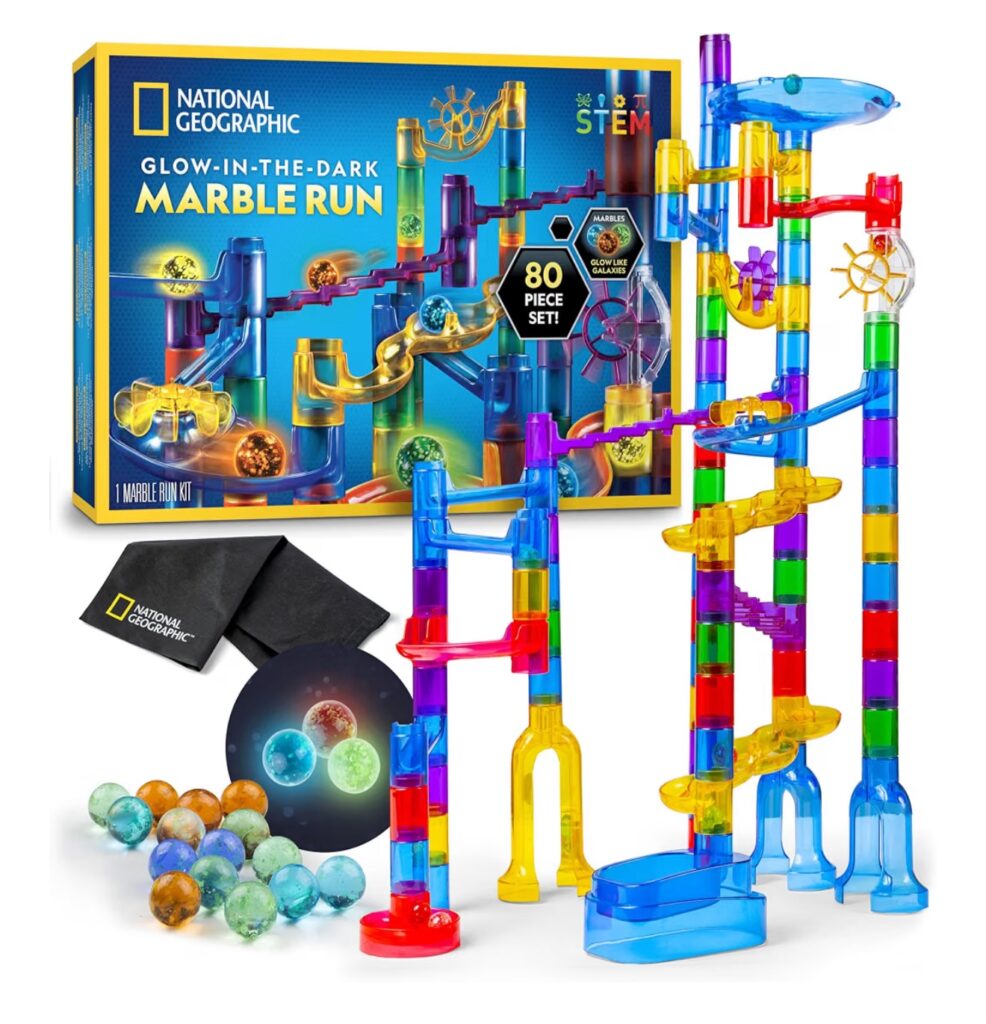
Also Great: National Geographic Glowing Marble Run
A build-it-yourself marble run with glow-in-the-dark pieces. The visual tracking piece is watching the marbles race through the track the child just built — eyes following a fast-moving object through twists and turns is textbook visual tracking practice. And the building itself is spatial reasoning and planning.
Why I like it: it’s one of the few visual tracking (not just scanning) toys on this list — most target the still-field search, but following a moving marble trains the smooth eye movements kids need for reading across a line. The glow feature means it can be used in a dim room, which somehow makes every kid try it at least once. Building it together is also genuinely good parent-child time.
The honest limits: it has a lot of pieces, and the build requires patience and some adult help for younger kids. If the build frustrates them, the tracking benefit never happens — so build it together the first few times.
Best for: True visual tracking practice (following moving objects), building skills, and kids who love to construct things.
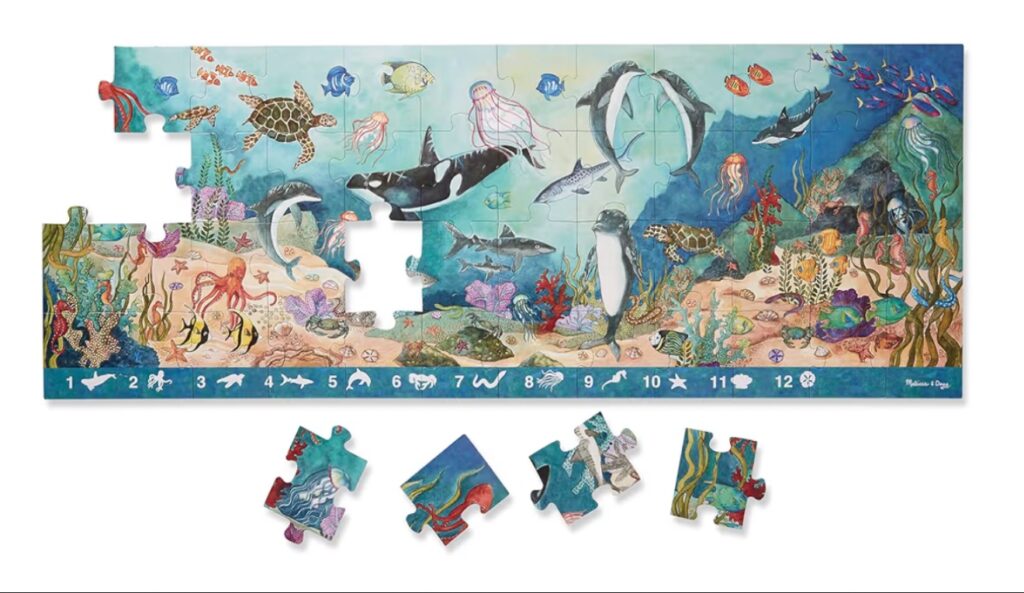
Also Great: Melissa & Doug Search and Find: Beneath the Waves Floor Puzzle
Two activities in one: first assemble the large floor puzzle (an underwater scene), then use the included search-and-find challenges to locate hidden objects in the finished picture. The puzzle assembly is visual discrimination and part-to-whole reasoning; the search phase is figure-ground and scanning. Big puzzle pieces on the floor also mean the child is moving, reaching, and shifting gaze across a large visual field — which is harder and better exercise for the eyes than a tabletop activity.
Why it’s great: the two-phase structure means it holds attention longer than either activity alone, and the floor format is perfect for classrooms, therapy gyms, or living rooms. Melissa & Doug’s search-and-find line is consistently well-made — the hidden objects are findable but not obvious, which is exactly the right difficulty calibration.
The honest limits: you need floor space, and 48-ish pieces scattered across a classroom can be a cleanup project. This is a home or classroom-center toy, not a travel one.
Best for: Classrooms, therapy sessions, and home play where floor space is available — great for younger kids who benefit from big-piece, whole-body play.
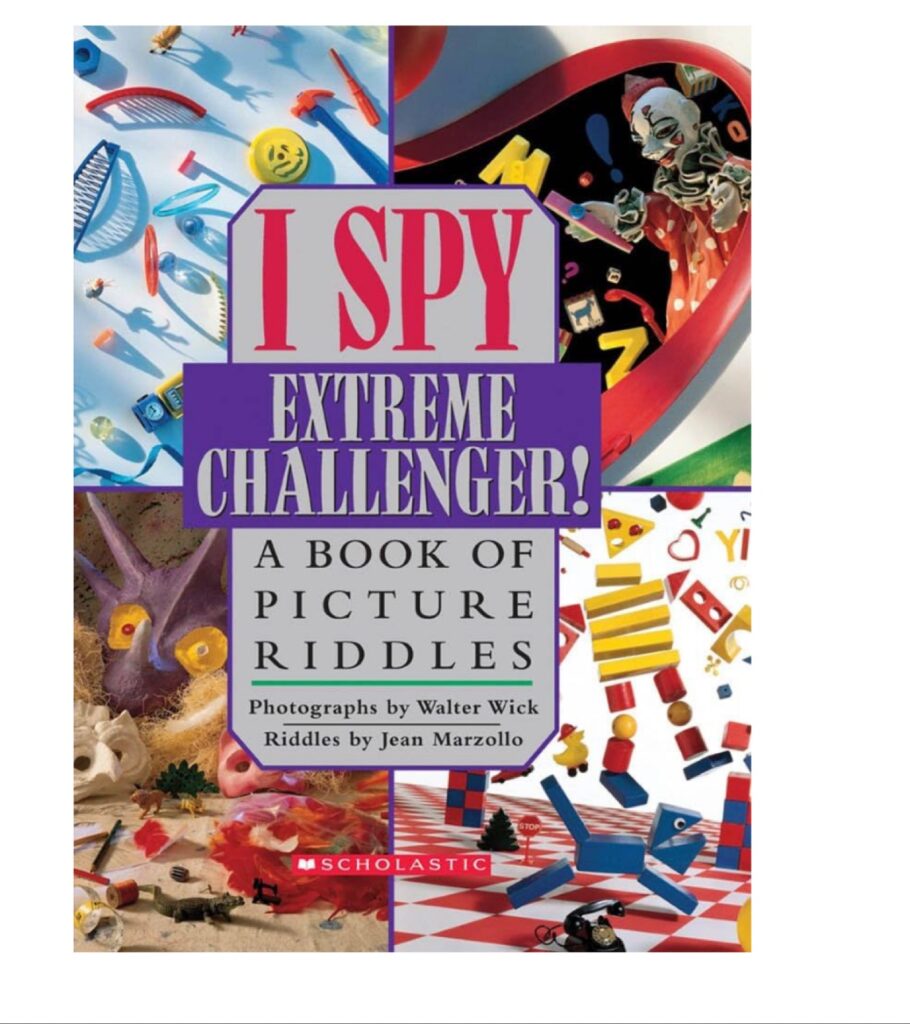
Also Great: I Spy Extreme Challenger
The I Spy books are photo-riddle treasure hunts: read the riddle, then find every item hidden in the elaborate staged photograph. The “Extreme Challenger” edition is the hardest of the series — genuinely camouflaged objects — which makes it the right pick for kids who’ve outgrown the easier books. The riddles add a working-memory layer (hold the list in mind while scanning), which mirrors what reading comprehension requires.
The honest limits: don’t start here with a young or easily frustrated child — the regular I Spy books are the on-ramp. And like Waldo, there’s no game structure, so engagement depends on the child enjoying the hunt itself.
Best for: Strong visual scanners ready for a real challenge, car rides, and kids who love riddles and hidden-object hunts.
What to Buy for Whom
For a classroom: Spot It! for small-group time and Lite-Brite as a self-running independent center. Both survive heavy use.
For holiday gifts: Spot It! is the safest bet across the widest age range. The Waldo travel collection suits the kid who’s always in the car. Rush Hour is the pick for the 8-to-12 crowd that’s “too old for kid games.”
For a child who struggles with reading: Talk to your child’s teacher or OT first — but at home, the Waldo and I Spy books are the lowest-pressure options (no timer, no losing), and Spot It! played cooperatively builds speed without competition stress.
For the child who needs to move: The floor puzzle and the marble run get the eyes working across large spaces with the body involved — start there before asking a wiggly kid to sit with a book.
FAQ
What’s the difference between visual tracking and visual scanning?
Tracking is following something that moves — a ball, a marble, words as someone points along a line of text. Scanning is searching something that stays still — finding Waldo, spotting the matching card, locating a word on a page. Reading needs both: tracking to move across the line, scanning to find your place after the return sweep. Most of the games on this list train scanning, because that’s the harder skill to build through everyday play.
My child skips lines and loses their place when reading. Will these games fix that?
They help, but they’re not a substitute for an evaluation. Losing place while reading can come from visual tracking or scanning weakness, but it can also come from convergence issues (eyes not teaming together), uncorrected vision problems, or attention difficulties. Start with an eye exam — not just the school screening, a real exam — and if concerns persist, ask your pediatrician about a referral to a developmental optometrist or an OT evaluation. These games are excellent support alongside that process, not a replacement for it.
What ages are these appropriate for?
Roughly 4 through 12, depending on the game. Spot It! and the floor puzzle work from about age 4-5 with adult help (6+ independently). Lite-Brite, Perfection, and the marble run hit the 5-9 sweet spot. Waldo and I Spy books span the whole range — younger kids just get more help narrowing the search. Rush Hour is genuinely 8+.
Can these be used in a classroom, or are they just for home?
Both. Spot It!, Lite-Brite, the floor puzzle, and Rush Hour all work as classroom centers or early-finisher activities — they’re quiet, self-contained, and don’t require the teacher to run them. I’ve written several of these into IEP accommodations as visual-motor breaks. If you’re a teacher buying with classroom funds, Spot It! and Rush Hour give you the most uses per dollar.
As an Amazon Associate, we earn from qualifying purchases.